










For cat owners juggling busy schedules, providing a consistent diet of wet food has long been a logistical headache. Traditional wet food must be served fresh and cannot sit out for extended periods without spoiling, forcing pet parents to plan their entire days around rigid feeding times. While automatic dry food dispensers have existed for years, automated wet food options have traditionally been limited to simple devices requiring cumbersome freezer packs or refrigerated models capable of holding only a day or two of meals.
Enter the Neakasa Riko, an innovative smart pet feeder designed to tackle this exact dilemma by rehydrating meals on demand. Instead of storing pre-moistened food, the unit stores freeze-dried food and water in separate compartments. When a scheduled or manual feeding is triggered, it grinds the food, mixes it with water from its built-in tank, and lets it soak in a retractable bowl before presenting it to the pet. After spending a month testing the $240 device, tech reviewers have put its promises of convenience, reliability, and modern pet care under a microscope.

How the Neakasa Riko Makes Wet Food Easier
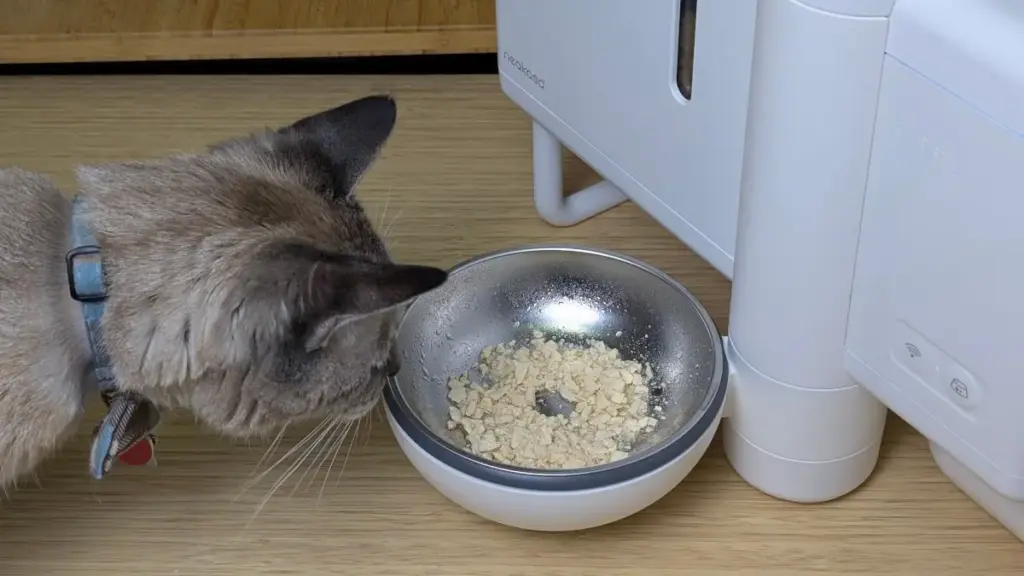
At first glance, the Neakasa Riko diverges significantly from standard automated kibble dispensers. Its most prominent features include an 80-ounce water tank positioned on the right side and a retractable feeding bowl located directly beneath the food hopper. Positioned just above the bowl are hidden water jets and a grinding mechanism integrated into the underside of the dry food storage. This mechanical setup allows the food to sit in the bowl long enough to fully rehydrate before a cat or small dog begins eating.

While the unit is specifically tailored for freeze-dried food, Neakasa notes that it can also accommodate air-dried and baked cat food, though it explicitly advises against using standard extruded kibble. Testers experimenting with alternative commercial brands found that while the Riko did not actively grind certain standard dry foods, the initial results were surprisingly promising because pets often readily accept the softened texture. A hybrid approach utilizing a mix of freeze-dried food and kibble could emerge as an attractive option for many cat owners, though finding the optimal water-to-food ratio requires a bit of trial and error.

The feeder is designed with practical maintenance in mind. Its storage tanks can be easily removed for refilling and deep cleaning. To prevent pets from bypassing the bowl and eating directly from the low-profile food hopper, the device features a built-in safety mechanism that refuses to operate unless the hopper lid is securely in place, even chiming as a reminder if it is left off. Much like traditional smart feeders, it also incorporates a dedicated compartment for desiccant packs to maintain food freshness.
Cleaning the unit is streamlined by two dishwasher-safe stainless steel bowl inserts. Notably, the food dispenser scale is calibrated with the bowl entirely removed, allowing owners to swap bowls rapidly without needing to recalibrate or zero out the scale. Starter kits typically include cleaning accessories such as wet wipes for the interior, spare desiccant packs, and a limescale cleaner to combat hard water buildup in the water tank. An optional rechargeable battery pack, available in higher-tier sets, provides up to seven days of backup power during potential outages.

The Neakasa App and Daily Operation
The Neakasa Riko relies on integrated Bluetooth and Wi-Fi connectivity, allowing owners to manage the device through a companion mobile application. Reviewers have highlighted the app’s intuitive interface, which centers around a main dashboard displaying daily feeding histories, quick controls for scheduled and manual meals, and estimated food and water levels. The settings menu accommodates a variety of configurations, including child locks, deep-cleaning cycles, and schedule adjustments, organized logically to prioritize frequently used features.
While auditory alerts and small displays on pet feeders are often viewed as secondary luxuries, the Riko utilizes them to practical effect. A gentle mealtime chime serves as a helpful audio cue for pets that might wander away while the food is rehydrating. The unit’s small front display indicates current operational status and can be customized to show a clock, a simple icon, or custom scrolling text. Because scrolling text can sometimes appear distracting, many users opt for static icons or utilize the Do Not Disturb schedule to turn off both the display and sounds entirely during overnight hours.

Unlike some smart home ecosystem hubs, the Neakasa Riko does not integrate deeply with smart home platforms like Home Assistant. However, reviewers point out that such integration is rarely necessary for a pet feeder, where the primary goal is reliable scheduling and accurate intake monitoring rather than complex multi-device automations.
Putting the Neakasa Riko to the Test
Transitioning a pet to a new diet typically requires a gradual introduction over several days to prevent digestive upset. Because testers generally evaluated the device using healthy cats with established routines, the Riko was primarily used to supplement existing diets with rehydrated freeze-dried chicken or to serve as a high-tech treat dispenser.

Calibrating the correct water-to-food ratio proved critical. Initial tests using equal amounts of food and water resulted in a consistency that failed to entice the cat, causing the meal to sit out longer than desired. Increasing the water ratio to a 1:4 proportion created an appealing texture that the cat consumed within minutes, eliminating concerns about food sitting out and spoiling.
The device features a safety retraction mechanism designed to pull the bowl back inside if too much food remains uneaten, with a threshold ranging from 10 to 60 grams. Because the minimum threshold sits around 10 grams, the retraction feature may not trigger if an owner is only serving tiny portions. Furthermore, experts advise against leaving a cat completely unattended with the feeder for extended periods until the owner is entirely confident in the proportions and the cat’s willingness to finish its meals, ensuring the safety feature does not unexpectedly lock away food and leave the pet hungry.

Scheduling quirks were minor but present; some users noted that scheduled feedings occasionally triggered an hour off from the intended time zone, though this was easily remedied by adjusting the programmed schedule. Interestingly, empty bowls remain extended until the next scheduled food or water distribution, giving pets an opportunity to lick the bowl clean and providing owners with continuous access when swapping in a clean insert.
Evaluating Value and Long-Term Costs
Priced at $240, the Neakasa Riko fills a distinct niche for owners looking to incorporate freeze-dried foods or softened kibble into their pet’s routine. However, financial considerations play a major role in its long-term viability. When comparing daily feeding costs for a 10-pound adult cat, freeze-dried diets from brands like Weruva, Instinct, and Stella & Chewy average around $5.18 per day. This is significantly higher than budget canned options like Friskies or Meow Mix, which hover around $1.05 per daily serving, and even outpaces premium canned lines like Fancy Feast and Sheba.

Traditional dry kibble remains the most economical feeding method, with standard bags costing a fraction of freeze-dried alternatives. For owners committed to wet food, competing devices like the $170 Petlibro PLAF109 and the $262 PetSafe FreshFeed utilize refrigeration systems to keep traditional canned food fresh for several days, offering lower per-meal costs for those who prefer standard wet food formats.
Despite the higher cost of freeze-dried ingredients, the Neakasa Riko stands out as one of the most mechanically convenient smart feeders designed to handle moisture-rich pet food. It holds up to 10 days of provisions, operates efficiently without complex refrigeration systems, and bridges the gap between dry storage and wet delivery. While relying exclusively on freeze-dried meals may stretch tight household budgets, the Riko succeeds as a versatile tool for enhancing a pet’s daily diet, managing vacation schedules, or providing targeted nutritional supplementation without requiring a costly subscription model.