For the better part of three decades, the professional life of a software engineer has been defined by a familiar, somewhat rigid ritual. It begins with the same static environment: a keyboard, a mouse, a code editor, a terminal, and a web browser cluttered with an ever-expanding collection of tabs. While the specific technologies and languages have evolved—moving from monolithic C++ projects to distributed, cloud-native architectures—the fundamental relationship between the developer and the machine has remained largely unchanged. Developers have spent their careers learning the syntax of their tools, memorizing complex command-line shortcuts, and meticulously adapting their cognitive processes to fit the limitations of their hardware.
However, a significant shift is currently underway. The rise of Artificial Intelligence is not merely adding another tool to the developer’s belt; it is fundamentally altering the nature of software engineering. This transition is defined by a move away from operating individual tools—where the developer must micromanage every keystroke and configuration—toward a model centered on expressing intent.
The Rise of the Agentic Workflow
In the traditional development paradigm, the developer acts as the operator. They must understand the repository, manually identify dependencies, write code line-by-line, run tests, diagnose failures, and repeat the process until the system functions. The advent of AI-assisted development is compressing this chain of events.

Modern AI systems, such as GitHub Copilot, have moved beyond simple code completion. Today, these systems are capable of "understanding" a full repository. They can inspect symbols, navigate complex dependency trees, plan out necessary work, edit multiple files simultaneously, run tests, and iterate based on the results—all within boundaries strictly defined by the developer. This is the emergence of agentic coding. A developer can now describe an intended outcome, and the AI agent works within that scope to gather the necessary context, draft the implementation, and run the validation tests.
In the integrated development environment (IDE), this loop has become highly interactive. The GitHub Copilot coding agent, for instance, can take a specific issue, process it within an isolated environment powered by GitHub Actions, and return a finished pull request ready for human review. This is a profound shift. It is no longer about the speed of typing; it is about the transition from issuing manual commands to making high-level intent executable. While the machine handles the mechanics, the developer remains the architect of the outcome, ensuring that the work aligns with the broader project goals.
The Changing Value of Human Judgment
As AI begins to manage the "mechanics" of coding, the role of the developer is not disappearing; rather, it is becoming more specialized and valuable. If an AI agent can generate three potential implementations of a feature in the time it takes a developer to finish a cup of coffee, the bottleneck is no longer production capacity. Instead, the premium shifts to judgment, taste, and architectural foresight.
The developer’s day-to-day work is increasingly centered on setting direction, defining constraints, supplying the necessary context, and reviewing evidence. The craft is evolving into a discipline of understanding the structure of a codebase, the specific needs of the customer, and the nuance of what makes a software solution truly effective. A machine can write code, but it cannot easily decide whether a specific abstraction belongs in a legacy system, whether a data migration is safe for a production database, or whether the tests being run are actually proving anything of value. The developer remains the final authority, accountable for the integrity of the output. In this new era, the ability to discern quality and maintain the integrity of a system is the most critical skill a developer can possess.
Embedding Intelligence: The Move Toward Ambient Control
To realize the full potential of this shift, AI must be embedded directly into the developer’s workflow, not merely exist as an external tool. The goal is the creation of an "ambient intelligence"—a state where the interface disappears, and the system anticipates needs based on the context of the work.
This requires a sophisticated technical foundation. The development industry is currently working to standardize how agents interact with the world. Protocols like the Model Context Protocol (MCP) are essential here, as they connect agents to a wide variety of tools and services. Meanwhile, repository instructions and specialized skills are being used to encode best practices and conventions, while hooks are employed to enforce policy and validate output.
This ecosystem relies on three distinct layers: a modality layer that captures the developer’s intent, a harness layer that plans and executes the work, and a control plane that allows developers to inspect, redirect, and approve the agent’s actions. The challenge for modern software product design is to connect these three layers seamlessly without stripping the developer of their necessary control. This evolution enables developers to transition between text, voice, and even physical controls without losing their "flow state" or the context of their project.
Why Physical Controls are Finding a New Home
Perhaps the most surprising aspect of this shift is the return of physical hardware to the developer’s desk. For years, the industry leaned toward the minimalism of the "clean desk" policy, prioritizing the keyboard and screen above all else. However, as agentic workflows move beyond the terminal, there is a renewed interest in ambient control devices. Makers and engineers are experimenting with everything from inexpensive, hackable picture frames to custom ESP32-based devices designed to trigger agentic sequences.
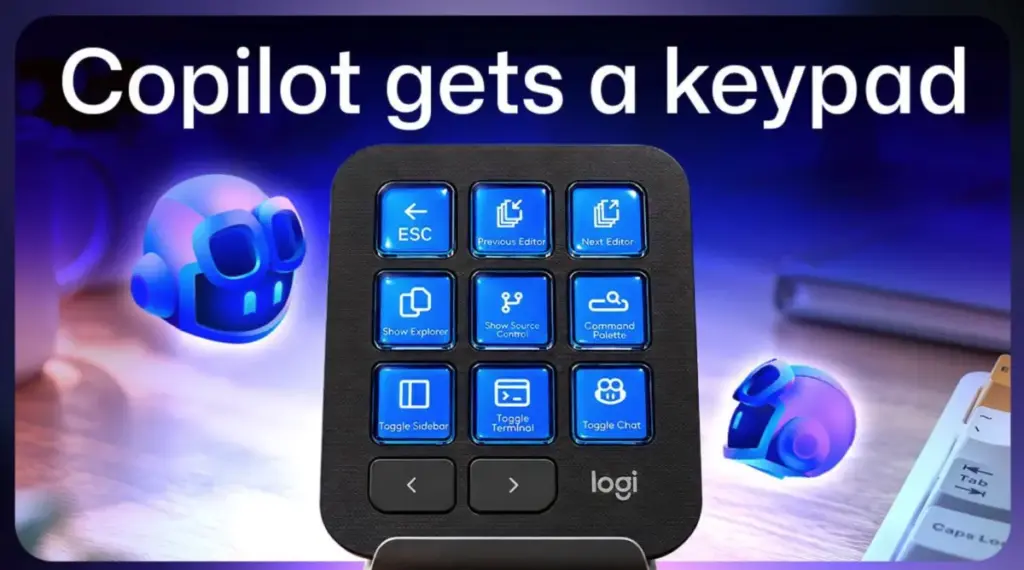
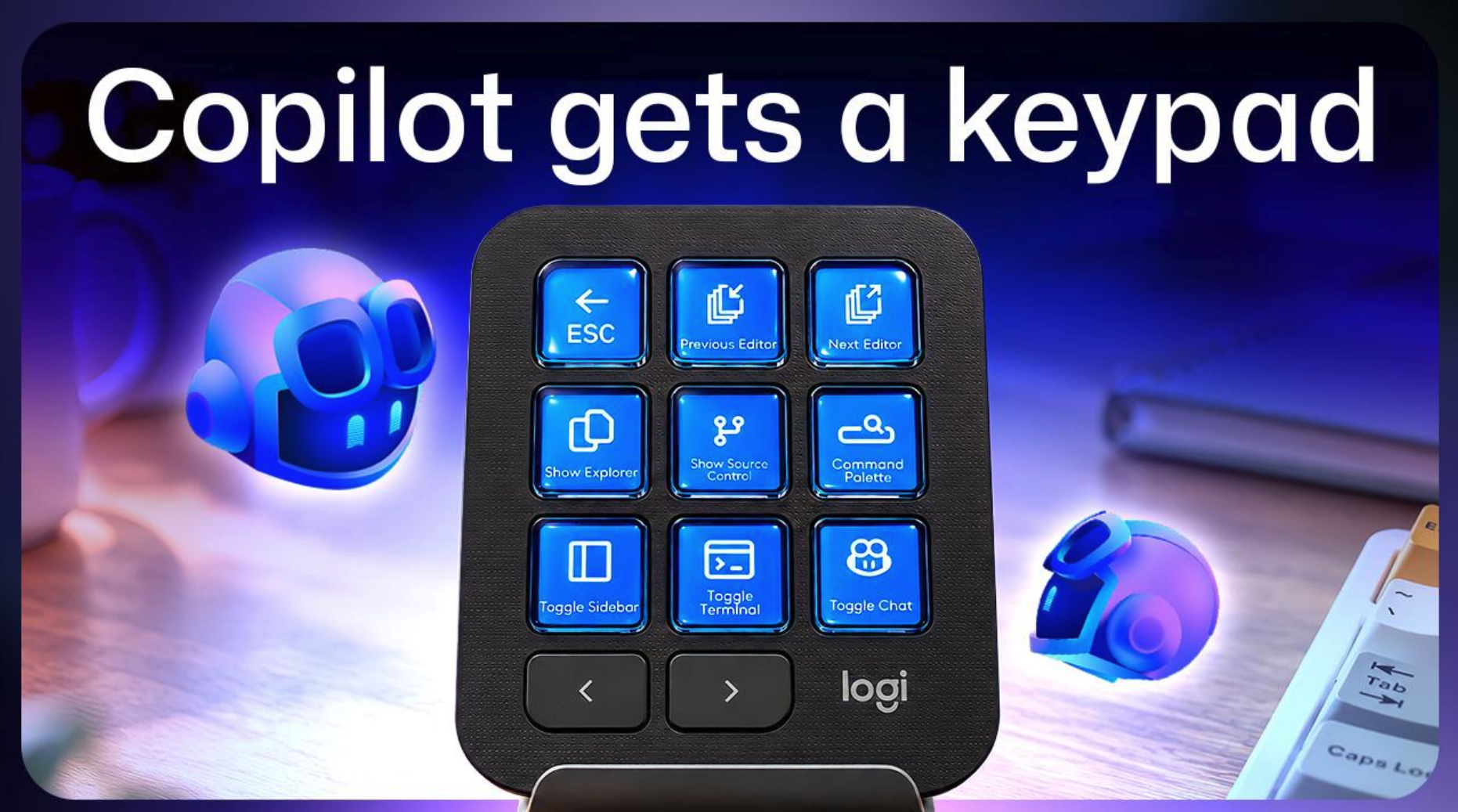
This desire for tactile interaction is what led to a collaboration between GitHub and Logitech, specifically regarding the MX Keypad. For the past 18 months, the two companies have explored how physical hardware can accelerate these new, ambient ways of working. The goal is to turn familiar developer actions into programmable inputs that are contextually aware.
With the GitHub Copilot app, a physical key can be mapped to submit a complex, parameterized prompt, resume a paused AI session, trigger an IDE command, or execute a multi-step workflow. The value of this hardware is not just in its novelty; it is in its ability to remove friction. When a developer performs an action frequently—such as triggering a specific test suite or summarizing a series of changes—removing even a few steps can help preserve cognitive focus. The physical interface is designed to be highly personal: the developer decides which actions are frequent enough to warrant a dedicated shortcut, and when the keyboard, the command palette, or voice input is the most efficient choice.
The Future of the Interface
The history of computing has always been a history of interfaces: the command line brought precision, the mouse brought intuitive navigation, the web brought connectivity, and mobile devices brought the natural touch. Agents, by contrast, are bringing intent and action to the forefront. The interface is now moving into the background.
By integrating the GitHub Copilot app directly into the Logitech MX Keypad experience, developers can now explore how to steer and resume agentic work without breaking their concentration. This is still the early stage of this evolution, and the engineering community is currently grappling with fundamental questions. How much organizational context should an agent retain? Which tool calls should be automated, and which require explicit sign-off? How should secrets, credentials, and network access be scoped to ensure security?
These are the questions that will define the next decade of software development. For now, the objective is clear: it is not to remove the developer from the work, but to strip away the friction that surrounds the work. As computers become better at meeting developers halfway, the best interface will not be the one with the most buttons or the most complex AI features. It will be the one that understands enough context to be useful, preserves the developer’s control, and eventually gets out of the way, allowing engineers to focus on what matters most—building software that solves real problems. For those interested in experimenting with this new workflow, the integration between the MX Keypad and GitHub Copilot Pro+ offers a practical, tangible way to see how physical controls can influence and improve the modern coding experience.