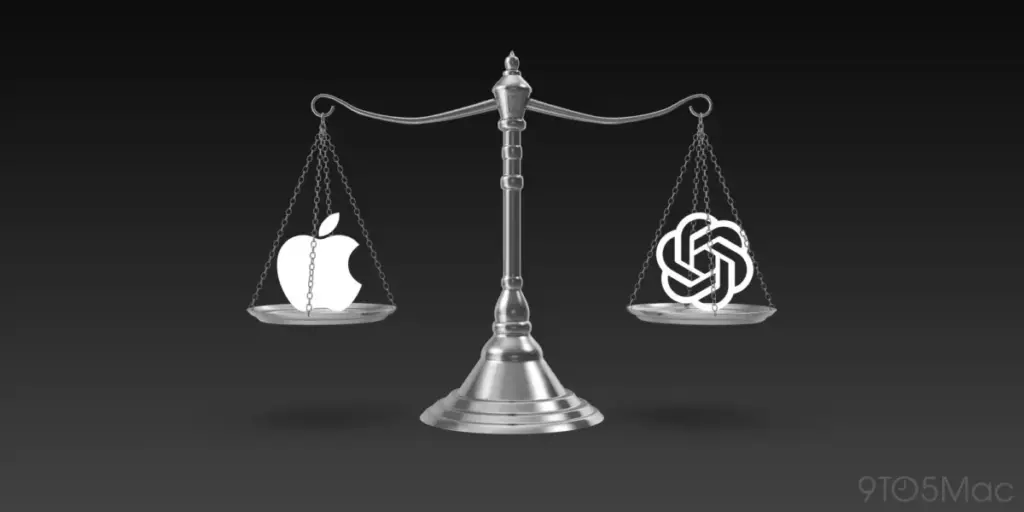
In a significant procedural development within the ongoing legal battle over alleged intellectual property theft, Judge Edward Davila has issued a ruling granting Apple partial approval for its request for expedited discovery. The decision marks a pivotal moment in the litigation filed by Apple against two of its former employees, Chang Liu and Tang Tan, as well as the artificial intelligence giant OpenAI and the hardware startup io Products.
The lawsuit, which centers on allegations of trade secret misappropriation, has pitted the Cupertino-based tech titan against some of its most prominent former talent and a key player in the generative AI space. As Apple seeks to protect its proprietary hardware research and development, the court’s decision to allow early access to specific evidence provides the company with a tactical advantage, even as the judge reined in some of its more expansive demands.
A Bit of Background: The Allegations Against Former Employees
The origins of this dispute trace back several months, when Apple initiated legal action against Liu and Tan. According to the original court filings, Apple alleges that these former employees improperly accessed and utilized highly confidential information concerning the company’s internal product development and technological advancements. The central concern for Apple is that this sensitive data was leveraged to assist OpenAI in its own ambitious consumer hardware development efforts.

Beyond the specific allegations against Liu and Tan, the lawsuit paints a broader picture of potential corporate overreach. Apple has accused the defendants of orchestrating a strategy to obtain proprietary information from other current Apple employees during the recruitment process. By allegedly soliciting confidential insights under the guise of job interviews, the defendants are accused of systematically harvesting trade secrets to bolster the competitive standing of OpenAI and io Products.
For Apple, the stakes are existential in nature. The company has long maintained a culture of extreme secrecy regarding its R&D pipeline, particularly as it navigates the competitive landscape of consumer hardware and AI integration. Consequently, Apple sought a preliminary injunction from Judge Davila, aiming to prevent the defendants from continuing to embed any allegedly misappropriated trade secrets into their ongoing hardware projects while the litigation moves through the court system.
To substantiate its claims and provide the necessary evidence for an injunction, Apple filed a motion for expedited discovery. This legal maneuver is designed to bypass the standard timelines of the discovery phase, allowing a plaintiff to access internal documents, forensic data, and witness testimony much earlier than typically allowed. Apple argued that such urgency is required to determine the full extent of the alleged misappropriation and to prevent further harm to its competitive position.

OpenAI, for its part, has consistently pushed back against these assertions. The company previously argued that Apple’s demands for expedited discovery were not only overly broad but fundamentally unnecessary. OpenAI maintained that the standard discovery process, which was already scheduled to begin, provided a sufficient framework for Apple to obtain the information it needed, rendering the request for special treatment redundant and burdensome.
Judge Partially Grants Apple’s Requests for Early Discovery
The ruling issued by Judge Davila today represents a middle ground that acknowledges the gravity of Apple’s claims while simultaneously protecting the defendants from what the court deemed to be excessive or poorly defined requests. The judge granted the majority of Apple’s motion, effectively compelling the defendants to produce specific categories of evidence.
Under the terms of the order, the defendants are now required to turn over a variety of documents and forensic evidence that Apple believes will illuminate the nature of the information exchange between the former employees and their new employers. This includes internal communications and technical files that are central to the core of the dispute.
Perhaps most significantly, Judge Davila authorized Apple to move forward with the depositions of Chang Liu, Tang Tan, and Yu-Ting “Alyssa” Peng. Additionally, the court has cleared the way for Apple to depose corporate representatives from both OpenAI and io Products. These depositions are expected to provide sworn testimony regarding the circumstances surrounding the recruitment of the former Apple employees and the subsequent development of hardware at the defendant companies.
However, the judge was careful to draw boundaries. Apple’s request for immediate access to OpenAI’s highly sensitive research and development documents—specifically those relating to metal finishes, power management systems, and battery functionality—was denied. Judge Davila determined that these requests were better suited for the regular, non-expedited discovery process. By categorizing these topics as part of the standard disclosure, the court has signaled that it will not allow Apple to use the expedited process to gain a broad, unchecked window into the core intellectual property of its rivals.
The Challenge of Defining "Apple Originated Information"
One of the most complex aspects of the hearing involved the legal definitions surrounding the data in question. Apple had requested information related to what it termed “Apple Originated Information.” In his ruling, Judge Davila expressed hesitation, characterizing Apple’s definition of the term as “amorphous as currently defined.”

The judge’s skepticism highlights the difficulty of litigating trade secret cases in the tech sector, where the lines between general industry knowledge, individual expertise, and proprietary company secrets can often blur. Because the court found the terminology to be too vague to serve as a basis for a binding discovery order, the judge has provided Apple with a five-day window to consult with the defendants and refine its definition. Should Apple fail to provide a more precise and defensible scope for this information, it risks losing the ability to compel the production of those specific documents.
The court also addressed the logistical parameters of the discovery process. The order outlines the specific deadlines for the production of documents and the timeline for conducting the authorized depositions. Furthermore, the judge clarified how these expedited depositions will factor into the broader limits imposed by federal discovery rules, ensuring that the litigation remains compliant with judicial standards even as the pace of the proceedings is accelerated.
As the case moves forward, both sides are now tasked with adhering to these court-mandated timelines. For Apple, the focus will shift to maximizing the utility of the documents and testimonies it is about to receive, hoping to find the "smoking gun" evidence necessary to secure a preliminary injunction. For OpenAI and the individual defendants, the challenge will be to comply with the court’s order while continuing to defend the legitimacy of their hiring practices and the independence of their hardware development programs.
The ruling is a clear indication that while the court is willing to facilitate a thorough investigation into Apple’s allegations, it will not grant the company carte blanche access to its competitors’ internal R&D files. With the next phase of the lawsuit set to commence, the coming weeks will likely see a flurry of legal activity as the parties prepare for the high-stakes depositions that will undoubtedly shape the future of this case. As it stands, the litigation remains a focal point for the tech industry, serving as a reminder of the intense scrutiny placed on the movement of talent and intellectual property between the world’s most powerful technology firms.