





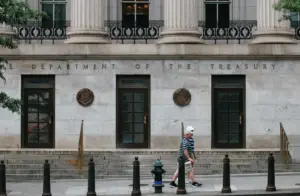






In a significant legal escalation that underscores the growing tension between traditional financial institutions and the burgeoning digital asset sector, the Independent Community Bankers of America (ICBA) has officially sued the Office of the Comptroller of the Currency (OCC). The lawsuit, filed in federal court on Friday, October 2, 2026, challenges the regulatory body’s authority to grant national trust-bank status to cryptocurrency firms, setting the stage for a high-stakes courtroom battle over the future of the U.S. banking system.
At the heart of the litigation is the ICBA’s assertion that the OCC has fundamentally overstepped its legal mandate under the National Bank Act. The trade association, which represents thousands of community banks across the United States, argues that the agency is effectively creating a "side door" into the nation’s core banking and payments infrastructure for digital asset companies. By facilitating these charters, the ICBA claims, the OCC is granting crypto firms the prestige and operational latitude of a federal bank charter without requiring them to adhere to the rigorous regulatory framework that governs traditional deposit-taking institutions.
The Competitive Disparity Argument
The ICBA’s grievance centers on what it characterizes as a "severe competitive disadvantage" for small, community-focused lenders. According to the complaint, these traditional institutions are bound by strict requirements regarding capital adequacy, liquidity, and operational oversight, and they are required to carry insurance through the Federal Deposit Insurance Corporation (FDIC). The ICBA contends that crypto-focused trust banks, while enjoying the credibility of a federal charter, do not operate under the same obligations.

"Congress did not create the national trust charter as a side door into the banking system for crypto firms seeking the credibility of a federal bank charter," said Rebeca Romero Rainey, President and CEO of the ICBA, in a statement following the filing. Romero Rainey emphasized that the disparity in regulatory treatment—specifically regarding capital, liquidity, and the absence of FDIC-insured deposit protections—creates an uneven playing field. For community banks, which rely on the stability and trust inherent in their deposit-taking business models, the encroachment of crypto-focused entities into the regulatory perimeter represents an existential threat.
The lawsuit is the latest manifestation of a broader, ongoing friction between the traditional banking lobby and the digital asset industry. The ICBA has consistently positioned itself as a guardian of the traditional banking model, previously playing a pivotal role in lobbying against the Digital Asset Market Clarity Act. That legislation, which failed to advance in the U.S. Senate last month, drew sharp criticism from the ICBA over concerns that its stablecoin provisions would fail to adequately protect community banks from direct competition with digital deposit-like products.
The OCC’s Regulatory Trajectory
The OCC, for its part, has maintained a policy of relative silence regarding the litigation. When approached by CoinDesk for comment on the lawsuit, an OCC spokesperson stated that the agency "does not comment on litigation," leaving the legal arguments to be fleshed out in the courtroom.
The agency’s recent track record, however, reveals a clear trend. The OCC has been actively granting a steady stream of trust charters to crypto-focused entities, a move that some financial analysts and regulators have credited with fueling a "resurgence in new banking names" following a period of stagnation in the banking sector. By providing a pathway for these companies to operate under federal oversight, the OCC has sought to integrate the rapidly evolving crypto industry into the established financial fold.

However, the nature of these entities differs significantly from that of a standard community bank. Crypto trust banks typically do not offer the traditional cash deposit accounts that are fundamental to retail banking and for which FDIC insurance is a mandatory component. Instead, these entities focus on services like digital asset custody, clearing, and settlement. The OCC’s argument, though not explicitly articulated in response to this lawsuit, has historically been that these charters are appropriate for firms whose business models are restricted to fiduciary services rather than general retail banking.
A Growing List of Entrants
The list of firms seeking and receiving these charters has grown increasingly prominent. The industry has seen a influx of applicants ranging from crypto-native firms like Protego and the recently conditionally approved Erebor, to industry giants such as Coinbase, Circle, and Crypto.com. These companies, having already established significant footprints in the global digital asset market, are now utilizing the OCC’s trust-charter pathway to solidify their presence within the U.S. regulatory environment.
The influx has not been without controversy. Beyond the structural concerns raised by the ICBA, the political optics of recent approvals have also drawn fire. The approval of a charter for World Liberty Financial, a firm partially owned by President Donald Trump and his family, has become a lightning rod for criticism. Senator Elizabeth Warren, a vocal advocate for tighter financial regulation, publicly condemned the move on the social media platform X, accusing the OCC of enabling potential corruption and providing the President’s family with a new, state-sanctioned vehicle for personal profit.
This climate of scrutiny was further intensified last month when the OCC granted a full-fledged national bank charter to OpenReserve Bank. As a blockchain-focused institution backed by major venture capital players including Andreessen Horowitz, Jump Capital, and Coinbase Ventures, OpenReserve represents the kind of sophisticated, well-funded entity that the ICBA views as a disruptive force against the traditional, community-based financial services model.
Implications for the Future of Banking
As the ICBA’s lawsuit moves through the federal court system, the outcome could have profound implications for the interpretation of the National Bank Act in the modern era. The court will be tasked with determining whether the OCC’s interpretation of its chartering authority is consistent with congressional intent or whether the regulator has indeed overstepped by allowing entities that lack traditional deposit-taking functions to access the federal banking system.
For community banks, the stakes are high. They argue that the current trajectory threatens to dilute the value of the federal charter and risks systemic instability if these new, technologically driven institutions are not held to the same rigorous standards of safety and soundness. For the crypto industry, the lawsuit represents a potential roadblock to the legitimacy and institutional integration they have been seeking for years.
As both sides prepare to argue their cases, the legal proceedings are expected to be closely watched by policymakers, industry participants, and banking regulators alike. The case serves as a focal point for a fundamental question currently facing the U.S. financial system: how to accommodate the rise of digital asset technology without compromising the stability and equitable regulatory environment that has historically defined the national banking landscape. Whether the courts will uphold the OCC’s current approach or force a recalibration of the federal chartering process remains to be seen. In the meantime, the ICBA’s move ensures that the debate over the role of crypto in the U.S. banking system will be played out in a formal, adversarial, and high-stakes environment.