










The transition from a functional AI prototype to a production-grade application is a hurdle that has long challenged software developers. While initial experiments with AI agents are often straightforward, scaling them to handle complex, multi-step workflows that may span hours or even days requires a robust, specialized infrastructure. Today, Amazon Web Services is addressing these challenges directly by announcing "runtime instances," a new, complementary compute option within the Amazon Bedrock AgentCore Runtime. This update is designed to provide developers with persistent, managed infrastructure specifically engineered to handle the demands of complex agent-based workloads.
Previously, Amazon Bedrock AgentCore provided runtime microVMs, which offer a fully managed environment for invocations lasting up to eight hours, complete with stateful workflow support through managed session storage. While these microVMs remain an excellent choice for many use cases, they are not always sufficient for workloads that require continuous operation over several days, access to GPU acceleration, or deep integration with the underlying operating system. The introduction of runtime instances bridges this gap, allowing teams to deploy multiple agents within a single, unified runtime environment.
Bridging the Gap Between Prototyping and Production
The primary value proposition of these new runtime instances is the shift toward managed, persistent infrastructure. By utilizing AWS-managed EC2 instances, developers can now deploy multiple agents that share a host, enabling them to collaborate effectively within sessions that can persist for up to 14 days. This capability is particularly significant for teams managing sophisticated agent architectures that require direct interaction with specialized hardware. By supporting GPU acceleration, the service caters to compute-intensive tasks, while features like session stop and restart allow organizations to manage costs effectively during periods of inactivity.
For many developers, the "heavy lifting" of infrastructure management—such as provisioning EC2 instances, configuring complex networking, managing session states, and scaling resources—has been a significant bottleneck. With runtime instances, Amazon Bedrock AgentCore automates these processes. Developers can now rely on the same familiar APIs, identity controls, and observability tools they have already integrated into their existing AgentCore workflows, ensuring a seamless transition from the lighter, short-term microVM environment to the more robust, long-term runtime instances.

Furthermore, the integration with existing services like Amazon Elastic Block Store (Amazon EBS) and AgentCore Memory ensures that agents can maintain long-term recall. This is crucial for applications that need to retain knowledge beyond the lifespan of a single session, effectively allowing agents to "remember" their experiences across different environments and timeframes.
Empowering Autonomous Agent Collaboration
One of the most compelling aspects of this announcement is the newfound ability for agents to act as tools for one another within a shared session. Because these agents operate on the same host, they can iterate autonomously until a job is completed without the need for constant, external orchestration. This flexibility is largely framework-agnostic; developers can continue to use their preferred tools, such as CrewAI, LangGraph, LlamaIndex, or Strands, while maintaining the freedom to choose any model that fits their specific requirements.
The deployment process has been streamlined to minimize friction. Developers need only use an @app.entrypoint decorator and package their code into a simple zip file or container image. This low-overhead approach allows teams to ship independently and rapidly. Moreover, for workflows that span multiple days, the system supports a hibernate function, allowing developers to pause operations overnight and resume precisely where they left off, with the session state fully intact.
The relationship between runtime microVMs and runtime instances is designed to be complementary. In a typical production architecture, a developer might employ a lightweight orchestrator agent running on a microVM to handle API calls, task routing, and the aggregation of results. This orchestrator can then dispatch specific, compute-heavy tasks to worker agents running on runtime instances. This hybrid approach leverages the rapid, cost-effective scaling of microVMs for management, while utilizing the persistent, GPU-backed power of runtime instances for intensive tasks like security scanning, code compilation, or complex GUI automation.
Real-World Application and Collaborative Workflows
To illustrate the practical utility of this new infrastructure, consider a scenario involving a code-generation pipeline. A developer might deploy a "code writer" agent, tasked with generating Python modules based on natural language prompts, alongside a "code reviewer" agent, which analyzes the generated output for potential bugs, security vulnerabilities, and adherence to style guidelines.
By leveraging the shared file system provided by runtime instances, these two agents can operate in tandem with remarkable efficiency. When the writer agent produces a Python file, it saves it to a shared directory. Because the reviewer agent is running on the same host, it can immediately access that file without the need for complex data transfers or additional API overhead. The reviewer then provides a detailed analysis, identifying improvements such as type hints or input validation, all within the context of a single, shared session.
This pattern is highly extensible. A single session could involve a chain of specialized agents: a writer to create the code, a reviewer to audit it, a test agent to execute it, a security scanner to check for vulnerabilities, and a documentation agent to generate supporting materials. Because they all share a common working directory and session state, the complexity of data management is drastically reduced.
Infrastructure Management and Deployment
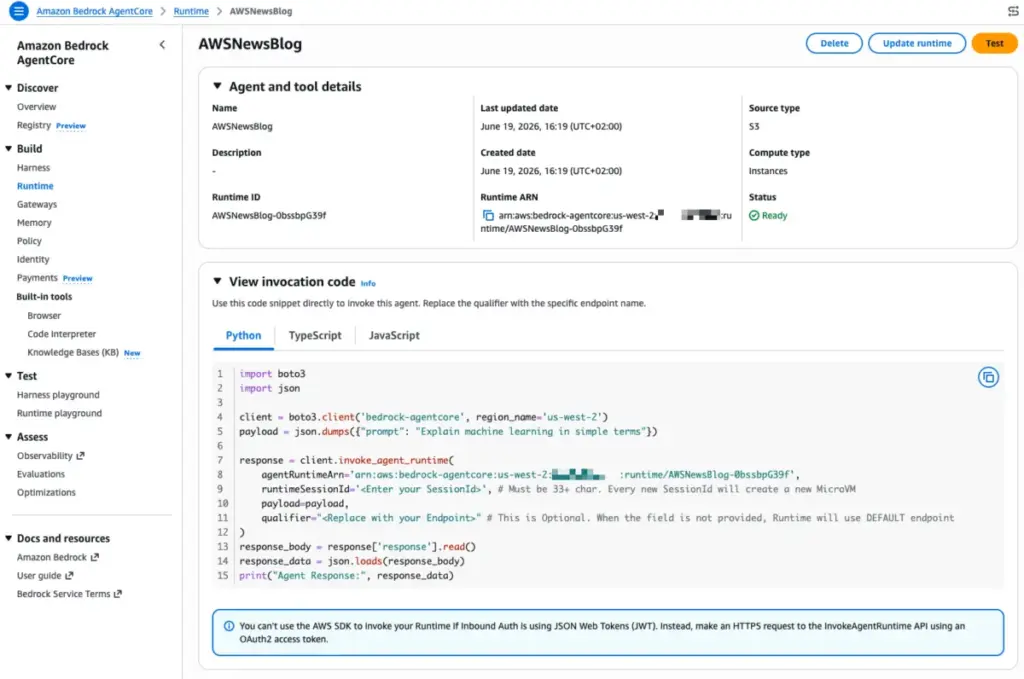
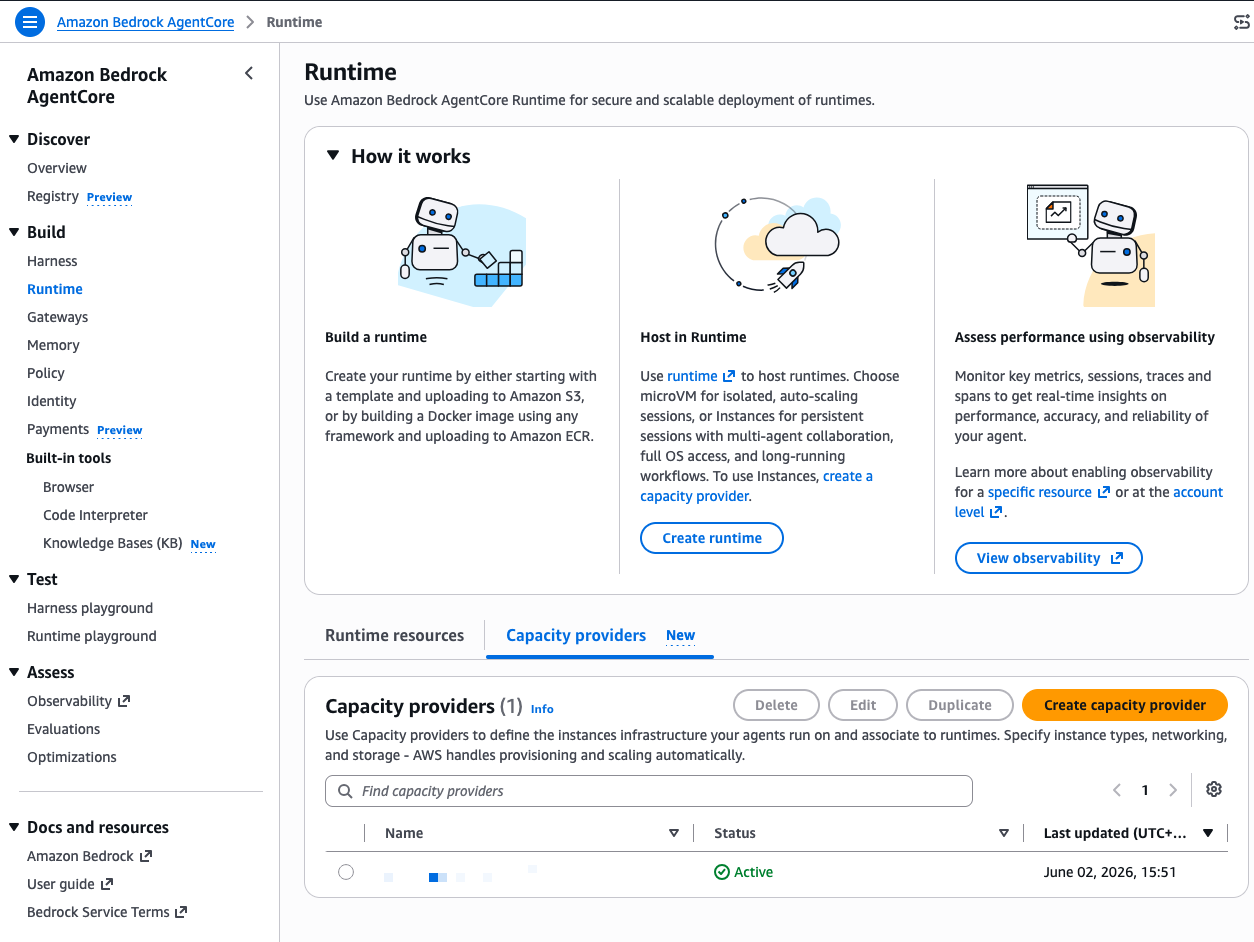
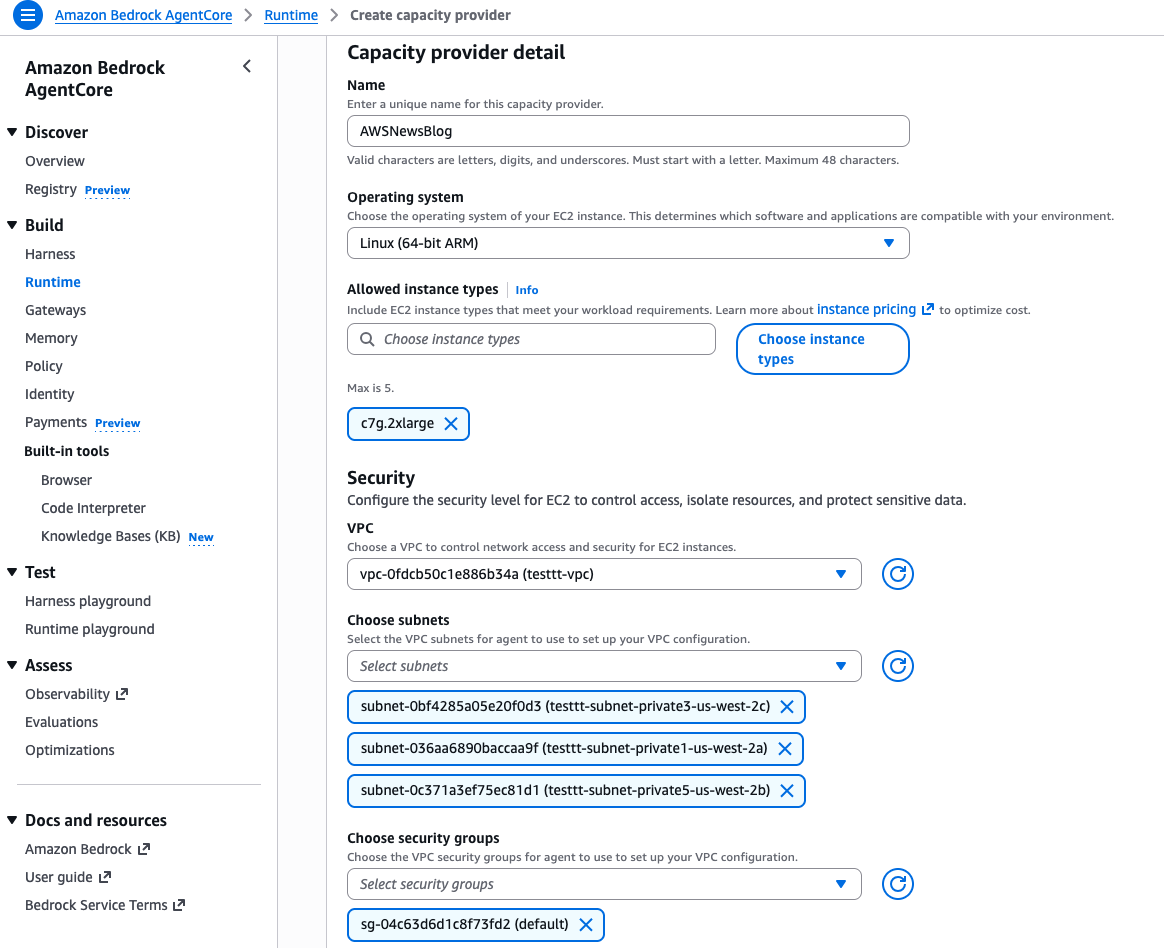
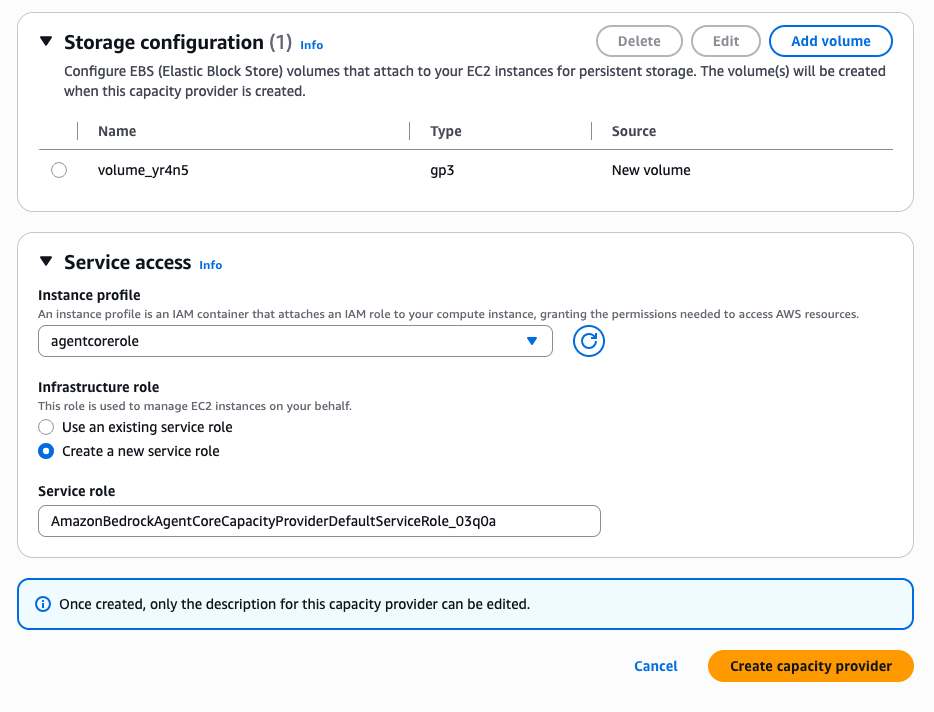
The process for deploying these agents through the AWS Management Console is designed to be intuitive. After creating a capacity provider—which defines the underlying EC2 infrastructure—developers can select their desired operating system and instance type, such as the c7g.2xlarge for ARM-based performance. Once the infrastructure is configured with the necessary VPC and security settings, the runtime environment is established.
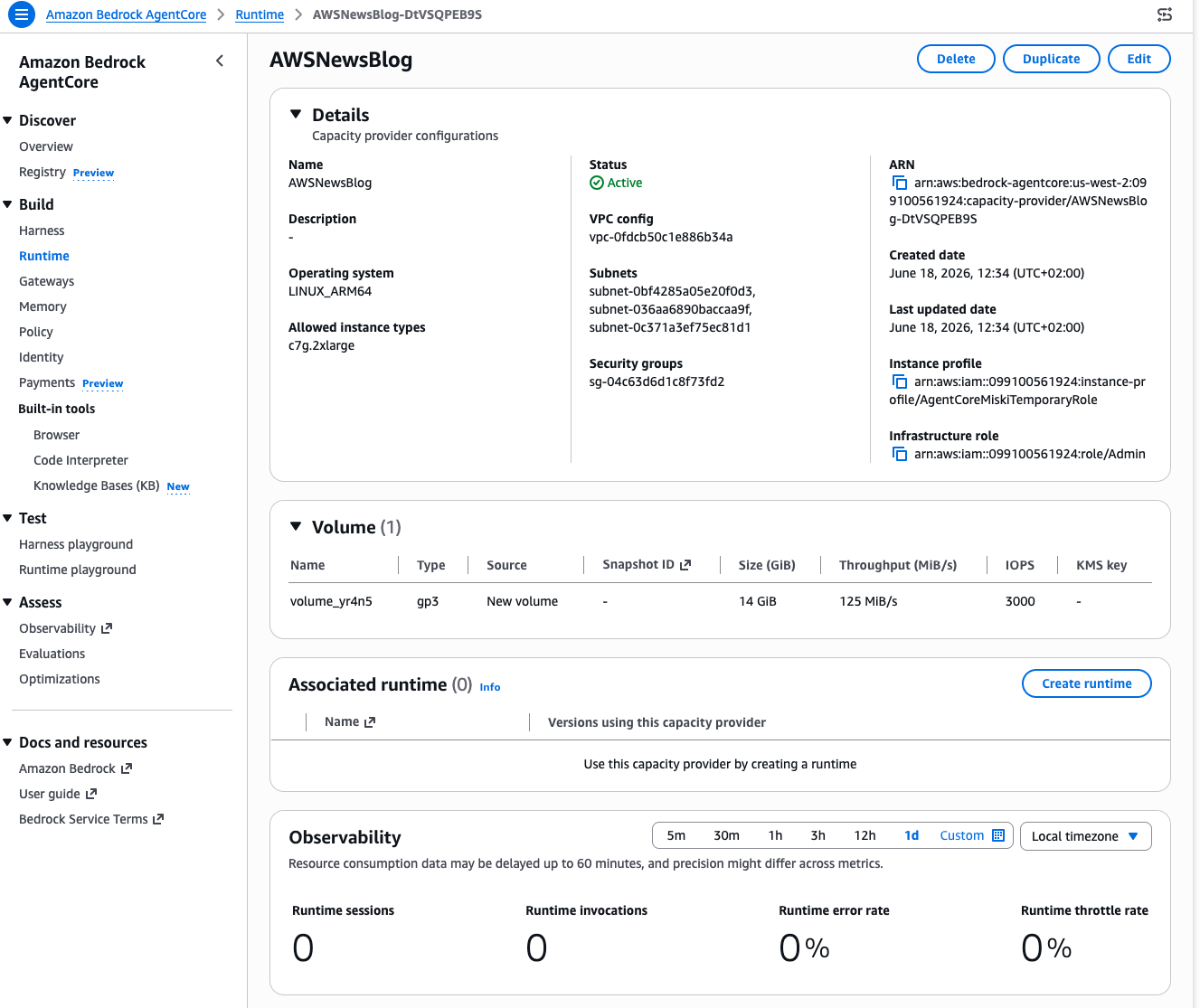
Uploading the agent code is straightforward: once the zip file is uploaded and the language runtime is specified, the system handles the provisioning of the necessary IAM roles and environment configurations. From there, testing is facilitated through a built-in playground that allows developers to simulate invocations, manage session IDs, and monitor output in real-time. By pasting the same session ID across different agent configurations, developers can trigger the collaborative behavior described earlier, observing how agents pass information through the shared filesystem.
As the AI landscape continues to evolve, the ability to manage state and persistent infrastructure becomes a competitive necessity. By providing a managed, scalable, and flexible environment for long-running agentic tasks, Amazon Bedrock AgentCore is positioning itself to support the next generation of complex, autonomous applications. The integration of these tools into the broader AWS ecosystem provides developers with a reliable path toward moving their AI agents from the lab to the real world, ensuring that even the most intricate multi-step workflows can be handled with the reliability and security expected of enterprise-grade software. For those looking to get started, the latest documentation on Amazon Bedrock provides comprehensive details on configuring capacity providers and deploying these new runtime instances.