










The latest iteration of Apple’s flagship portable, the MacBook Pro with the new PROLED XDR Display, has finally been put under the proverbial microscope. In a comprehensive teardown released today, the repair experts at iFixit have dismantled the machine to uncover the engineering marvels behind its most talked-about features: the return of the iconic illuminated Apple logo and the implementation of a cutting-edge tandem OLED panel. The teardown offers a rare glimpse into how Apple has managed to pack advanced display technology into a thinner, lighter chassis without sacrificing the structural integrity users have come to expect from the professional line.
iFixit Reveals Illuminated Apple Logo Details
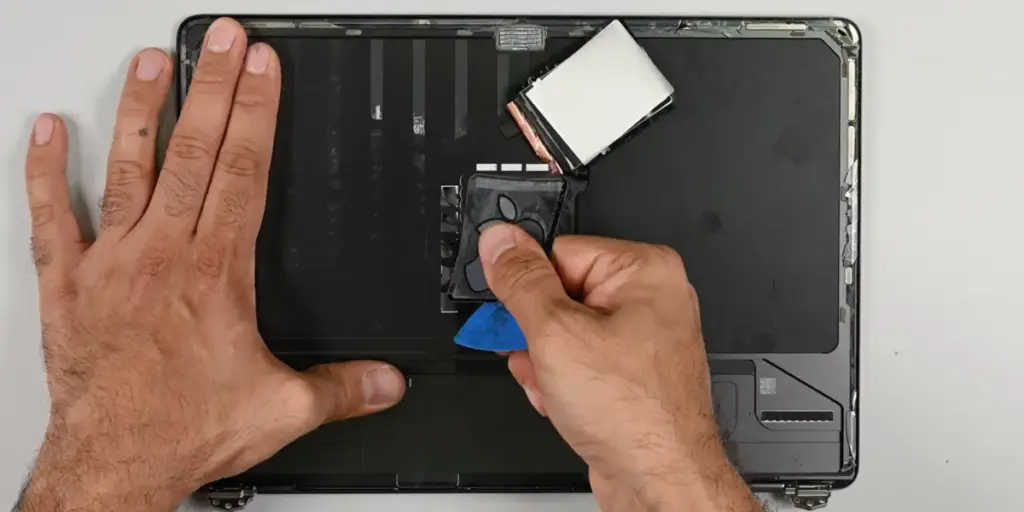
For years, Apple enthusiasts lamented the removal of the glowing lid logo, a signature aesthetic element that defined the MacBook silhouette for over a decade. The new MacBook Pro marks its triumphant, albeit technologically complex, return. As iFixit discovered, bringing the logo back was not a simple matter of swapping a panel. Accessing the component proved to be one of the most challenging aspects of the teardown; in their attempt to reach the mechanism, the iFixit team inadvertently destroyed the primary OLED panel, highlighting just how tightly integrated and delicate the lid assembly has become.
Once the team successfully navigated the internal housing, they revealed that the logo is powered by a dedicated strip of four high-efficiency LEDs. These are paired with a sophisticated light-diffusing layer and a reflective backing designed to ensure the light is distributed uniformly across the Apple icon. Perhaps most interesting is the treatment of the logo itself: it features a specialized two-way mirror coating. When the laptop is powered down or the LEDs are inactive, the logo retains a sleek, polished, metallic appearance. However, when the system is active, the coating allows the light from the LEDs to pass through, creating that familiar, soft glow.


Beyond the aesthetics of the lid, the teardown provides a deep dive into the PROLED XDR Display technology. This "tandem" OLED configuration stacks two distinct light-emitting layers. By utilizing this dual-layer approach, Apple is able to achieve peak brightness levels that would typically cause a standard single-layer OLED to degrade prematurely. Under a microscope, iFixit’s analysis revealed that the blue subpixels are noticeably larger than their red and green counterparts. This is a deliberate engineering choice; blue organic materials historically have a shorter lifespan than other colors. By increasing the physical size of these subpixels, Apple reduces the current density required to achieve the same level of brightness, thereby mitigating material strain and extending the overall longevity of the display.
Structural Efficiency and Weight Reduction
One of the most impressive feats achieved with this generation of the MacBook Pro is the reduction in weight. Despite the addition of a touch-capable display layer and the hardware required for the illuminated logo, the laptop has shed significant mass. The standard 14-inch model now weighs in at 3 pounds (1.38 kg), down from 3.4 pounds (1.55 kg) in its predecessor.
iFixit’s component-level breakdown explains where those savings originated. The chassis itself was lightened by approximately 92 grams, while the display assembly—even with its complex tandem OLED and lighting system—contributed a 101-gram reduction. Smaller adjustments were found throughout the machine, including a slightly more compact trackpad that shaved off another 8 grams, and a battery that is 2 grams lighter than previous iterations. This focus on weight distribution and material efficiency suggests that Apple’s engineering teams are increasingly prioritizing portability alongside raw performance.

Repairability and Logic Board Constraints
While the hardware innovations are impressive, the teardown also serves as a reminder of the challenges inherent in modern laptop design. iFixit noted that, despite some modularity in internal components, the overall repairability of the device remains constrained by Apple’s design philosophy. For example, replacing the fans or the USB-C ports still necessitates the removal of the entire logic board. This adds significant complexity and risk for any technician or user attempting a repair, as the logic board is the heart of the machine and is connected to a vast array of sensitive, permanent components.
The connectivity suite remains a point of contention for those who advocate for greater user-serviceability. The HDMI port, the SDXC card reader, and the system’s RAM and storage remain permanently soldered to the main logic board. This design choice effectively prevents any post-purchase hardware upgrades, cementing the configuration chosen at the time of sale.
However, there is progress in the realm of software-locked components. In previous years, swapping a logic board between two identical MacBook models would often trigger a cascade of issues with Apple’s "Repair Assistant," rendering features like Touch ID unusable or disabling display functions. The new model shows a marked improvement in this regard. During their testing, iFixit successfully swapped logic boards between two MacBook Pro units and found that the system recognized the battery, display, and Touch ID sensor without the software failures seen in the M5 generation. The team was even able to enroll a new fingerprint with a donor logic board, and features such as True Tone and brightness controls functioned exactly as expected. This suggests that Apple may be relaxing the strict "parts pairing" software restrictions that have historically hindered third-party repair efforts.

Final Assessment: A Score of 5 out of 10
Following the completion of the teardown, iFixit assigned the new MacBook Pro with PROLED XDR Display a repairability score of 5 out of 10. While this remains in the middle-of-the-road territory, it is an improvement over the M5 MacBook Pro, which scored a 4. Interestingly, it sits just one point below the MacBook Neo, which remains the high-water mark for recent Apple laptop repairability.
The score reflects a duality in Apple’s design approach: while the company is clearly making strides in software-assisted component replacement, the physical architecture remains highly consolidated. The use of strong adhesives, the integration of critical ports into the logic board, and the extreme fragility of the new tandem OLED display assembly ensure that professional-grade tools and expertise are still required for almost any internal maintenance.
For those interested in seeing the process firsthand, iFixit has documented the entire endeavor on video. The teardown provides a fascinating look at the interplay between form and function, demonstrating how the pursuit of a thinner, more vibrant display and a nostalgic design feature like the illuminated logo continues to push the boundaries of what is possible in portable computing. As the industry moves toward more complex display technologies, the insights gained from such teardowns become increasingly vital for understanding the longevity and sustainability of our personal technology.

For a more comprehensive look at the user experience, including how these internal changes translate to daily performance, you can refer to the full review of the new MacBook Pro with PROLED XDR Display. As Apple continues to iterate on its hardware, the conversation between design innovation and repairability remains a central theme, one that will undoubtedly continue as these devices make their way into the hands of users worldwide.