The vibrant open source community is currently hard at work behind the scenes on something entirely new. Regular visitors to Opensource.com may have recently noticed a distinct quietness across the platform. That noticeable pause in publishing is due to a new project currently in the works. While specific details regarding the upcoming initiative are still under wraps and not yet ready for a formal public announcement, there is already plenty to discuss about the philosophy, history, and human connections driving this next chapter.
To understand where the platform is heading and why this upcoming transition matters so much to the people who use it, it helps to start right at the beginning—with the entire internet, the way it was built, and the foundational architecture that connects billions of people every single day.
The internet, and top-level domains
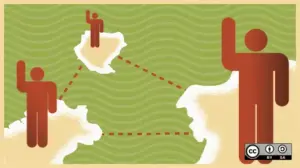
Most people who interact with digital technology on a daily basis know that the internet is, fundamentally, a network. By definition, a network is a group of interconnected connections. In fact, the very term "internet" is a portmanteau combining the concepts of "interconnected" and "network." The internet is a massive, global network of interconnected networks.

Historically, the modern internet originated from just two primary networks: the military network and the academic network. In those early days, the user base was small, highly specialized, and shared a common set of goals and operational parameters. However, once the internet began to gain popularity and expand far outside those initial military and academic groups, it quickly became apparent that different designations were desperately needed.
As commercial entities, charitable organizations, universities, and governmental departments began coming online, a way to easily categorize and differentiate them became essential. These crucial designations are known as top-level domains, commonly referred to as TLDs. Today, there is a vast and sometimes dizzying array of TLDs available to web architects and domain purchasers, ranging from industry-specific extensions to geographic indicators.

However, for a long time during the formative years of the web, there were only a handful of these top-level domains available. Those original TLDs remain remarkably popular, trusted, and recognizable today. Most internet users know instinctively that when they navigate to an address ending in .com, they are visiting a commercial site. Conversely, when they visit an address ending in .org, they understand they are accessing the website of a non-profit organization or public interest group. These suffixes were designed to reflect the underlying nature of the entity operating behind the screen.
Open source is a network
Just as the internet itself is built upon a structure of interconnected networks, open source technology can represent many different things depending on the context, the application, and the participants. Open source can be commercial, serving enterprise markets and driving billion-dollar industries. It can be non-profit, supporting public goods and digital infrastructure. It can be academic, powering research institutions and scientific breakthroughs. It can also be deeply cultural, shaping how creators, artists, and writers share their work with the world.
Yet, no matter what specific form open source takes in any given instance, it is fundamentally and always a network. Sometimes, that network consists of computers communicating via protocols, sharing code repositories, and distributing software updates across continents. But most importantly, and at its very core, open source is a network of people.
Whether community members are gathering together in person at a massive international technology conference, catching up informally at a local pub, or collaborating asynchronously in an online chat room, open source is, above all else, a community of human beings working toward shared goals. It is driven by collaboration, shared knowledge, and a collective desire to build better tools for everyone.
The website Opensource.com has proudly occupied a unique space within this broader ecosystem, having been supported by a commercial entity for the past 12 years. Throughout that extended period, the platform has served as a central hub for publishing stories, tutorials, and perspectives on creating, adopting, and sharing open source solutions.

However, there is a distinct difference between the infrastructure of a website and the community that breathes life into it. The people—representing the readers, contributors, writers, and advocates that make up the vibrant Opensource.com community—are not commercial entities. They are individual human beings, bound together by a shared passion for open principles, transparency, and collaborative technology.
Now, after more than a decade of consistency, that relationship is evolving. In just one month, Opensource.com is going to resolve that operational gap, marking the beginning of a fresh chapter for the platform and its loyal readership.
For those who have followed the journey of the site and its community over the years, the coming weeks promise new developments as the details of the new project finally come to light. Until then, the community continues to look forward, staying connected through the very human networks that made open source a global movement in the first place. Stay tuned for further updates as the transition approaches.