








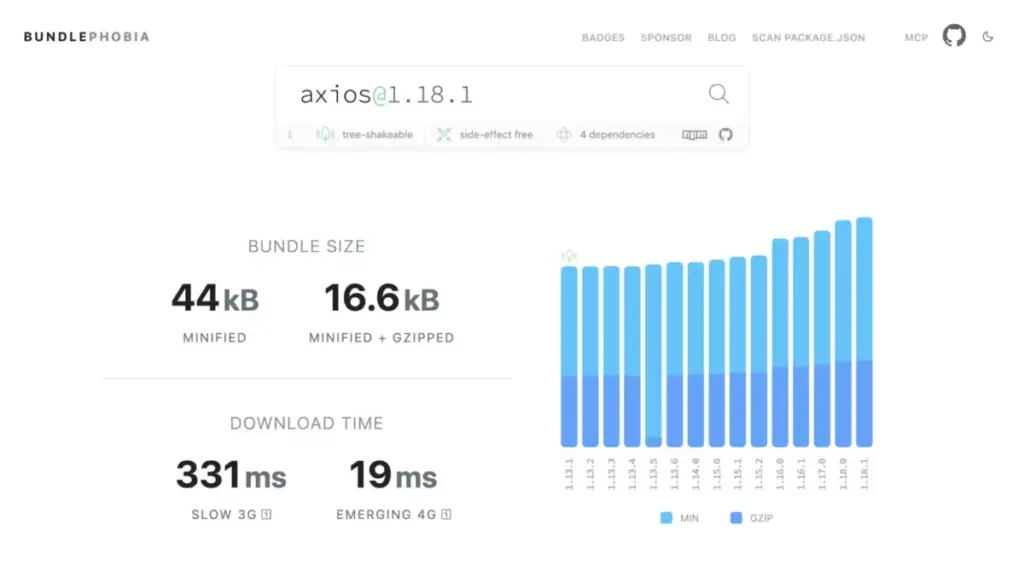
The traditional divide between needing an external library for common web development tasks and relying on native browser capabilities continues to narrow significantly. Recent technological shifts demonstrate that a surprising number of dependencies residing quietly inside modern applications’ package.json files are now built directly into the web platform. Industry analysts and front-end developers point out that typical mid-sized JavaScript applications frequently harbor between 60KB and 90KB of minified and gzipped dependencies that modern browsers can now handle natively.
Tasks such as date and number formatting, HTTP requests, interactive modals, tooltips, deep cloning, and array grouping once represented genuine development gaps requiring specialized packages. Today, a vast majority of those gaps have closed. Despite this rapid evolution, these external libraries often persist within codebases. This persistence rarely stems from developer laziness, but rather from the reality that most engineering teams fail to re-audit their dependencies on a regular Baseline cadence or remain unaware of the rapid pace at which modern browsers ship new native features.
Engineering organizations routinely run automated security audits for vulnerabilities, yet they rarely ask whether a particular library continues to perform functions that the underlying browser cannot handle on its own. Consequently, legacy code remains bundled into production deployments. Industry experts advocate for a systematic approach to auditing dependencies in functional clusters rather than evaluating them in isolation, allowing development teams to calculate bundle math accurately, weigh platform limitations, and establish a repeatable maintenance process.

Understanding the Baseline Standard
Before removing dependencies, developers must evaluate feature safety across major browsers including Chrome, Edge, Firefox, and Safari using the Baseline standard established by the WebDX Community Group. A feature’s progression moves from initial implementation to widespread availability over a multi-month or multi-year window. This transition period dictates whether a native browser feature can safely replace an external library immediately or whether it requires careful audience verification.
Engineers can verify the status of any web platform feature through dedicated status portals, developer documentation reference badges, or programmatic checks. While widely available features can generally replace external packages immediately, newly available features require a closer examination of user demographics and target audience profiles to ensure seamless compatibility without unintended regressions.

Establishing a Rigorous Decision Framework
Adopting the philosophy that browsers can handle more native tasks should not lead to reckless deletions. Swapping out a dependency without proper analysis can quietly break functionality for specific segments of users or strip away auxiliary features that an application relies upon. Before removing any library, engineering teams must weigh three critical questions regarding audience safety, the actual cost of replacement alternatives, and whether native features cover specific use cases.
A native platform feature might lack widespread support, forcing developers to introduce a polyfill. If that polyfill exceeds the weight of the original library, the overall bundle size increases unless the resource is loaded conditionally. Furthermore, external libraries frequently offer broader feature sets than their native counterparts. For instance, robust HTTP clients provide request interceptors, cancellation tokens, and automatic retries that basic platform primitives do not handle implicitly.
Internationalization and the Largest Immediate Wins
Internationalization clusters typically yield the most substantial reductions in bundle size because browsers now ship a robust family of formatting tools natively under the global namespace. Formatting tools that once required third-party installations for relative time calculations, number formatting, currency adjustments, and list joining are now supported by widely available native application programming interfaces.
Relative time formatting, which transforms timestamps into localized phrases such as hours or days ago, is fully supported across modern browser engines. Similarly, native number formatting covers thousands separators, currency symbols, percentages, and compact notations without external overhead. Array joining utilities that handle complex grammatical structures and conjunctions are likewise integrated directly into modern web runtimes, rendering numerous legacy formatting packages redundant.
Evaluating HTTP Clients and Network Requests
While internationalization libraries offer straightforward removal opportunities, network request dependencies require more nuanced evaluation. Popular HTTP utilities provide developers with convenient abstractions, automatic JSON parsing, and streamlined request configurations. Although native fetching mechanisms require explicit handling of response parsing, they offer robust timeout controls and cancellation signals out of the box.

Replacing comprehensive HTTP libraries with native fetching wrappers requires developers to verify whether their applications depend on advanced features like request interceptors, global error handling, or automated retries. For applications utilizing basic retrieval and submission methods, migrating to native request mechanisms can eliminate significant weight from production bundles while reducing external maintenance overhead.
UI Primitives and Accessible Platform Components
User interface development has experienced some of the most satisfying native migrations, as modern platform features not only match external libraries but frequently provide superior accessibility defaults. Modal dialogs, focus trapping utilities, background scroll locking mechanisms, and tooltip positioning helpers can now be replaced by native dialog elements, popover architectures, and CSS anchor positioning rules.
The native dialog element automatically manages accessibility concerns by trapping focus within the modal, listening for escape key closures, restoring focus upon dismissal, and rendering content above the page hierarchy within the browser layer. Combined with simple styling rules for background overflow control, a single native element can replace multiple external dependencies while delivering more reliable behavior across devices.
Popover application programming interfaces and anchor positioning specifications similarly streamline dropdown menus and floating panels. By leveraging these native capabilities, developers eliminate the need for heavy third-party positioning libraries, resulting in significantly lighter bundles and improved rendering performance.
Utility Libraries and Data Structures
Utility libraries, particularly modular collections of helper functions, frequently find their way into modern codebases. However, native JavaScript runtime environments have progressively absorbed these capabilities. Array grouping operations, deep object cloning functions, and complex set operations such as intersections, unions, and differences are now natively supported.

Native deep cloning utilities correctly handle complex data types including dates, maps, sets, and circular references, though they maintain specific limitations regarding functions and class prototypes. Meanwhile, native set operations provide high-performance mathematical evaluations directly within the runtime environment. While certain utility functions like debouncing and throttling lack native equivalents and remain worth retaining, cherry-picking native alternatives allows teams to discard substantial portions of legacy utility code.
Managing Transitions and Future Platform Additions
While many dependencies can be safely removed today, certain emerging standards require a cautious approach. Highly anticipated platform upgrades, such as advanced chronological timekeeping specifications, offer vastly improved developer experiences but may lack universal stability across all target browsers during initial rollouts. Introducing heavy polyfills to support these features prematurely can inadvertently increase bundle sizes rather than reducing them.
Engineering teams are encouraged to conduct regular, quarterly audits of their production dependencies by leveraging bundle analysis tools, verifying platform feature statuses, and applying progressive enhancement strategies where necessary. By systematically evaluating production codebases against modern browser capabilities, development organizations can continually reduce bundle sizes, improve application performance, and return unnecessary operational weight back to the web platform.