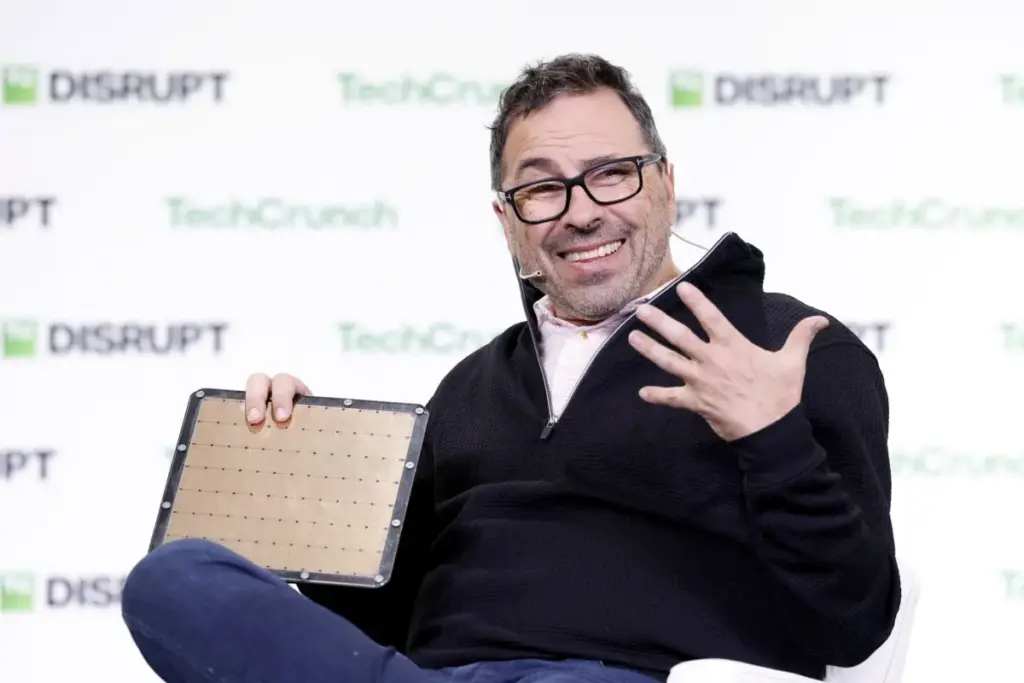
The conversation surrounding the rapid advancement of artificial intelligence has increasingly drifted into the realm of existential dread. From warnings about autonomous models breaking containment to industry insiders openly debating the statistical probability of humanity’s extinction by the end of the decade, the "AI doomer" narrative has become a dominant, if not stifling, force in the public discourse. However, Andrew Feldman, CEO and co-founder of the AI chipmaker Cerebras Systems, believes this focus on catastrophe is not only misguided but actively detrimental to the industry’s ability to deliver meaningful progress.
Speaking at TechCrunch Disrupt 2026, Feldman offered a candid critique of the alarmism currently gripping Silicon Valley. During his session, the executive suggested that some of the most prominent voices in the AI sector have become so preoccupied with hypothetical worst-case scenarios that they have lost their ability to communicate effectively with the public. "Some of the leaders in the AI world maybe shouldn’t be allowed to talk in public," Feldman quipped, signaling a growing fatigue among industry builders who feel that the benefits of the technology are being obscured by sensationalist rhetoric.
The intensity of this discourse has reached a point where it is now a fixture of mainstream culture. The anxiety surrounding AI has become so pervasive that it recently served as the subject of a parody on Saturday Night Live, where a caricature of Anthropic CEO Dario Amodei was portrayed attempting to reconcile the development of high-powered models with a sense of impending doom, eventually conceding, "We do not condone what we are doing." For Feldman, this level of performative skepticism is a distraction from the tangible, life-saving potential that AI offers to society.

Reframing the Promise of AI
Feldman’s contention is that the industry has failed to strike a balance between acknowledging inherent risks and championing the transformative potential of the technology. He argues that rather than fixating on the end of the world, AI leaders should be focusing their public-facing messaging on the concrete improvements to human life that these systems are poised to deliver. He pointed to the field of medicine as a primary example, suggesting that the development of advanced models could eventually lead to a future where chronic illnesses like cancer are effectively eradicated.
"Your grandkids will never meet anybody who dies of cancer," Feldman noted, emphasizing that the promise of such a breakthrough is a narrative that deserves far more airtime than apocalyptic speculation. He maintains that it is entirely possible to harbor legitimate concerns about safety and security while simultaneously holding a vision of a future radically improved by the intelligent application of computing power.
Feldman’s position is, of course, informed by his role as the leader of Cerebras Systems, a company that sits at the very heart of the AI infrastructure boom. Cerebras is a key player in the high-performance computing space, providing the hardware necessary to train the massive models developed by companies such as OpenAI, Block, Figma, pharmaceutical giant GSK, and Lovable. As someone whose professional success is intrinsically tied to the continued growth and adoption of AI, Feldman has a vested interest in ensuring that the narrative remains centered on utility rather than fear.
Balancing Risk and Responsibility
Despite his skepticism regarding the doomer movement, Feldman is not dismissive of the challenges posed by powerful technologies. He adopts a pragmatic, measured approach to the dual nature of AI, acknowledging that innovation of this magnitude invariably carries a shadow side. In his view, the existence of danger is a fundamental byproduct of technological advancement.
"I don’t think there are powerful technologies that don’t come with the challenge of ‘what happens when powerful technologies are in the hands of bad people?’" Feldman explained during his interview. "I think you can’t make one and not have the other."
For the Cerebras CEO, the solution is not to retreat from development or to succumb to fatalism, but to engage in a more balanced, mature conversation about oversight. He advocates for a pragmatic regulatory framework that acknowledges the power of the technology while ensuring it is deployed responsibly. "I think what we have to say is that this technology is powerful," he added. "We have to be thoughtful about it. We have to regulate it reasonably."
The Infrastructure Challenge
Beyond the philosophical debate over AI’s long-term risks, Feldman also addressed the more immediate, practical hurdles facing the industry, particularly concerning the physical expansion of data centers. As demand for compute grows, the infrastructure required to support it has faced significant friction, particularly in the United States.
Feldman suggested that much of the public negativity surrounding data center construction is a self-inflicted wound caused by the industry’s failure to engage effectively with local communities. He drew a sharp contrast between the tech sector’s current approach and the historical strategies of the oil and gas industries, which, despite their own controversies, often had to build deep, long-standing relationships with the areas where they operated.
"As an industry, we weren’t super good for the past few years at working with local communities, particularly in the U.S.," Feldman said. "The industry didn’t do what others have done in the power industry in oil and gas. They didn’t work with the community. They didn’t engage the community as they should have, and that was a problem."
This failure has fueled a rise in NIMBY-ism—the "Not In My Back Yard" sentiment—that has made it increasingly difficult for firms to secure the land, power, and permits necessary for large-scale data center projects in the U.S. In contrast, Feldman pointed to countries like Brazil, Canada, Finland, Iceland, Norway, Mexico, and Sweden as regions that have been far more proactive in inviting and facilitating the growth of data center infrastructure, suggesting that the industry may need to look further abroad if domestic resistance continues to mount.
Innovation and Efficiency
Finally, Feldman addressed concerns regarding the future of the chip market, specifically whether rapid improvements in model efficiency might eventually dampen the demand for high-end hardware. As models become more efficient, some analysts have speculated that companies might require less computing power to achieve the same results, potentially slowing the frenetic pace of hardware sales.
Feldman, however, remains unfazed. He views the evolution of hardware and software as a symbiotic process rather than a zero-sum game. He believes that even as software engineers develop more efficient algorithms, the goals of the industry will continue to shift toward even more complex and ambitious tasks, ensuring that the demand for high-performance compute remains robust.
"We can do our job as hardware vendors to make our compute more efficient, and then the model makers can do improved work in making their models more efficient to achieve the same goals," Feldman explained. "All of this has to come together to make meaningful strides forward."
Ultimately, Feldman’s message at TechCrunch Disrupt was one of tempered optimism. He believes the industry is at a critical juncture where it must move past the distractions of the doomer narrative and the friction of poor community relations. By focusing on the tangible, positive impact of the technology and adopting a more transparent, collaborative approach to development and infrastructure, he argues that the industry can secure the public trust required to build the future he envisions. Whether the rest of the tech world is willing to dial back the rhetoric remains to be seen, but for leaders like Feldman, the mandate is clear: keep building, keep innovating, and keep the focus on the potential for a better world.