










The ambitious Australian data center alliance known as Project Southgate has officially collapsed after just one year of operation, falling drastically short of its grand vision. The high-profile partnership, which was backed by artificial intelligence titan Nvidia and once touted as a potential AU$73 billion ($50.7 billion) infrastructure juggernaut, has been abruptly dismantled. CDC Data Centers has formally severed its ties with infrastructure developer Firmus, driven primarily by mounting anxieties over Firmus’ aggressive, independent expansion strategies across Asia and beyond.
The dissolution of the alliance brings a swift and unceremonious end to what was initially envisioned as a massive 1.6-gigawatt (GW) data center buildout across Australia. Throughout the partnership’s brief 12-month lifespan, the collaboration managed to complete a mere 42 megawatts (MW) of data center capacity. Crucially, every single megawatt of that realized infrastructure was confined to a single CDC facility located in Melbourne.
Reflecting on the premature termination of the alliance, CDC CEO Greg Boorer offered candid insight into the breakdown of the collaboration. Speaking to financial news site Rampart, Boorer explained that the operational reality diverged sharply from the original blueprint agreed upon by the stakeholders. "We’re certainly not planning on doing 1.6GW of rollout with them because they made other choices regarding doing their own data center developments, which is slightly different to what we envisaged," Boorer stated.

Project Southgate had first captured the attention of the global technology and financial sectors when it was unveiled in October 2025. Launched jointly by Firmus, CDC, and Nvidia, the initiative was marketed as a sweeping rollout of specialized "AI factories" built directly on top of CDC’s established data center infrastructure. At the time of its announcement, the project was projected to scale rapidly, reaching a staggering 1.6GW of capacity by 2028. Firmus executives had even claimed that total cumulative investment into the ecosystem could reach AU$73 billion, cementing Australia’s position as a premier hub for next-generation artificial intelligence computing.
However, the reality on the ground proved starkly different. Firmus Co-Chief Executive and Cofounder Oliver Curtis acknowledged that the two organizations had mutually agreed earlier in the year to wind down their joint venture, a development first reported by industry publication W.Media.
Nvidia, OpenAI Deals
While Curtis maintained that the dissolution of Project Southgate would not disrupt Firmus’ broader corporate development plans, industry analysts point to a flurry of independent deals pursued by Firmus over the preceding four months as the catalyst that ultimately spelled doom for the CDC alliance. In none of these sweeping new ventures was CDC included as a partner.
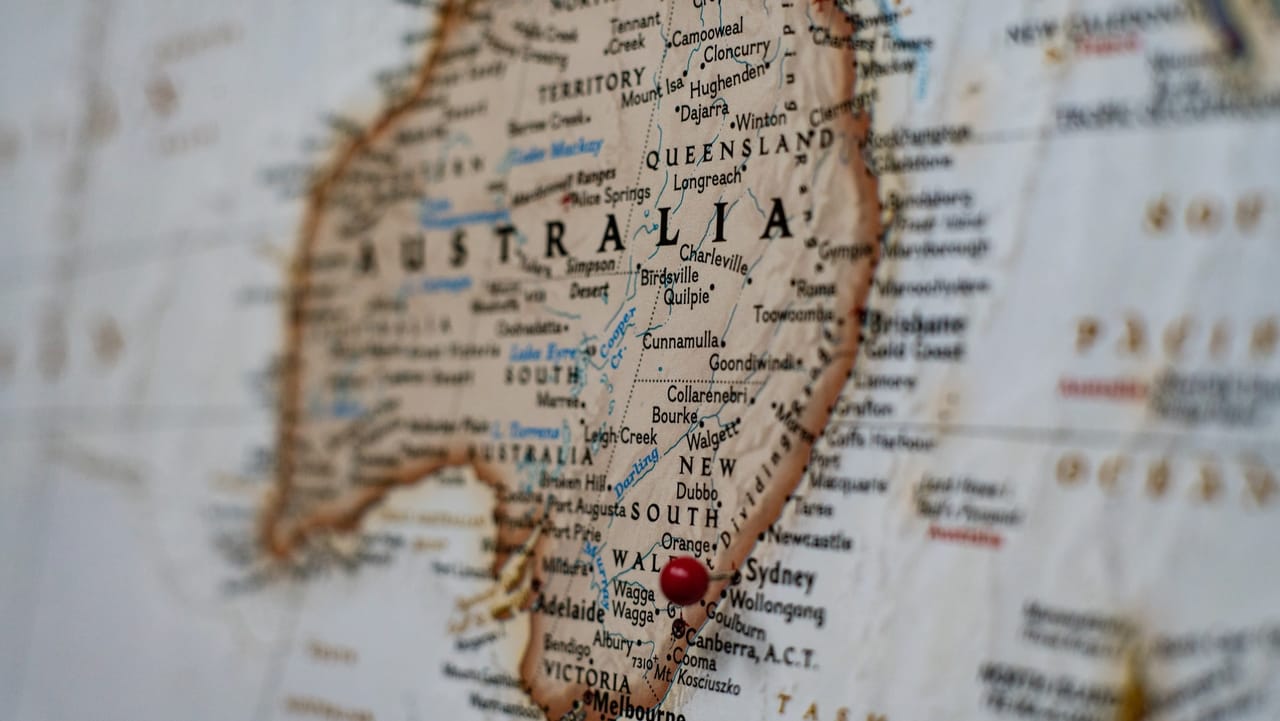
Over a remarkably brief window, Firmus embarked on a series of massive, high-stakes international and domestic projects that fundamentally shifted its strategic focus away from the domestic-heavy CDC partnership. Among these major undertakings is a 360MW Nvidia-backed data center campus situated on Batam Island in Indonesia, designed specifically to serve global AI demand. Furthermore, the company secured major agreements to build two separate sites in Malaysia tailored to anchor customer OpenAI, alongside another two major sites designated in South Australia.
Beyond its data center footprint, Firmus also moved to secure vital supporting infrastructure. The company partnered with Subco to construct a brand-new subsea telecommunications cable, named Bernacchi-1, designed to connect the Australian mainland directly to the island state of Tasmania. Additionally, Firmus locked in a massive 600MW energy supply agreement in South Australia, which is directly linked to an impressive 1.2GW of new renewable energy generation and large-scale battery storage facilities.
This aggressive pivot toward independent regional dominance, however, has not come without significant friction in the financial markets. The collapse of the giant project with CDC coincides with a period of severe valuation stress for Firmus as it prepares for a public stock market debut. In a rare and striking move, the company is reportedly preparing to lower the expected price of its pending initial public offering (IPO) due to palpable investor anxiety regarding the risks associated with its largely unbuilt data center pipeline.
Market watchers have been quick to criticize the transparency surrounding the public offering. Jun Bei Liu, a portfolio manager at Ten Cap, publicly rebuked the company for what she characterized as an "unprecedented" lack of adequate disclosure regarding its forward-looking operations and financial commitments, as reported by ABC News.
Original plans for the IPO saw Firmus setting an initial price target of AU$11 ($7.65) per share, which would have valued the entire enterprise at approximately AU$44 billion ($30.6 billion). However, mounting skepticism and weak demand from institutional and retail investors have forced a recalibration, with reports indicating that the final IPO price is slated to drop to AU$9 ($6.26) per share.
At the same time, CDC Data Centers has faced its own distinct financial headwinds. The valuation of CDC has experienced a measurable contraction, driven primarily by surging interest costs resulting from a series of interest rate hikes implemented across Australia. CDC is 49.7% owned by Infratil, a prominent listed New Zealand and Australian infrastructure investment firm that also maintains ownership stakes in major telecommunications operators like New Zealand’s OneNZ.
According to regulatory disclosures and independent market valuations released by Infratil, the value of its stake in CDC declined by AU$45 million ($31.3 million) during the third quarter alone. The valuation shifted downward from AU$9.21 billion ($6.4 billion) to AU$9.17 billion ($6.37 billion). Reflecting the broader market sensitivity surrounding these developments, Infratil’s stock traded on the Australian Securities Exchange (ASX) experienced a modest dip, declining 0.72% over the course of the trading session.