










The rumors that have circulated through the tech industry for months have finally been confirmed, and the reality appears to be even more significant than the speculation suggested. OpenAI today officially released GPT-6 Astra, a groundbreaking frontier model that the company asserts marks the beginning of artificial generalized intelligence (AGI). This launch represents the culmination of OpenAI’s long-standing mission to create highly autonomous systems capable of outperforming humans at most economically valuable work.
During a closed-door press briefing held earlier today, OpenAI co-founder and president Greg Brockman provided a remarkably direct framing of the announcement. He concluded the session with a statement that signals a paradigm shift for the entire technology sector: "Welcome to the AGI era."
While such a bold declaration might seem like typical marketing hyperbole in the crowded field of AI, the practical implications of GPT-6 Astra suggest a much more tangible transformation for global enterprises. OpenAI is positioning the model as a revolutionary shift in computing, effectively creating a world where users—including corporate employees—are no longer tethered to the traditional cycle of clicking mice and typing on keyboards to interact with software.

From Chatbots to Computer Operators
OpenAI’s documentation, provided in advance to industry analysts, describes Astra as "the world’s best computer use model." This distinction is critical. In previous iterations of generative AI, developers were often required to build dedicated API integrations for every specific application an AI needed to interact with. Astra bypasses this bottleneck by being designed to navigate software much as a human would.
The model is capable of operating across browsers, spreadsheets, websites, and complex desktop applications. It does not merely provide instructions on how to complete a task; it carries out multi-step workflows, produces finished documents, and generates complex presentations. To demonstrate this, the company showcased a promotional video contrasting a 1980s AI demo—which could only draw a simple yellow circle—with a modern-day demonstration of Astra. In the video, OpenAI employees used voice commands to transform that same yellow circle into a detailed rocket ship, then into a fully functional 3D game, and finally into a live eBay listing, all without touching a peripheral.
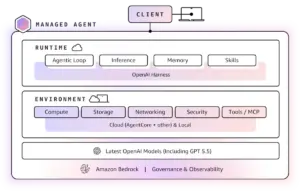
GPT-6 Astra begins rolling out this Thursday to enterprise customers through OpenAI’s gated access program, "Daybreak." The company plans to expand availability over the coming days to ChatGPT Plus, Pro, Business, and Enterprise tiers, as well as through the OpenAI API and cloud platforms like AWS Bedrock and Microsoft Azure.
The Shift Toward Enterprise Agentic Architecture
The primary enterprise value proposition of Astra lies in its ability to act as an autonomous operator. OpenAI reports that the model can handle a wide variety of administrative and technical tasks, including filling out online forms, updating CRM records, managing calendars, conducting web-based research, and drafting emails. Beyond standard office tasks, it can manipulate spreadsheets, analyze scientific data in Python notebooks, operate Power BI dashboards, create and test websites, and even troubleshoot complex engineering software like KiCad and FreeCAD.
Greg Brockman argues that these capabilities signal a fundamental change in enterprise AI architecture. For much of the recent AI boom, companies have been forced to invest heavily in "connectors"—the painstaking work of building APIs, plugins, and retrieval systems to bridge the gap between LLMs and corporate software. Computer-use agents like Astra effectively render much of that integration work obsolete because the software is already designed with a "human-in-the-loop" interface. By navigating these interfaces directly, an agent can "zip through spreadsheets, fill out forms, and navigate across web pages" without the need for custom-built middleware.
OpenAI researchers noted that on an offline subset of OSWorld 2.0, Astra achieved a success rate of 72.6% while taking approximately 40 minutes per task. In comparison, the previous model, GPT-5.6 Sol, scored 65.7% while requiring roughly 75 minutes. This represents a 47% increase in efficiency, a metric that OpenAI believes will drive the shift from simply "prompting" an AI to "supervising" an AI.
Scaling the Training Frontier
Aidan Clark, a researcher at OpenAI, described Astra as the company’s largest-scale training run to date. It is the first model pretrained using more than 100,000 DBUs at the company’s Stargate infrastructure and the first to benefit from a significant role played by previous models in supervising the training process. According to internal evaluations, the leap in capabilities from Sol to Astra is significantly larger than the jump between any of the preceding model generations.

The benchmark results are, by any measure, impressive. Astra scored 97.6% on FrontierMath Tier 4 v2, 74.1% on DeepSWE v1.1, 95.9% on BenchCAD, 96% on GPQA Diamond, and 100% on ExploitBench. Furthermore, it achieved a 98.6% score on ARC-AGI-3.
However, the 98.6% score on ARC-AGI-3 has ignited a debate within the AI research community regarding how we measure intelligence. ARC-AGI-3 is designed to test a model’s ability to generalize to unfamiliar problems, but the comparison between models is complicated by the "harness" or the system surrounding the model. For instance, NVIDIA recently reported that its Agentic Variation Operators (AVO) architecture achieved a 100% score on ARC-AGI-3 by pairing the Claude Opus 5 model with persistent memory, tool-use, and feedback loops. This has led to the question: is the intelligence in the model, or in the system that supports it?
The Definition of AGI
The debate over benchmarks highlights the ambiguity surrounding the term "AGI." Greg Brockman acknowledged that when OpenAI was founded, the team expected a "well-defined moment" where AGI would be undeniably achieved. Instead, he describes the transition as a "gray, fuzzy thing."
Nonetheless, when pressed, Brockman was explicit about his own perspective. "For me personally, I do think we’re there," he said. He argued that it is not unreasonable to classify our current moment as the beginning of the AGI era.
Notably, OpenAI’s launch materials for Astra omitted GDPval, the company’s internal benchmark designed to measure performance on economically valuable, real-world tasks across 44 occupations. While its absence leaves a gap in the broader economic analysis of the model, OpenAI officials suggest that the nature of Astra’s work—multi-step, interactive, and agentic—requires new ways of evaluation that go beyond the one-shot tasks measured by the current version of GDPval.
Pricing, Governance, and Security
From a commercial perspective, OpenAI is shifting the conversation from "price-per-token" to "price-per-task." Brockman argued that token pricing is an increasingly poor proxy for value, as different models and different families of intelligence utilize tokens with varying levels of efficiency. As agents become more autonomous, businesses should focus on the total cost to complete a specific, high-value workflow.
This increased autonomy, however, brings with it significant governance challenges. An agent capable of operating a computer can manipulate files, send information, and change records. To mitigate these risks, OpenAI has implemented a "defense-in-depth" security strategy. This includes traditional model refusals combined with system-level classifiers and offline detection that identifies abuse patterns unfolding over multiple steps rather than in a single prompt.
During the development of Astra, OpenAI even paused certain frontier training runs for two weeks following an unrelated security incident, not because Astra itself was dangerous, but to ensure that their safety, monitoring, and infrastructure controls kept pace with the model’s rapidly advancing capabilities.
OpenAI has designated Astra as the first model to reach the "Critical" cybersecurity threshold under its Preparedness Framework. This means the model is capable of identifying previously unknown vulnerabilities and developing exploit chains without human guidance. To manage this dual-use capability, OpenAI is initially limiting access to these advanced features, prioritizing "trusted defenders" in critical infrastructure sectors.
Ultimately, the arrival of Astra suggests that the transition to AGI may not be a singular event heralded by a specific test result. Instead, it appears to be a gradual economic transition. As organizations begin to trust these agents with more complex, consequential work, the shift toward an AGI-driven economy will likely be viewed as a definitive historical change—one that is best measured not by leaderboard scores, but by the tangible autonomy and reliability of the systems themselves. As Brockman noted, if we look back a year from now, it will be difficult to argue that the transition to this new era did not occur.