









This week, while moderating a panel on the future of world models at the All In conference—a gathering that, for the record, shares no formal affiliation with the popular podcast of the same name—I found myself navigating one of the most enigmatic corridors of the artificial intelligence landscape. The discussion served as a stark reminder that while the industry is currently defined by massive capital injections and breathless hype, there is a profound disconnect between the ambition of these projects and their practical, revenue-generating applications.
The industry is currently dominated by two heavyweights: Yann LeCun’s AMI Labs and Fei-Fei Li’s World Labs. Both organizations have successfully accumulated staggering amounts of funding and a significant degree of industry buzz, effectively cementing their status as the vanguards of the next wave of AI development. Yet, when evaluated against a more pragmatic benchmark—the “trying-to-make-money” scale—both companies, and indeed the broader sector they inhabit, rank surprisingly low.
At their technical core, world models represent a move toward the automation of spatial intelligence. This is the promise of AI that can understand, navigate, and simulate the physical world rather than just processing text or pixels in a vacuum. It is a field with a vast, high-stakes horizon, theoretically spanning everything from advanced robotics and interactive media to the next generation of highly autonomous self-driving systems. The potential for commercial success is ostensibly limitless, yet the path to that success remains remarkably obscured.

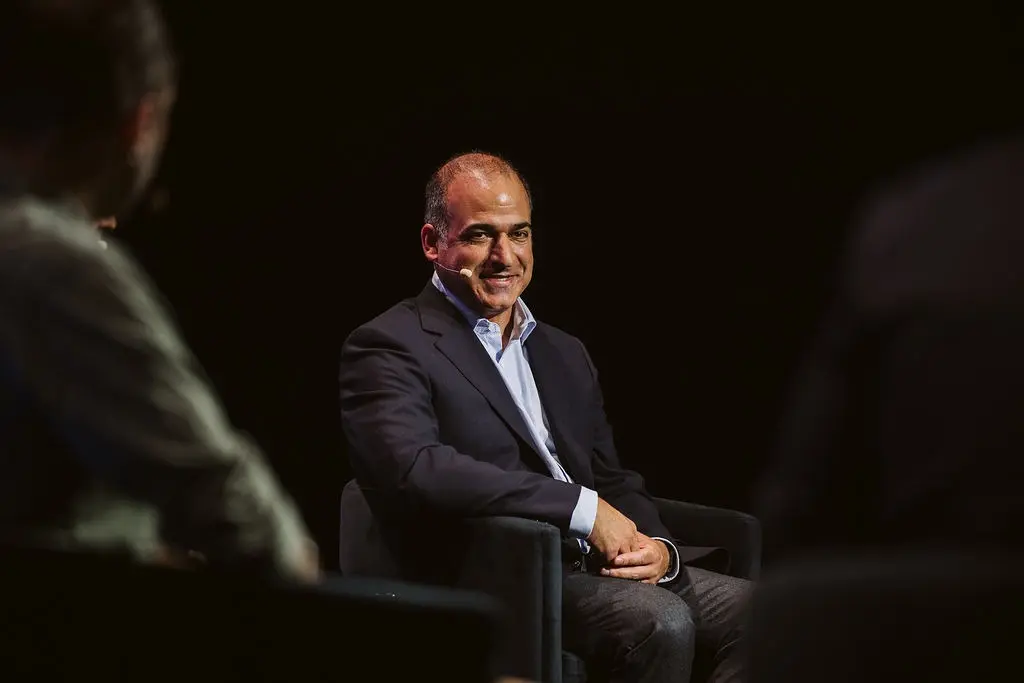
When I began to press the participants on my panel regarding where, specifically, we might see this technology transition from a laboratory experiment to a commercialized product, the conversation shifted from technical excitement to strategic fog. The closest I could find to an authoritative voice on the matter was Michael Rabbat, a co-founder of AMI Labs and the company’s vice president of world models. Despite his seniority, his approach to public discourse was decidedly cagey. When asked for concrete details on the company’s current development roadmap, Rabbat remained noncommittal, offering only the mantra, “We’ll talk about it when we’re ready to talk about it.”
Follow-up inquiries sent via email did little to clear the air. Rabbat clarified that the company is currently entrenched in a “research and building phase,” and as such, is not prepared to disclose any public-facing product plans or timelines. While it is certainly reasonable to afford a company less than a year old the grace to operate in stealth, the reticence I encountered is not an anomaly; it is an industry-wide posture.
This strategic silence defines the entire world-modeling ecosystem. World Labs’ “Marble” platform is perhaps the most advanced product currently visible in this space, yet even its applications remain somewhat experimental. Its demonstrations range from straightforward media generation and the creation of explorable environments for video games to complex CGI effects. While there are certainly robotics use cases inherent in the architecture, the entire platform currently feels designed more to signal capabilities and proof-of-concept rather than to solve an immediate, enterprise-scale problem.
This culture of secrecy has begun to permeate the supply chain as well, creating a frustration that is bubbling up among the vendors who support these labs. On the sidelines of the All In conference, I spoke with Alex de Vigan, the CEO of Physicl, a firm that provides specialized data for the burgeoning world model sector. De Vigan occupies a unique vantage point: he knows for a fact that his company’s data is being put to use by the top-tier labs, yet he remains entirely in the dark regarding the final objectives of his clients.
“I wish they would tell us more,” de Vigan told me. “We could build more useful data if we knew what they were working on.” The sentiment highlights a growing disconnect between the foundational data layers and the black-box models being built atop them.
Part of this mystery is inherent to the technology itself. World models are, by definition, incredibly versatile. The simplest iteration of a world model is essentially a navigable, high-fidelity map of the physical environment, much like the models that underpin contemporary self-driving car software. However, the exact same underlying architecture that allows a Waymo vehicle to navigate a busy intersection can theoretically be repurposed to help a humanoid robot maneuver through a warehouse, or to transform a few minutes of flat video footage into a fully explorable 3D environment.
AMI Labs, for instance, has already begun to signal interest in a wide range of disparate sectors, including manufacturing, biomedicine, and robotics. They have even dipped their toes into the medical field through their Nabia partnership, which aims to provide AI software for physicians. While it is highly improbable that a single company can meaningfully pursue all of these verticals simultaneously, the lack of clarity makes it impossible to discern which of these paths, if any, is actually gaining the most traction.
It is worth considering why these companies are so hesitant to declare their intentions. There is no doubt that there are numerous viable, multi-billion-dollar businesses waiting to be built on top of world model technology. As long as venture capital remains abundant and easy to raise, there is no immediate, existential pressure to pivot toward a single, revenue-generating focus. In fact, there is a compelling strategic argument for keeping their cards close to their chests.
If a company like AMI were to announce tomorrow that it had successfully developed a high-functioning humanoid “OpenClaw” or a revolutionary next-generation Hollywood rendering system, the landscape would change instantly. Competitors would immediately pivot, and the labs would suddenly find themselves in a direct, resource-heavy race against other world-model startups, established “neolabs,” and the existing giants like OpenAI and Anthropic.
In a way, this is the unintended consequence of the current, easy-money fundraising environment. The same massive capital inflows that grant these companies the luxury of building in the dark are also funding their potential rivals. When the path to market becomes clear, the barrier to entry will be eroded by the sheer amount of capital currently sloshing through the ecosystem. Consequently, even if direct competition is an inevitable outcome, the most rational move for these firms is to delay that confrontation for as long as possible. By keeping their specific product goals quiet, they prevent competitors from rushing into the same niche.
Fans of science fiction writer Cixin Liu will immediately recognize this behavior as a “dark forest” scenario. The hypothesis suggests that in a universe where the motives of others are unknown and resources are finite, the safest path is to remain hidden. If you don’t know who else is lurking in the woods, the best way to survive is to avoid attracting any attention at all.
For now, the world-model industry remains in this state of quiet observation. The labs are building, the suppliers are providing the fuel, and the investors are waiting for the first major breakthrough that defines the sector. Until the market forces a transition from research to commercial reality, we are likely to remain in the dark, watching from the edge of the woods, waiting to see what emerges.