








In the crowded landscape of science fiction cinema, few properties have been adapted as frequently—or as unevenly—as H.G. Wells’ 1898 masterpiece, The War of the Worlds. For over a century, the story of humanity’s desperate struggle against an unrelenting extraterrestrial force has served as a benchmark for the genre. However, the legacy of this seminal work has recently been muddled by contemporary misfires. Most notably, the 2025 “screenlife” adaptation of The War of the Worlds has garnered a reputation as a frontrunner for the worst film of the 21st century.
This recent iteration has been widely criticized for its baffling creative decisions, ranging from its jarring narrative structure to an egregious final act that effectively functions as a thinly veiled advertisement for Amazon’s drone delivery service. It is a film so fundamentally misguided that it leaves viewers searching for a “black box” to explain where the production went wrong. The sheer failure of this latest attempt has left a lingering distaste among fans of the source material, casting a shadow over the franchise that may take years to dissipate.
Yet, as the dust settles on this modern disaster, the long and storied history of The War of the Worlds offers a much-needed reminder of the material’s original potency. While the H.G. Wells novel is not technically the first alien invasion story in the Western canon, it is widely credited with cementing the concept in the public consciousness. Over the last 128 years, visionaries from Orson Welles to Steven Spielberg have attempted to capture the existential dread of Wells’ narrative. Perhaps the most enduringly famous version remains Orson Welles’ 1938 radio play, which famously sparked real-world panic by convincing segments of its audience that they were listening to genuine news reports of an active invasion.

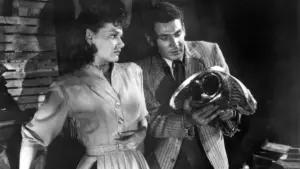
For those looking to cleanse their cinematic palette, there is now an opportunity to revisit the definitive cinematic standard. The 1953 film adaptation, directed by Byron Haskin and produced by George Pal, is currently available to stream for free on YouTube. Featuring stars Gene Barry and Ann Robinson, this version remains a foundational piece of sci-fi history and a perfect addition to any Halloween viewing schedule.
Intellects Vast and Cool and Unsympathetic
Haskin’s 1953 production is a masterclass in mid-century genre filmmaking. The screenplay, penned by Barré Lyndon, made the bold choice to transplant the setting from the Victorian-era English countryside to the sun-drenched landscapes of 1950s California. By accelerating the pace and stripping away the slow-burn dread of the novel, Haskin transformed the story into a taut, 85-minute war film that captures the frantic, breathless nature of an unfolding global catastrophe.
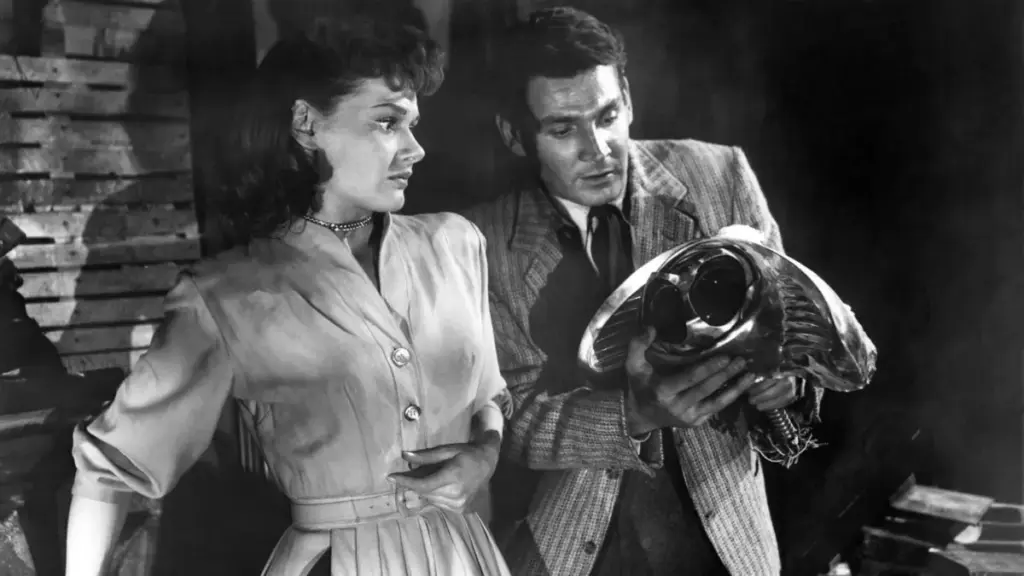
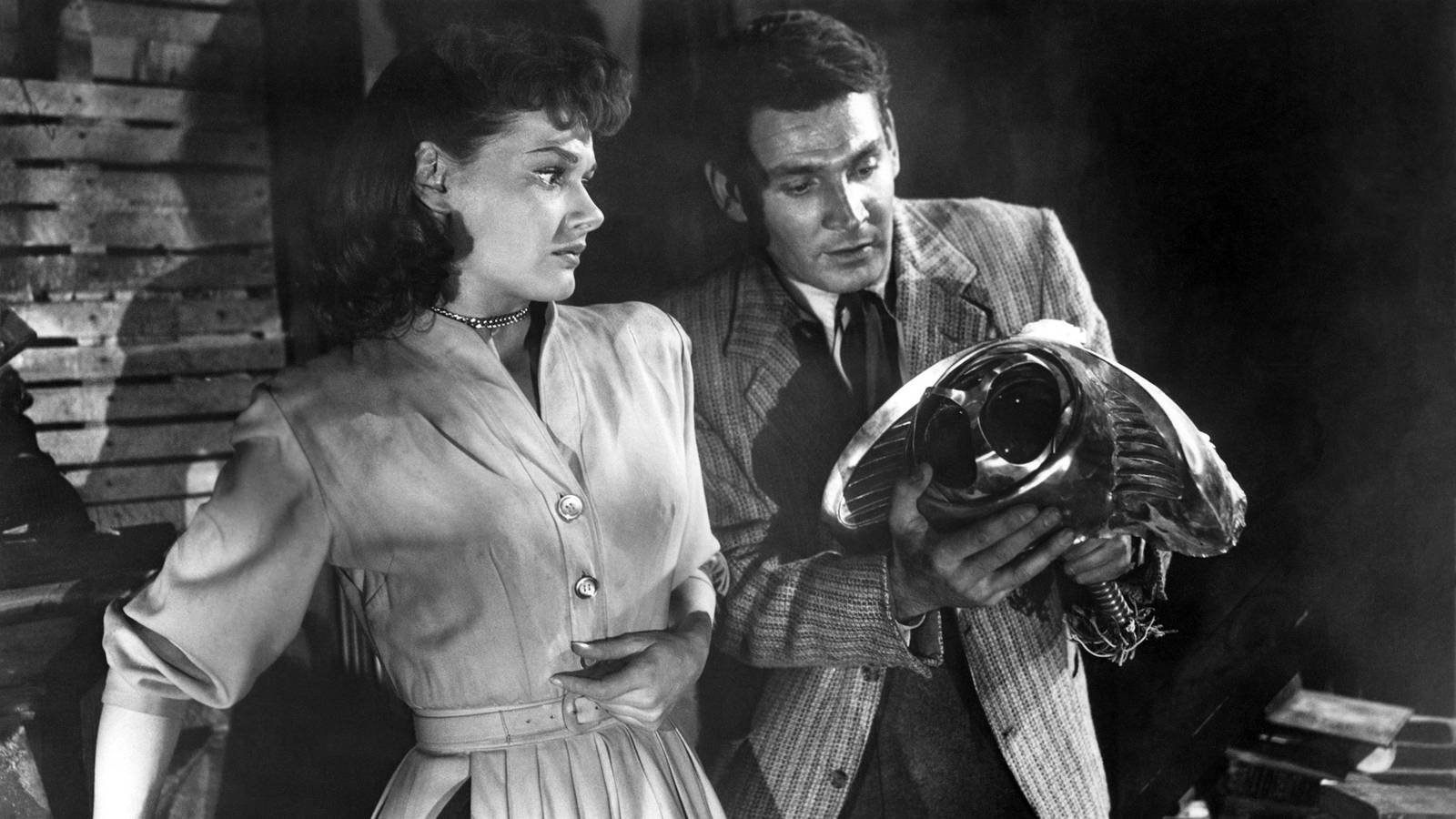
The narrative begins with a series of strange meteor showers raining down across the globe. One such object strikes near a small, quiet town in California. Physicist Dr. Clayton Forrester—a character whose name would later inspire the moniker of the protagonist in the cult classic Mystery Science Theater 3000—arrives on the scene to investigate. His scientific curiosity quickly turns to dread as he observes the object, deducing that it must be hollow.
As the sun sets, the meteor reveals its true nature: it is a “cylinder” from Mars, a vessel of unimaginable technology that surveys the surrounding area through electronic eyes mounted on flexible, cobra-like metal stalks. When a small group of locals attempts to make peaceful contact, the Martians respond with cold, clinical violence. They incinerate the party with a heat ray before laying waste to everything in their path. There is no attempt at communication, no ultimatum, and no negotiation. The Martians possess a singular purpose: to systematically purge human life from the Earth.
The film follows Dr. Forrester and local resident Sylvia, played by Ann Robinson, as they narrowly escape the initial onslaught. As the U.S. military attempts to organize a defense, the audience is forced to witness a series of desperate, futile battles. The sheer scale of the destruction is conveyed not just through the primary action, but through reports of major cities and nations falling across the globe. It is a disaster film in the truest sense, where the disaster is not merely a force of nature, but an intelligent, unstoppable enemy.

A Legacy of Cold War Dread
To appreciate the 1953 version of The War of the Worlds, one must meet it halfway. It is a product of its time, and while it earned an Academy Award for its groundbreaking special effects, modern viewers may find them quaint. In an era of high-definition digital rendering, the practical effects of the 1950s—which were never intended to be scrutinized on massive, high-resolution screens—carry a different weight.
However, if one can suspend disbelief, the film’s effectiveness becomes undeniable. The depiction of the Martian heat ray is particularly haunting. The way the beams cause people to vanish in a flash, leaving behind nothing but man-shaped piles of gray ash, creates an unsettling visual shorthand for annihilation. The Martians wield these weapons with the casual indifference of someone weeding a garden, reinforcing the famous opening lines of the novel: that there are “intellects vast and cool and unsympathetic” regarding our world with envious eyes.
The film also gains a significant amount of power when viewed through the lens of the Cold War. The 1950s were a time of profound existential anxiety, and the film’s depiction of a seemingly invincible, technologically superior force sweeping across the globe resonates with the era’s fear of nuclear annihilation. Watching the U.S. military—led by men who act with logic, courage, and clear-headedness—fail repeatedly against an incomprehensible threat creates a bleak, nihilistic atmosphere that remains powerful to this day.
While the modern adaptations have struggled to capture the gravity of Wells’ original vision, Haskin’s 1953 film succeeds by leaning into the terror of the unknown. It avoids the temptation to over-explain the Martians or turn them into caricatures. Instead, it presents an invasion that feels inevitable and overwhelming. For those who can appreciate the history of the genre and the limitations of the era’s production techniques, the 1953 The War of the Worlds remains a classic of cosmic horror. It serves as a reminder that the best science fiction is not just about the spectacle of technology, but about the fragility of human civilization when confronted with a truly superior, and utterly uncaring, power.
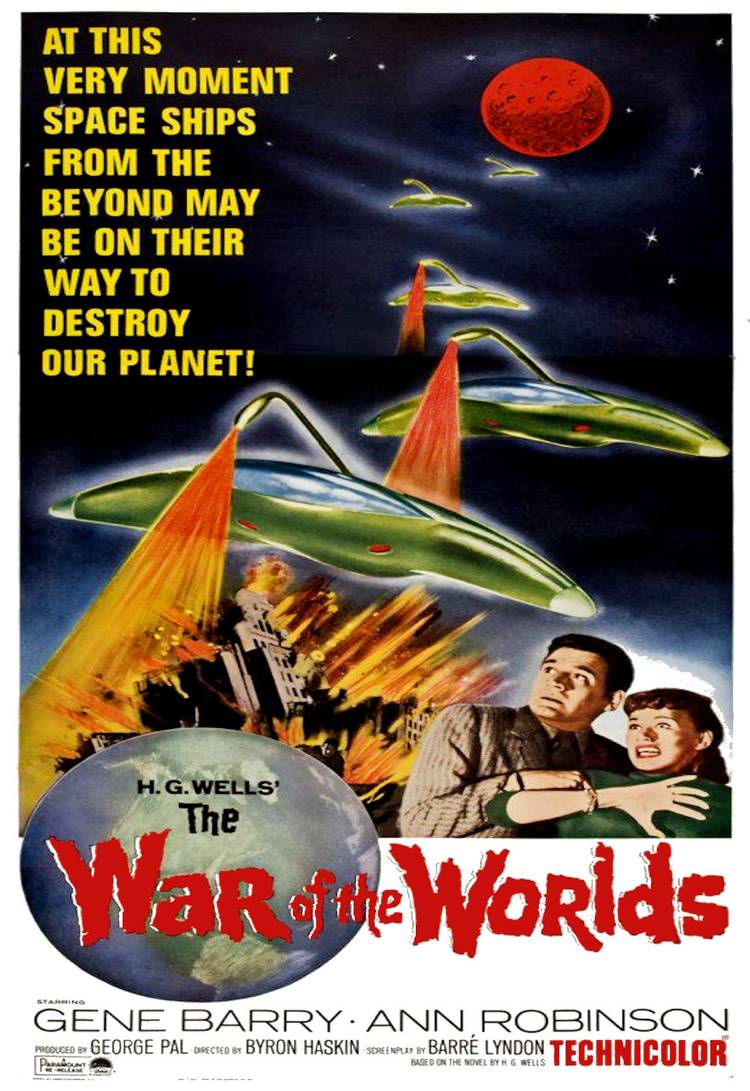
The 1953 version of The War of the Worlds is currently available to stream for free on YouTube.