











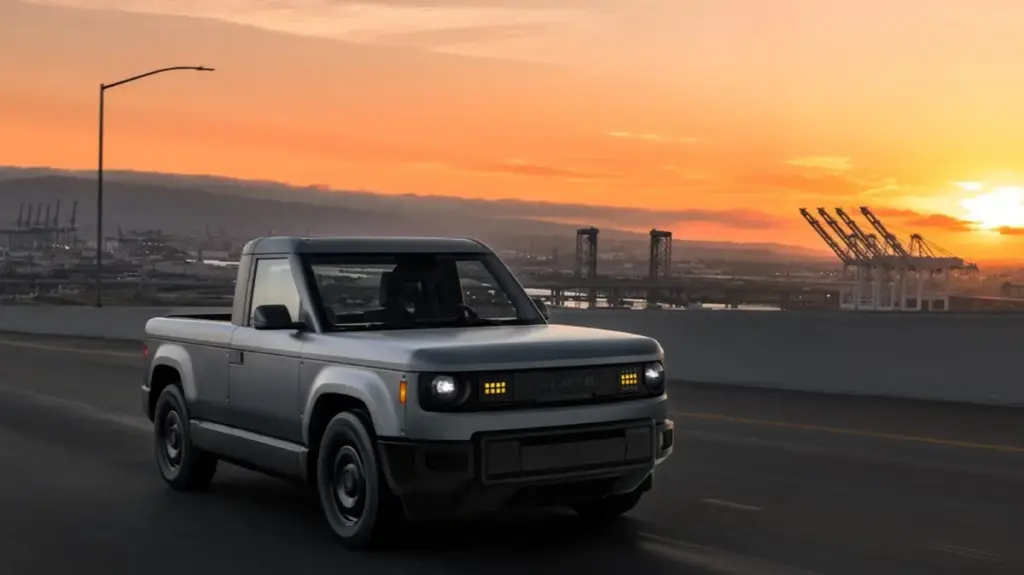
In an automotive landscape where the average price of a new vehicle has soared past $50,000, Michigan-based startup Slate Auto is positioning itself as a disruptive force. The company is making a bold, calculated bet that the primary obstacle to the widespread adoption of electric vehicles is not necessarily range anxiety or charging infrastructure, but the sheer cost of entry. With its flagship vehicle, the "Blank Slate," starting at just $24,950, the company is attempting to prove that a minimalist, customizable, and affordable electric vehicle is the antidote to a market increasingly dominated by luxury-priced SUVs and premium trucks.
The Blank Slate is available in both truck and SUV configurations, intentionally eschewing the modern "creature comforts" that have driven up the prices of contemporary EVs. By removing features like automatic windows and integrated high-end audio systems, Slate is offering a back-to-basics approach that challenges the industry standard. However, the company argues that this simplicity is not merely about cost-cutting; it is about empowerment. With a massive catalog of over 200 optional accessories and a kaleidoscope of vinyl-wrap exterior options, Slate is leaning heavily into the DIY ethos. The goal is to provide a platform that owners can personalize, effectively allowing the "most affordable truck" in America to be tailored to specific professional or personal needs, rather than forcing consumers to pay for factory-installed tech they may not actually desire.
While the concept is undeniably intriguing, it invites a fair amount of skepticism regarding performance. It is a common assumption in the automotive world that low cost must equal low capability, yet the specifications of the Blank Slate suggest otherwise. The vehicle is equipped with a 135 kW rear-mounted motor that produces 181 horsepower and 195 lb-ft of torque. It is capable of towing 2,000 pounds, a performance metric that puts it squarely in the same category as the 2026 Ford Maverick. While a 0-to-60 mph time of approximately 8 seconds will not be setting any track records, it is entirely consistent with the performance expectations of the current crop of entry-level hybrid and electric trucks. For the average consumer looking for a functional daily driver, the Blank Slate provides a level of utility that matches the industry’s most popular budget-friendly haulers.

The most significant point of contention for potential buyers, however, is the vehicle’s range. The Blank Slate is powered by a 63 kWh battery pack, providing an estimated range of 205 miles on a single charge. In an era where competing electric trucks often boast ranges between 280 and 450 miles, 205 miles might appear inadequate to those accustomed to high-end EVs. Yet, Slate Auto maintains that this limitation is a deliberate design choice rather than a technical failure. According to the company, the engineering team has focused on finding the "sweet spot" for practical, everyday driving. By prioritizing a smaller battery, the company not only reduces the overall weight of the vehicle—thereby improving efficiency—but also significantly slashes the retail price.
This philosophy aligns with data regarding modern driving habits. Research from Consumer Affairs indicates that the average American driver covers approximately 37 miles per day. Slate Auto is betting that for the vast majority of consumers, a 205-mile range is more than sufficient for the average commute, weekend chores, and rural errand running. By choosing to forego the massive, expensive battery packs required for long-distance travel, the company is aiming to serve the massive demographic of buyers who want an EV but have been priced out of the current market. The trade-off is clear: the shorter range is the price paid for a lower monthly bill.
Understanding Charging Times and Infrastructure
The viability of any electric vehicle is inextricably linked to its charging capabilities, and in this regard, the Blank Slate adheres to the industry’s standard benchmarks. The vehicle is fully compatible with Level 3 DC fast chargers, which are essential for those who might occasionally need a quick boost. When utilizing these stations, the Blank Slate can reach an 80 percent charge in approximately 30 minutes.
For those who plan to charge at home or at the workplace, the vehicle is equally versatile. Using a standard Level 2 charger—the kind that plugs into a four-pronged appliance outlet—the Blank Slate can reach a full charge in roughly 5 hours. For owners who do not have a dedicated high-speed setup, the vehicle is also compatible with a standard Level 1 charger that connects to a conventional household wall outlet. While this is the slowest method, it allows for a "trickle charge" that can add between 20 and 50 miles of range overnight, which is often more than enough to cover the daily commute of an average driver.
To ensure that its customers are supported during the transition to electric ownership, Slate has taken steps to simplify the installation process for home charging. The company has entered into a strategic partnership with Treehouse, a firm specializing in home charging infrastructure, to help owners navigate the installation of Level 2 systems. Furthermore, every Blank Slate comes with an included charging cable that is capable of handling both Level 1 and Level 2 ports, ensuring that owners are not forced to purchase additional hardware immediately upon delivery.
The ultimate question for prospective buyers is one of philosophy: what is the true purpose of the vehicle? If the goal is to secure an affordable, minimalist, and highly customizable truck or SUV that excels at the daily grind of commuting and light utility, the Blank Slate presents a compelling case. It is designed for those who view a vehicle as a tool rather than a status symbol. Conversely, for those whose lifestyle necessitates frequent long-distance travel or who are not willing to incorporate charging stops into their road trips, the vehicle may fall short of their specific requirements.
As the industry watches, the stakes for Slate Auto remain high. The company has announced that shipping for the Blank Slate will commence from its factory in Warsaw, Indiana, later this year. For those interested in securing one of the first units, the company has opened a $300 preorder window. In the months leading up to delivery, customers are encouraged to utilize the company’s online design tool, a platform that allows users to experiment with different configurations and accessory packages.
It is a process that has already consumed hours for many enthusiasts, as they toggle through the endless combinations of exterior wraps and utilitarian add-ons. While the wait for the first vehicles to hit the road continues, the automotive world remains curious. If Slate Auto succeeds in delivering a high-quality, reliable, and genuinely affordable EV, it could force a significant shift in how manufacturers think about the trade-offs between range, luxury, and accessibility. Whether the market is ready for a "blank slate" in the most literal sense remains to be seen, but the company’s commitment to stripping away the excess suggests they are prepared for the challenge. For many, the prospect of an electric truck that doesn’t cost a year’s salary might just be too good to pass up.