






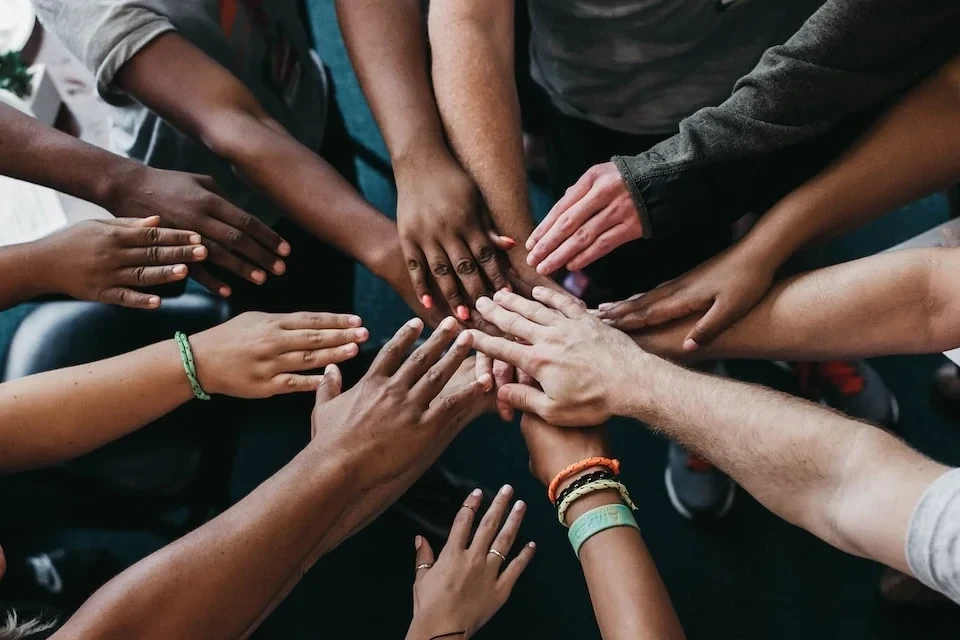
The community is hard at work on something new. Regular visitors to Opensource.com may have noticed that things have been unusually quiet across the platform lately. Behind that quiet exterior, however, a significant new project is actively taking shape. While the team behind the site notes that there are not yet many specific details to announce to the public, there is already plenty to discuss regarding the future of the platform and the philosophy that drives it. And when looking for the right place to begin a conversation about growth, networks, and open collaboration, there is arguably no better starting point than the entire internet itself.
The Internet, and Top-Level Domains
To understand where the community is heading, it is helpful to look at where the digital world began. Most internet users know that the internet is fundamentally a network. By definition, a network is simply a group of interconnected connections. In fact, the very term "internet" is a portmanteau combining "interconnected" and "network."
In its earliest days, the internet was a smaller, more specialized system consisting primarily of two distinct networks: the military network and the academic network. As the technology matured and gained popularity far beyond those initial groups, it quickly became apparent that different designations were necessary to help users identify the nature of the entities they were interacting with. Authorities needed a way to clearly differentiate a commercial enterprise from a charitable organization, a university from a governmental department, or a personal project from a public institution.


These structural designations are known as top-level domains, or TLDs. While there is a vast and diverse marketplace of available TLD extensions today, for a long time there were only a handful of foundational suffixes. These original top-level domains remain remarkably popular and deeply embedded in digital literacy. Most internet users intuitively understand that when they navigate to a web address ending in .com, they are visiting a commercial site. Similarly, visiting a .org address generally signals that the user is navigating to a non-profit website. These suffixes have served for decades as immediate visual indicators of an organization’s underlying mission and operational structure.
Open Source Is a Network
Open source, much like the internet itself, can take on many different forms and serve many different functions. It can be commercial, built around enterprise software, support contracts, and sustainable business models. It can be non-profit, driven by foundations dedicated to protecting user freedoms and digital rights. It can be academic, emerging from university research labs and computer science departments. It can also be cultural, shaping how creators share art, documentation, and collaborative knowledge.
No matter what specific form open source takes in any given instance, it always operates as a network. Sometimes that network is literal, consisting of millions of computers, servers, repositories, and continuous integration pipelines communicating across global protocols. But more importantly, at its core, open source is a network of people.

Whether those individuals are gathering physically at a massive international conference, casually meeting at a local pub for a technology meetup, or collaborating asynchronously in an online chat room, the open-source movement is fundamentally a community of human beings working toward shared goals.
For the past twelve years, the website Opensource.com has been proudly supported by a commercial entity. That institutional backing has helped sustain the platform, allowing it to publish thousands of stories and build a dedicated readership over more than a decade. However, the people who actually make up the heart and soul of the Opensource.com community—the writers, editors, advocates, contributors, and readers—are not commercial entities. They are simply people.
In one month, Opensource.com is going to resolve that structural bug. Stay tuned for further developments as this exciting new chapter unfolds.