The community surrounding Opensource.com is hard at work on something new. Regular visitors to the prominent platform may have noticed a distinct quietness settling over the site lately. That hush is not a sign of fading momentum, but rather the precursor to a significant evolution. According to recent disclosures from the platform, there is a brand-new project actively in the works. While organizers and community members note that there are not yet many granular, specific details to announce to the public, there is already an abundance of foundational topics to discuss. And what better way to start a conversation about networks, collaboration, and the future of open source than by looking at the entire internet itself?
The internet, and top-level domains
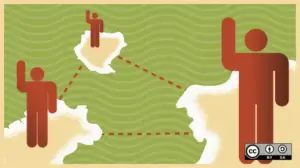
To understand where the community is heading, it helps to examine where the digital ecosystem began. Most internet users know that the internet is, at its core, a network. By definition, a network is simply a group of connections linking different points together. In fact, the very term "internet" is a portmanteau born from combining "interconnected" and "network."
Historically, the modern internet began as a network of interconnected networks, which originally consisted of just two major components: the military network and the academic network. These early iterations served specific, highly controlled institutional purposes. However, once the internet began to gain widespread popularity and utility far outside those two initial groups, it quickly became apparent that different designations were desperately needed. As usage expanded, society required a method to clearly differentiate between, for instance, a commercial entity operating for profit, a charitable organization serving the public good, a university conducting academic research, or a governmental department carrying out public administration.

These crucial designations ultimately became known as top-level domains, universally abbreviated as TLDs. Today, internet users can choose from an immense variety of available TLD extensions, ranging from niche industry tags to regional identifiers. However, for a remarkably long time after the expansion of the public web, there were only a small handful of these domains available.

Those original TLDs remain remarkably popular and culturally embedded in the architecture of the web to this day. Most web users recognize almost instinctively that when navigating to an address ending in the .com suffix, they are visiting a commercial site built around business operations. Conversely, when typing a URL that culminates in a .org address, users understand they are visiting a non-profit website dedicated to advocacy, community service, or public information. These suffixes do more than just route traffic; they tell a story about the identity, purpose, and foundational nature of the entity behind the screen.
Open source is a network
Just as the internet relies on interconnectivity, open source can embody many different forms and expressions. Open source software and culture can be commercial, serving enterprise clients and driving corporate innovation. It can be non-profit, championed by foundations dedicated to keeping core infrastructure free and accessible. It can be academic, emerging from university laboratories where students and researchers push the boundaries of computer science. It can also be deeply cultural, shaping how creators share art, writing, and collaborative knowledge.
Yet, no matter what specific form open source takes in any given instance, it is fundamentally and always a network. Sometimes—though certainly not always—that network is manifested strictly as a web of computers, servers, and repositories sharing code across continents. But most importantly, and at its very heart, it is a network of people.
Whether individuals are gathering physically at a bustling international conference, casually meeting at a local pub to talk code, or collaborating remotely in a digital online chat room, open source is first and foremost a community of human beings working toward shared goals.

For the past twelve years, the prominent publication Opensource.com has been supported by a commercial entity, providing a steady platform for stories, tutorials, perspectives, and news centered around the open source way of life. But the people—representing the readers, contributors, writers, and advocates that make up the vibrant Opensource.com community—are not themselves commercial entities. They are simply people, driven by shared values of transparency, collaboration, and collective creation.
In just one month, Opensource.com is going to resolve that fundamental discrepancy, aligning the platform’s structure more closely with the human community that has always powered it. Stay tuned as more details emerge about this upcoming transition.