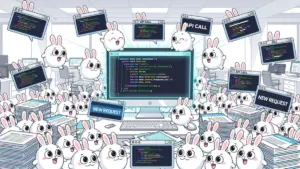










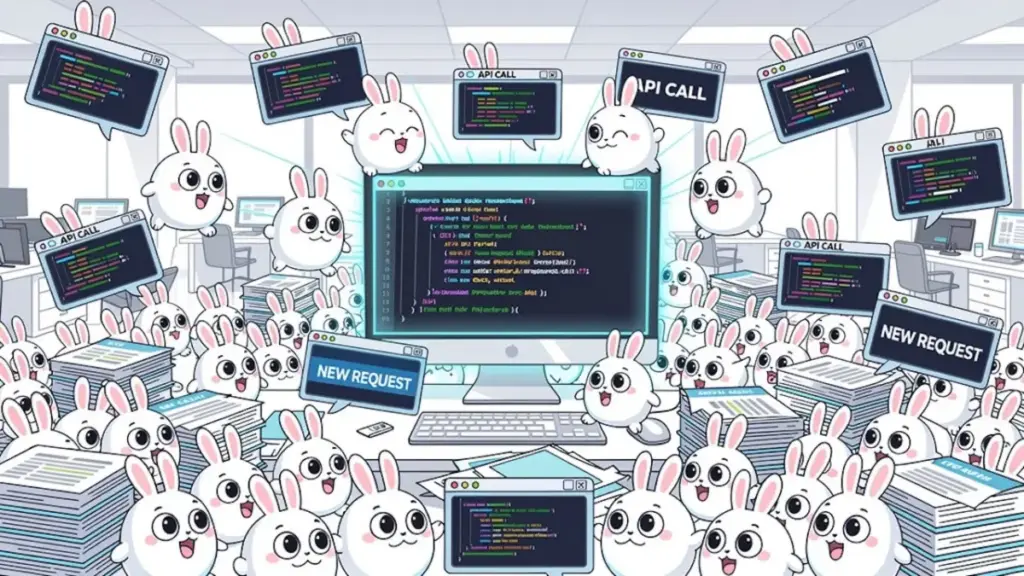
The promise of generative AI in software development has always been speed. By automating the boilerplate, suggesting complex algorithms, and accelerating the creation of new features, AI coding tools have fundamentally altered the pace at which developers can write code. However, as the velocity of production has increased, a critical friction point has emerged: the human-led code review process, which was never designed for the volume of output now hitting engineering teams.
According to the LeadDev AI Code Review Report 2026, this disconnect has turned code review into the single greatest bottleneck in modern software delivery. While 45% of engineering leaders identify the review process as their primary obstacle to shipping, there is a pervasive lack of confidence in the quality of the output. Only 26% of respondents report feeling "very confident" that they understand AI-generated changes as thoroughly as those written by their human peers. This creates a dangerous scenario: a surge in pull requests (PRs) accompanied by a growing uncertainty about the underlying logic of the code being pushed into production.
The report, which surveyed 377 engineers and leaders across the U.S. and Europe, highlights a dramatic shift in developer workflows. Half of the respondents noted that the number of pull requests per developer has jumped by at least 25% since the adoption of AI tools. This influx of code is fundamentally overwhelming the traditional gatekeepers of software quality.

The Shift in Engineering Gatekeeping
The core of the issue lies in a transition of where "work" is filtered within an organization. Historically, the software development lifecycle was governed by rigorous planning and backlog grooming by product managers, who acted as a filter to ensure that only the most necessary and well-considered code was written. Engineering time was viewed as a high-cost, limited resource, and therefore, it was managed with great care.
Harjot Gill, CEO and co-founder of CodeRabbit, the vendor that sponsored the research, suggests that the "gate" that once protected engineering teams from unnecessary work has effectively vanished. "There used to be a gate before code got written; product managers groomed the backlog because engineering time was expensive. That gate is gone," Gill explained. "Anyone can go from idea to code now, so review is the only gate left, and everything piles up there."
This centralization of responsibility at the final stage of the pipeline has created a structural overload. Because the review phase is now the final barrier to deployment, it has become a destination for every piece of code—regardless of its complexity, risk level, or importance.
Review Capacity Failing to Keep Pace with Volume
The volume of code is not just rising; it is changing in nature. The LeadDev report indicates that 67% of developers are seeing their pull requests increase in size. This puts an immense strain on the cognitive capacity of reviewers. When faced with massive, AI-generated PRs, developers often find themselves in an impossible position.
"Nobody can read all of that line by line while still doing the rest of their job, so people skim," Gill noted. This tendency to skim, born of necessity, is the enemy of thorough security and architectural integrity. The data bears this out: more organizations report that their review cycles have slowed down (38%) than those who claim they have sped up (25%) since the introduction of AI.
The struggle is echoed in broader industry trends. A 2026 developer survey from BairesDev found that 67% of developers are spending significantly more time reviewing AI-generated code than they were just a year ago. As Paul Nashawaty, a principal analyst at Efficiently Connected, observes, the perceived speed of development is often an illusion. "We’re seeing developers move faster, but that doesn’t necessarily mean the entire software delivery lifecycle is moving faster," Nashawaty said. Instead, the speed gained at the keyboard is being lost in the queue of the review process.
The Problem of Superficial Validation
The reliance on manual review remains the industry standard, even as the scale of code generation has scaled beyond human limits. The survey reveals that 82% of developers still manually review the majority of AI-generated code before it is merged. However, the quality of these reviews is increasingly superficial.
A significant 58% of respondents admitted that they understand the general intent of a code change but lack a full grasp of every technical detail. Even more concerning, 11% of developers reported that their review process consists mostly of checking whether the code runs and passes automated tests—a "happy path" approach that ignores deeper architectural implications or potential security vulnerabilities.
Perhaps most telling is the lack of context available to those performing the reviews. Only 18% of respondents feel they regularly have enough information to judge the architectural impact or the "blast radius" of a specific change. Furthermore, 68% of developers report that they do not consistently know which changes require a deep, granular review versus those that can be safely skimmed. This ambiguity leads to a "check-the-box" mentality, where 74% of respondents state they always or usually have a human verify what an AI review tool has already flagged, creating a redundant and inefficient feedback loop.
While AI tools have a clear role to play in modern development, Nashawaty warns against over-reliance on a single point of failure. "AI can absolutely help review code, but I wouldn’t rely on the same agent that generated the code to be the final validator," he noted.
Governance Gaps and Accountability
Beyond the immediate technical hurdles, the report exposes a troubling lack of governance and accountability within many organizations. When asked how they measure the success or failure of their review processes, 24% of respondents reported that their companies track no metrics at all. Only 30% track AI token usage, and a mere 22% track "escaped defects"—bugs that reach production.
This absence of data makes it nearly impossible for teams to refine their processes or justify changes in their workflow. As Gill suggests, for teams to truly mature in their use of AI, they must shift their focus toward tangible outcomes: "Alongside spend, I’d want every engineering team tracking how many defects reach production, how often changes fail or get rolled back, and how stretched their reviewers are."
Accountability is similarly fragmented. When an AI agent writes code that is reviewed by another agent and merged by an automated system, the question of ownership becomes murky. In that scenario, 48% of respondents identified the person who requested the change as the one accountable for its performance in production, while 14% assigned accountability to the individual who approved the merge.
Furthermore, formal standards for reviewing AI code remain rare. In 42% of the surveyed organizations, guidelines are applied inconsistently, and another 42% leave the decision-making process entirely to individual teams. This lack of a unified approach leaves organizations vulnerable to uneven quality control. "The real issue isn’t whether AI can review code," Nashawaty said. "It’s whether enterprises have the governance, context, accountability, and engineering standards to trust the outcome."
Moving Toward a Risk-Based Future
To resolve the tension between AI-driven speed and human-governed quality, experts suggest that enterprises must move away from the "one-size-fits-all" approach to code review. Instead, they recommend a strategy based on risk assessment and clear escalation paths.
Gill advocates for prioritizing reviews based on the "blast radius" of the code in question. Changes that affect critical infrastructure—such as payment logic, ledger systems, authorization protocols, database schemas, or shared API contracts—should be routed to the engineers who own those specific domains, regardless of whether the code was generated by a human or an AI.
Some organizations are already experimenting with tiered review systems. For example, CodeRabbit has implemented a risk-based review model for its own internal engineering. Under this system, low-risk, low-impact changes are often pushed to production without human intervention. To ensure quality, the team monitors the defects introduced by each developer; if an individual consistently produces risky code or skips necessary protocols, their future contributions are automatically routed to a human reviewer until their performance record improves.
Ultimately, the consensus among experts is that AI should be viewed as one layer in a multi-layered defense strategy. Enterprises should combine independent AI review agents with robust automated testing, security scanning, and policy enforcement tools. By automating the routine checks and reserving human expertise for high-complexity, high-risk changes, organizations can begin to restore the balance between the speed of their development teams and the integrity of their production environments.