








You have written a window function a hundred times. Then an interviewer asks you to write one, a countdown timer starts, and the syntax completely vanishes from your mind.
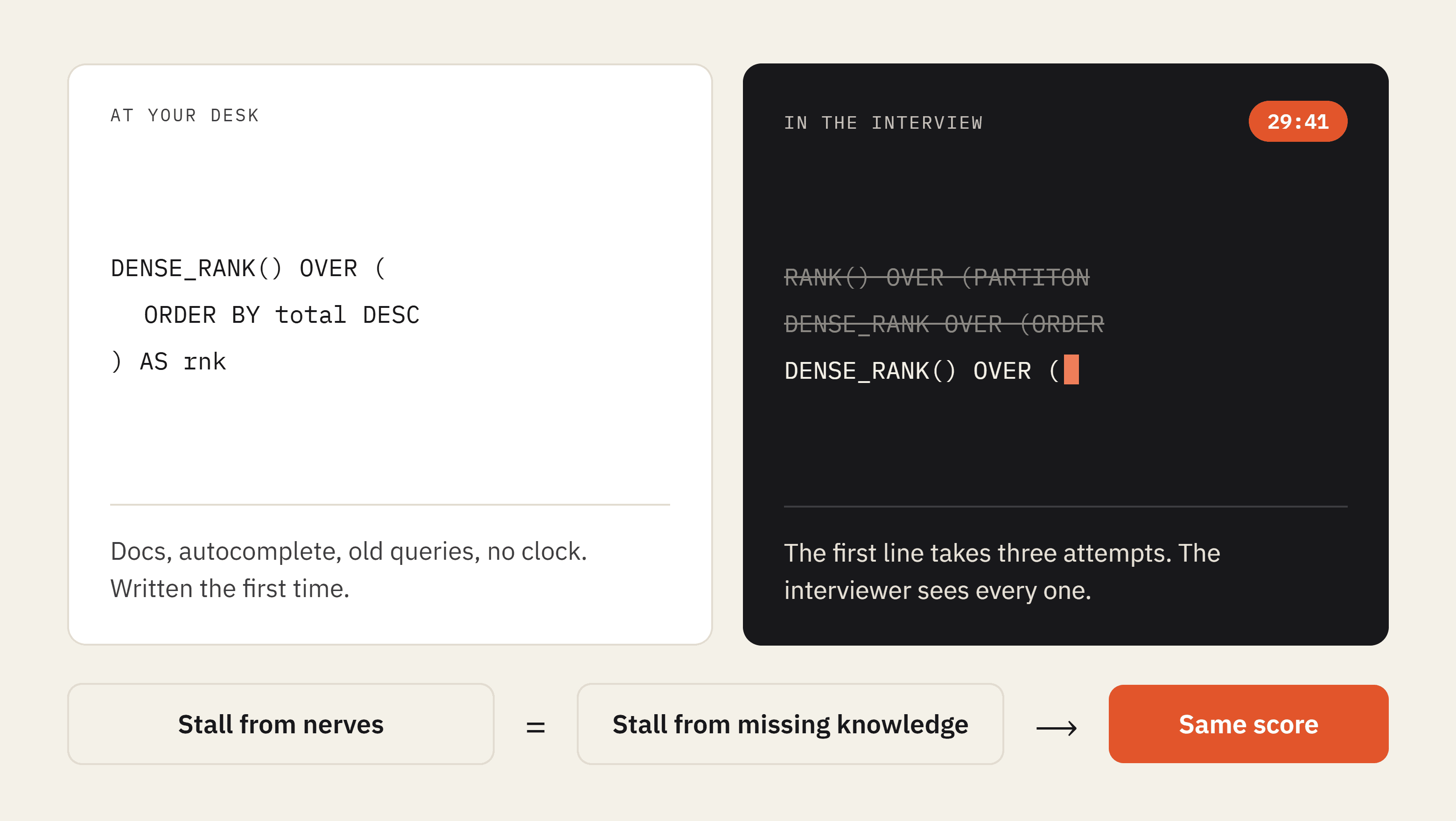
Job candidates who can solve a complex problem effortlessly at their own desks often stall completely when faced with the exact same problem in a live interview setting. The overarching analytical approach remains entirely clear in their heads, and they are fully capable of describing the logic. Yet, writing the very first line of code takes three separate attempts, and the person watching across the table observes every single hesitation.
From the perspective of the interviewer, a momentary freeze caused purely by nerves is practically indistinguishable from a stall caused by missing technical knowledge. Both outcomes unfortunately result in the exact same evaluation score.

A thorough examination of technical hiring dynamics reveals that five distinct conditions contribute heavily to this phenomenon known as the interview freeze, and each one of them can be actively practiced and managed. In a recent sixty-minute SQL mock interview featuring two distinct ranking questions, researchers observed how these conditions manifest in real time. Both questions hinged critically on how ties are handled within ranking functions, and both problems became significantly more manageable once the test-taker stated the specific tie-breaking rule out loud before typing a single character.
Five Conditions That Make Known Material Hard to Use
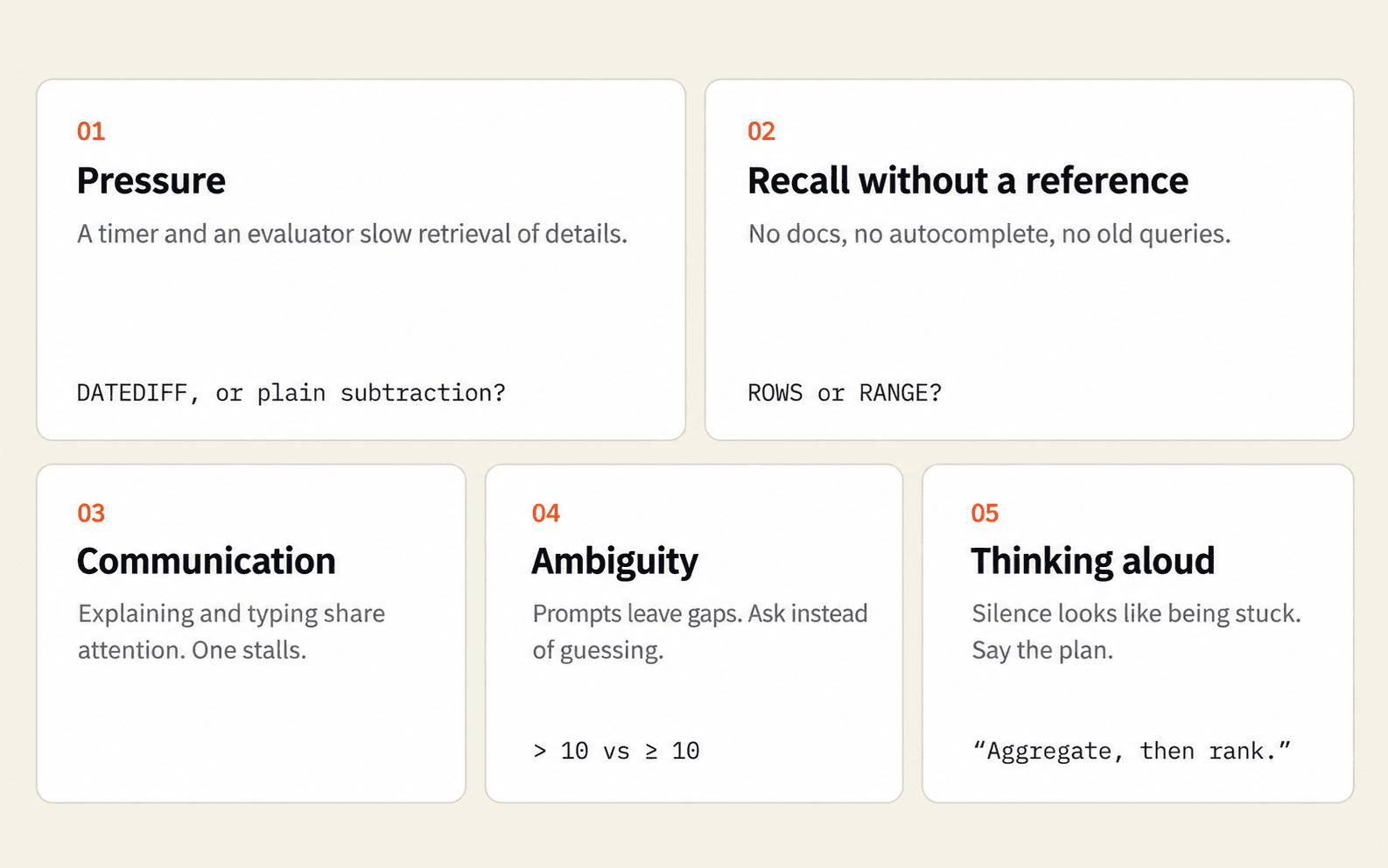
The first major hurdle is the sheer pressure of the environment. The presence of a ticking timer and a live evaluator significantly raises stress levels, and heightened stress directly impairs the brain’s ability to retrieve specific details from memory. A candidate typically knows whether a date difference requires a specific database function or simple subtraction, but under intense pressure, that answer arrives sluggishly. The candidate types one option, immediately doubts it, deletes it, and types the other, wasting precious seconds on a clock that offers very little margin for error.
The second condition involves recall without external references. At a normal desk, a data professional relies heavily on documentation, IDE autocomplete features, and historical queries. In a traditional interview setting, everything must be pulled entirely from memory, a type of cognitive retrieval that few people practice regularly. Minor details vanish first: the exact argument order of a function, whether a complex frame clause requires specific row or range boundaries, or the precise keyword sequence following a partition clause. At a desk, pressing the tab key solves the problem instantly; in an interview, the candidate writes something that looks close and simply hopes it executes successfully.
The third challenge is communication overhead. Candidates are routinely asked to explain their ongoing query to another person simultaneously while writing it. Because both tasks draw heavily upon the same pool of mental attention, one of them inevitably stalls, which is almost always the code itself. The verbal explanation might keep flowing while the cursor sits motionless, or the code gets written in total silence while the interviewer waits awkwardly. In either scenario, the evaluator misses the primary objective, which is observing how the candidate’s analytical mind actually works.
The fourth condition is ambiguity within the prompt itself. Interview prompts almost always leave minor gaps. Do tied rows share a rank, or do they create ranking gaps? What precisely constitutes a completed business record? Guessing the answers to these questions in silence is a primary driver of incorrect solutions, yet asking for clarification consumes valuable time. Even a minor wrong guess about the data can completely alter the final output. For instance, distinguishing between phrasing that asks for more than a specific threshold versus at least that threshold changes the inclusion criteria by a single unit.
The fifth condition centers on the necessity of thinking out loud. Total silence during an interview is frequently misinterpreted as being completely stuck. Articulating a half-formed plan, such as declaring an intention to aggregate per category first and then apply a ranking mechanism, gives the interviewer a clear roadmap to follow and provides the candidate with an actionable next step. Crucially, it also allows the evaluator to gently correct a fundamentally flawed plan before the candidate has invested time into writing fifteen lines of incorrect code.
Rehearsing These Conditions with Mock Interviews
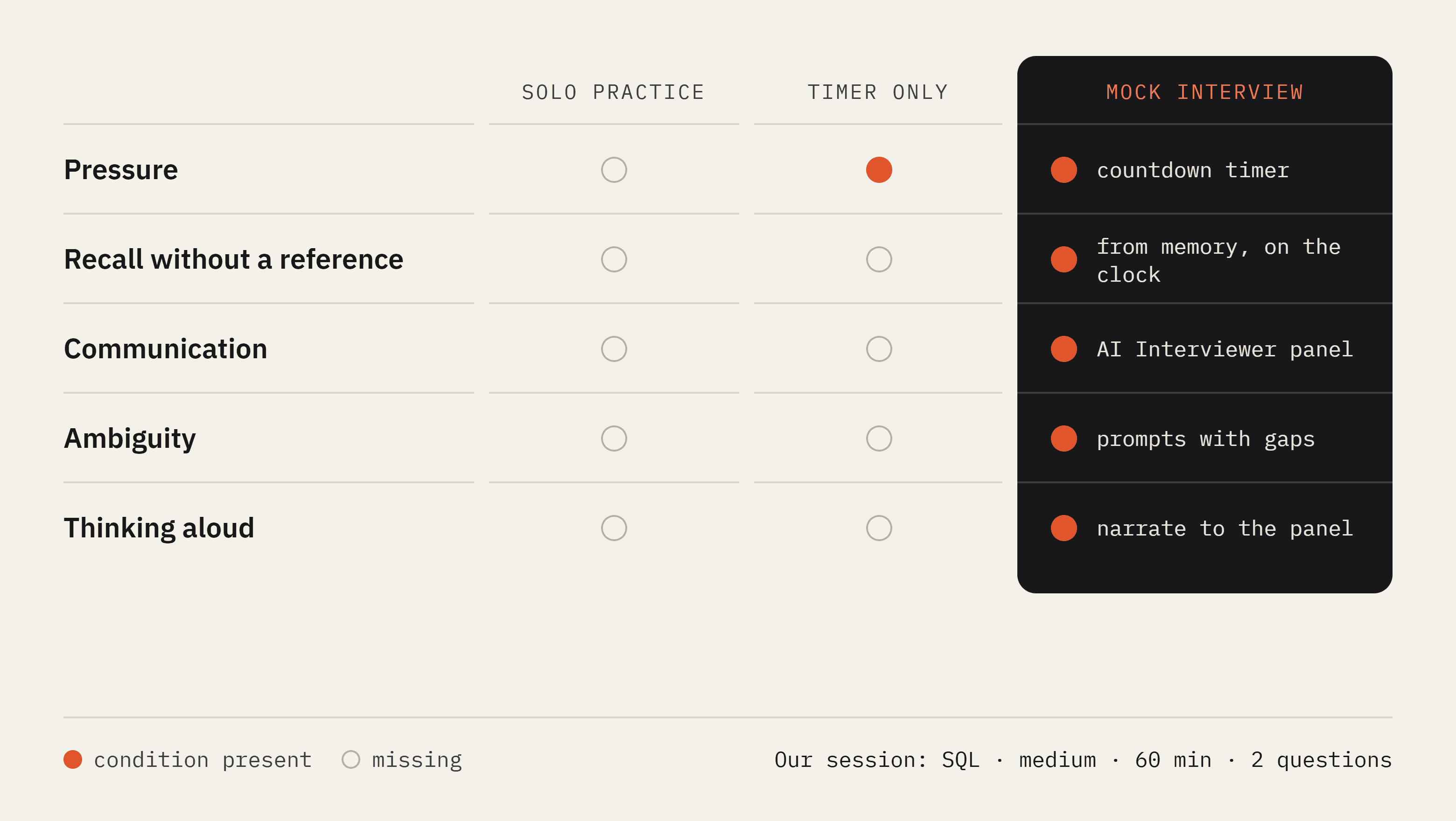
Practicing technical problems in isolation typically eliminates most of these stress-inducing conditions because there is no clock, no listener, and no requirement to explain the logic aloud. The individual solves the problem calmly, verifies the output, and moves forward. While this builds calm problem-solving skills, real interviews demand the simultaneous ability to recall syntax, explain methodology, and ask clarifying questions under pressure.
While a timer alone addresses the element of time pressure, the remaining four conditions require a live listener and a prompt containing deliberate ambiguities. A mock interview environment successfully restores these variables by introducing a countdown timer, an interactive communication panel, and prompts with missing details that must be resolved through dialogue.
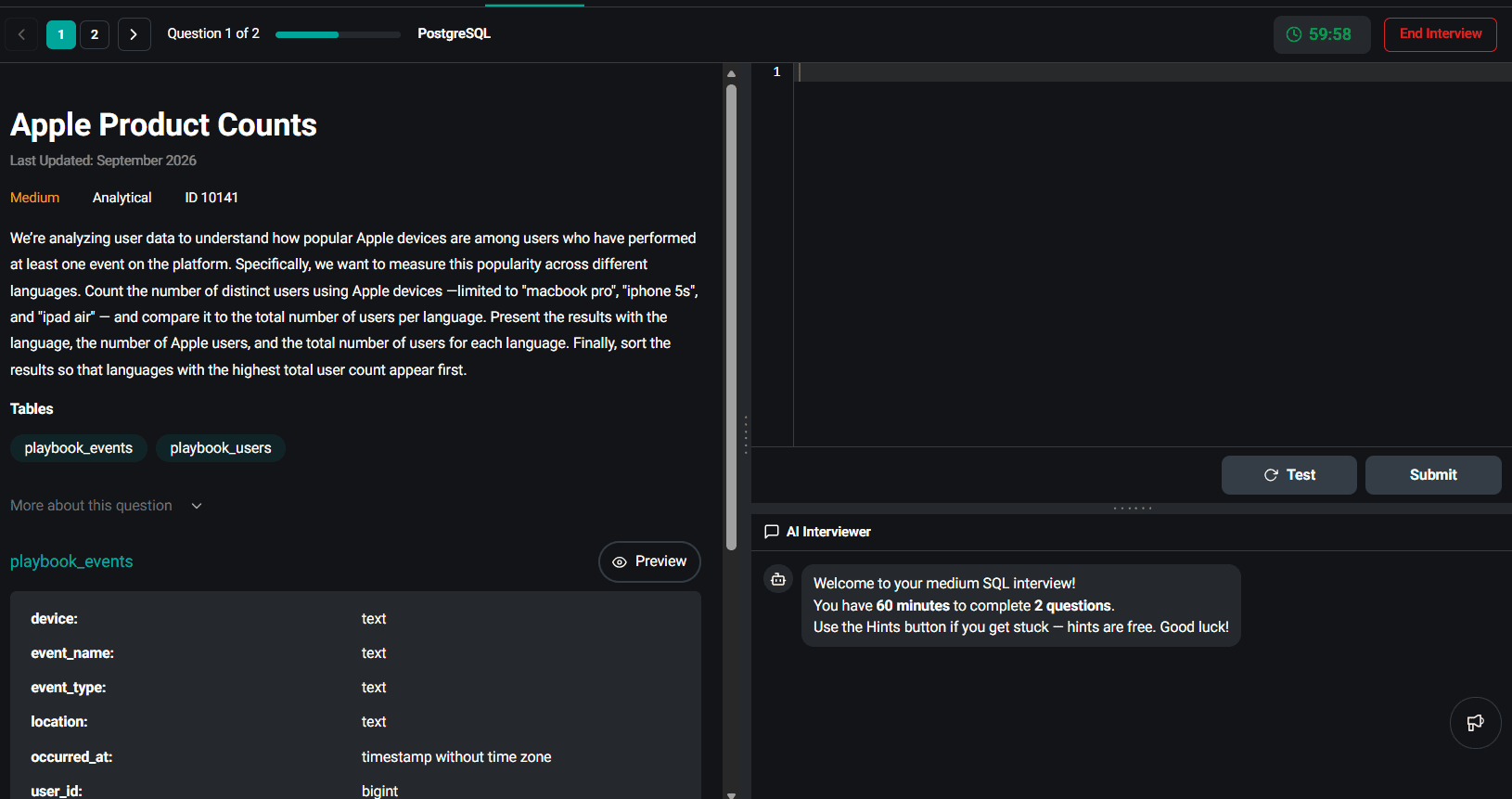
During simulated sessions structured around medium-difficulty database challenges, candidates encounter a countdown timer alongside a question panel containing schema diagrams and sample data tables. Adjacent to these elements sits a code editor complete with test and execution buttons, supported by an evaluation panel where hints can be accessed. Treating such a simulation like a real interview involves starting the clock, reading the prompt carefully, stating clarifying questions and the analytical plan out loud, and only then proceeding to write code.
Analyzing Specific Interview Scenarios
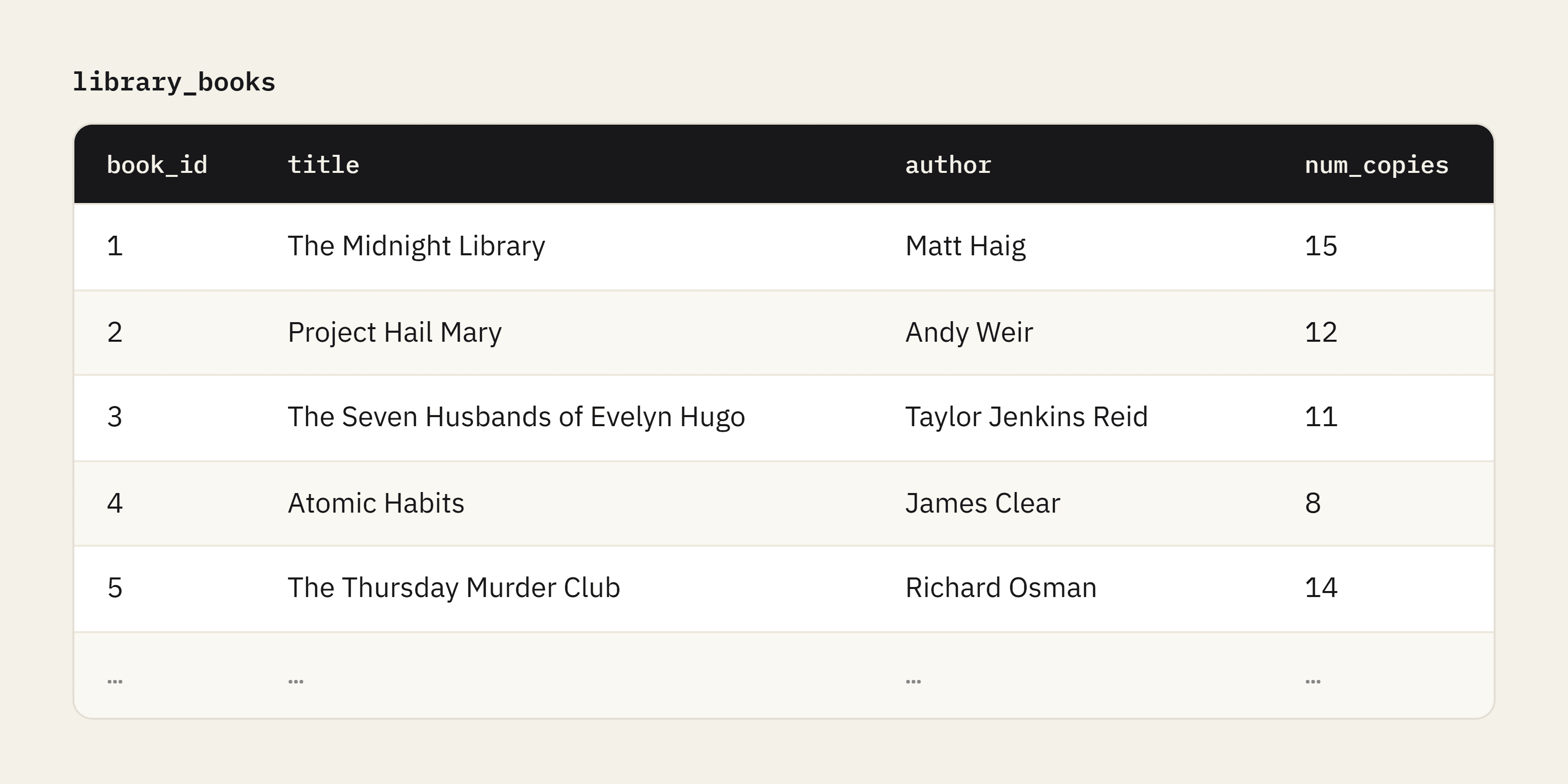
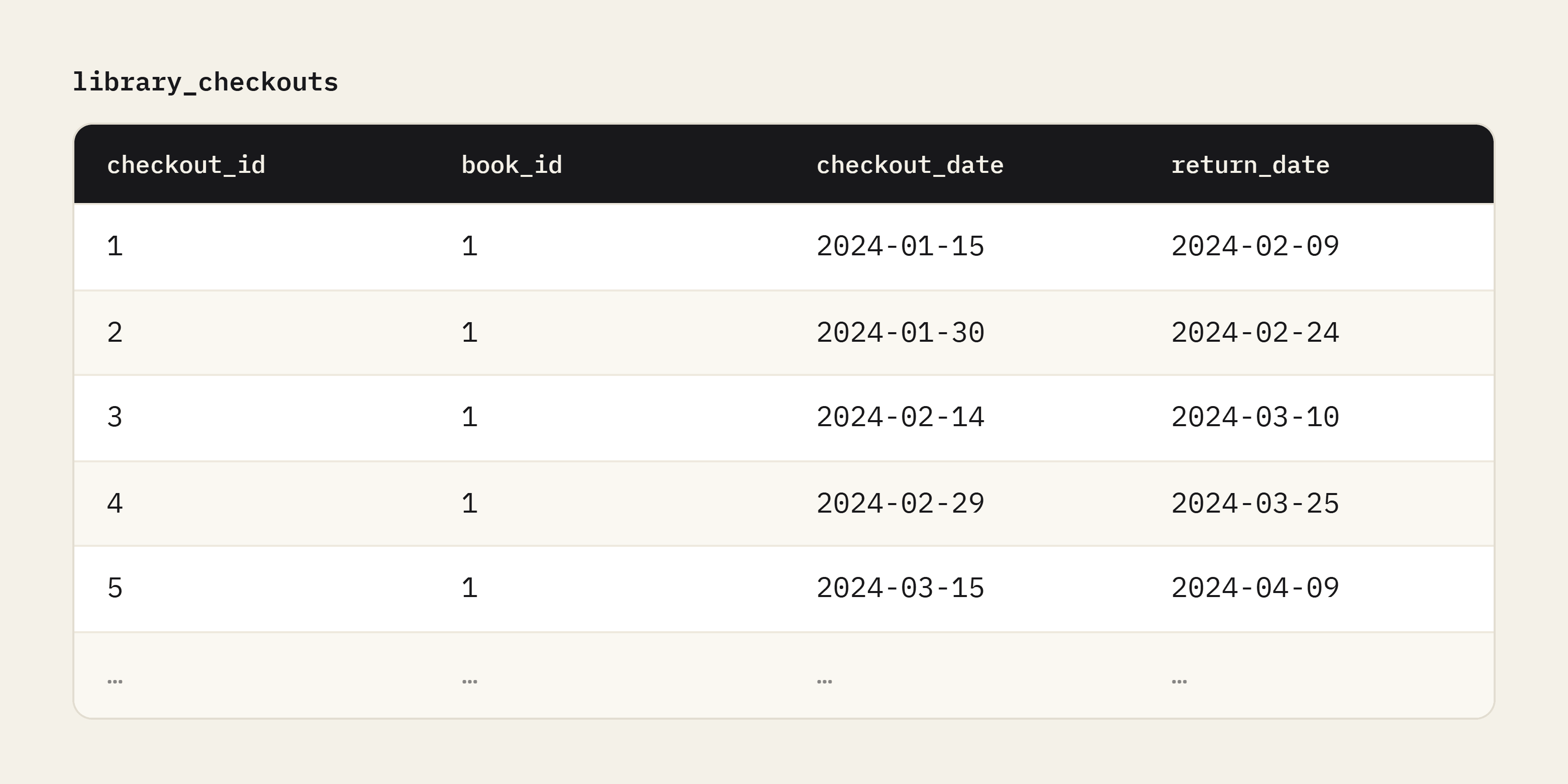
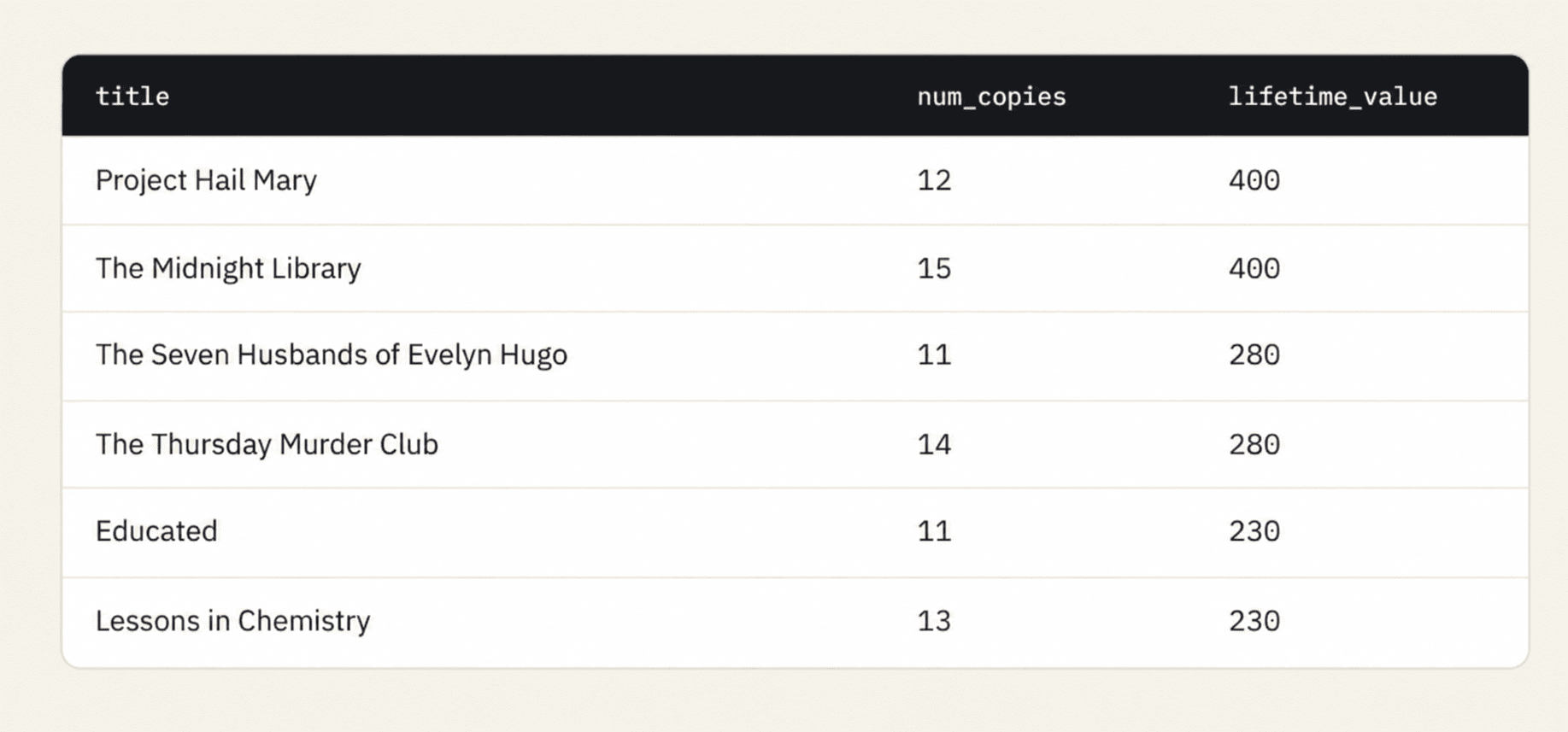
A typical public library analytical problem illustrates these dynamics clearly. The primary goal requires evaluating books that exceed a specific copy threshold, calculating the total duration between checkout and return dates across all completed transactions, ranking the titles based on that aggregated duration, assigning identical ranks to tied items without leaving numerical gaps, and restricting the output to the top three ranks. The resulting dataset requires careful handling of null values representing ongoing checkouts and strict adherence to copy count thresholds.
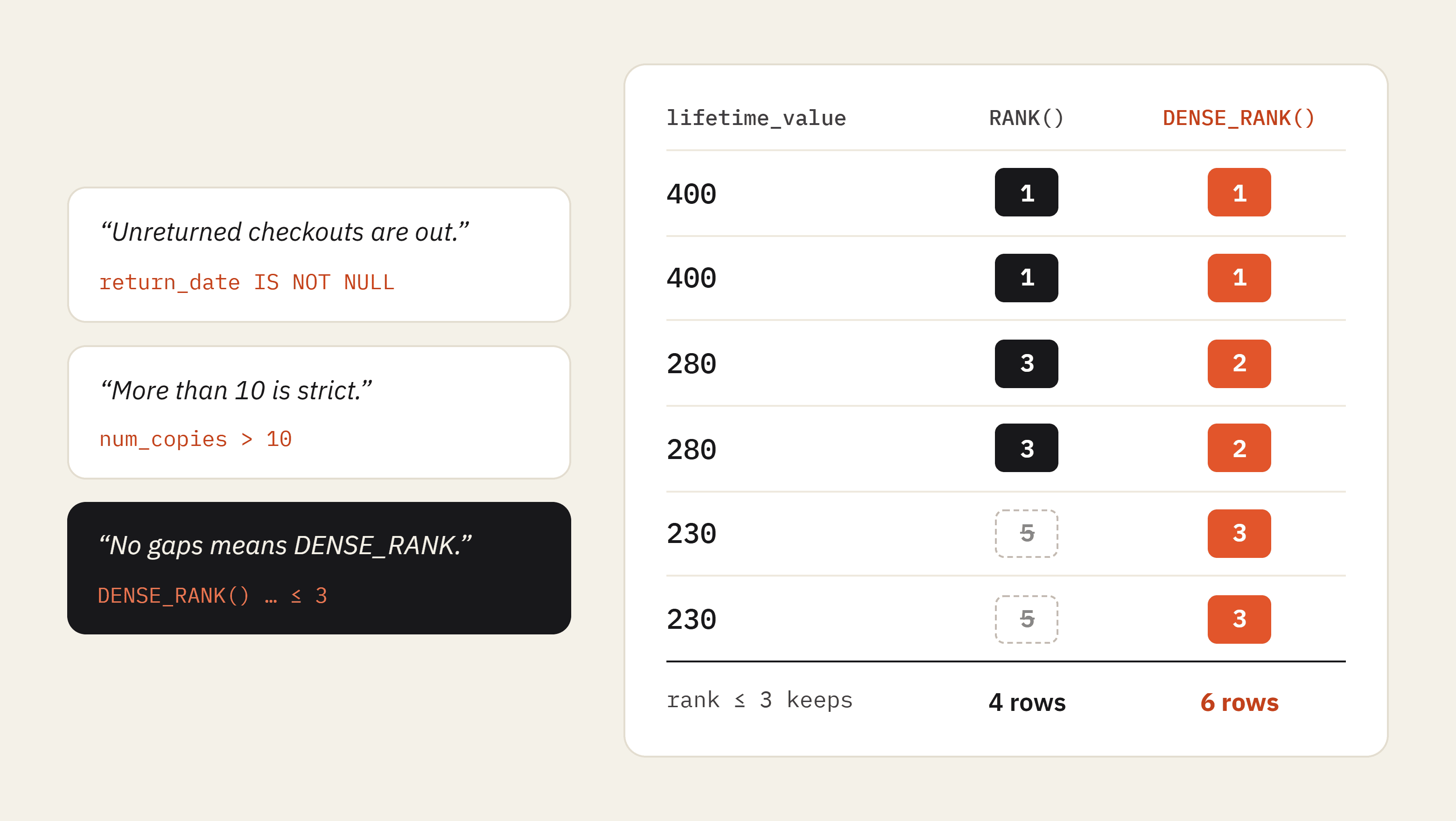
Before writing any database code, articulating the rules out loud prevents costly assumptions. Stating that unreturned checkouts must be excluded, that strict thresholds mean items with exact boundary values are dropped, and that gapless ties require a specific ranking window function ensures the entire logic is sound. Using the appropriate ranking function rather than standard ranking prevents records sharing a rank from improperly pushing tied competitors out of the top tier.
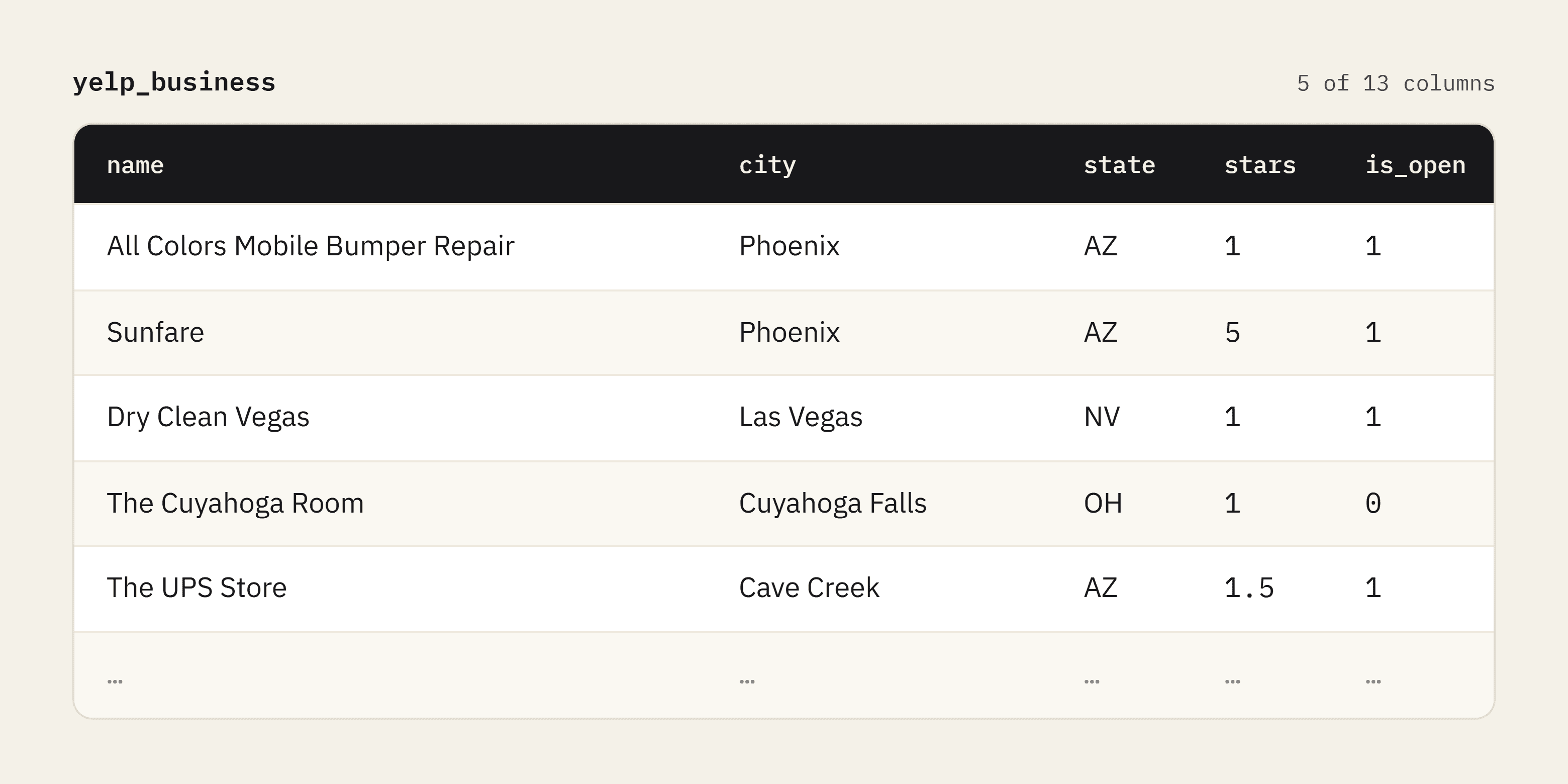
A similar analytical challenge involving business ratings demonstrates how easily context can be misapplied. When tasked with finding the top-performing cities based on the count of businesses holding maximum ratings, candidates must determine whether closed establishments should be included and how standard competition ranking behaves when handling ties. A rushed candidate might mistakenly rely on a simple row-limiting command at the end of the query, which would arbitrarily truncate results when multiple cities share the exact same count of top-tier businesses. Proper implementation requires utilizing ranking functions that correctly account for competition ties and filtering the final dataset based on those assigned ranks rather than an arbitrary row count limit.
Conclusion and Preparation Strategies
The tendency to freeze during technical interviews stems directly from the surrounding environmental conditions, including the ticking clock, the evaluator, the absence of reference documentation, prompt ambiguities, and forced silence. Many common errors trace back to failing to establish critical rules—such as how ties are ranked or which records are excluded—before writing code.
Developing resilience against this freeze requires practicing timed sessions where candidates explicitly state their assumptions and narrate their strategic plan before touching the keyboard. By breaking down problem-solving sessions into distinct phases of reading, clarifying, outlining, and coding, candidates can train themselves to maintain composure. Reviewing past narration habits after a practice session helps identify whether rules were stated proactively or assumed silently, providing clear direction for what aspects of the interview process require further rehearsal. Nate Rosidi, a data scientist, product strategy professional, and founder of the interview preparation platform StrataScratch, emphasizes that mastering these behavioral and communicative hurdles is just as crucial for career success as knowing the underlying syntax.