










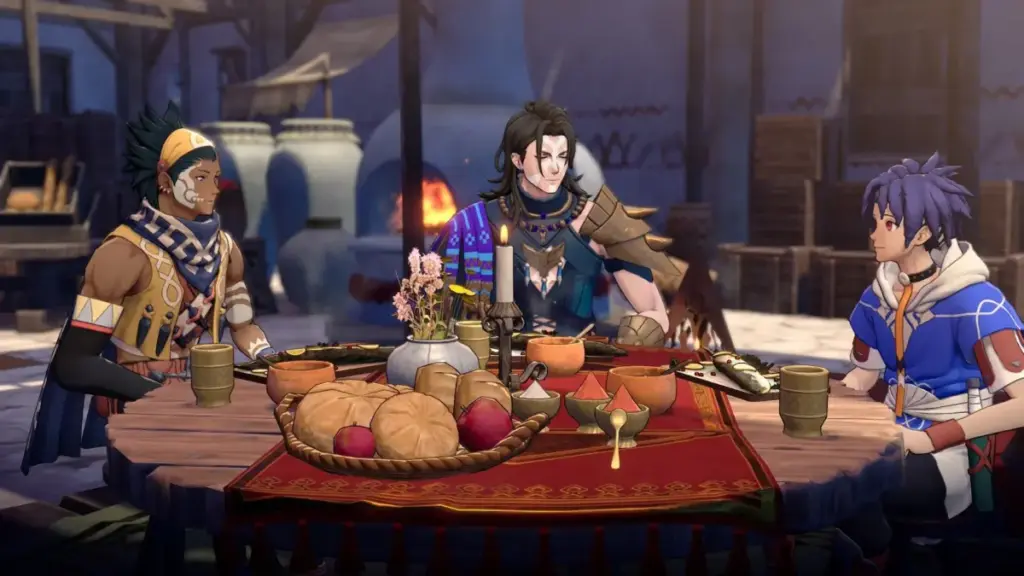
For the first several hours of my time with Fire Emblem: Fortune’s Weave, I found myself wandering the world map with the frantic, singular focus of someone who had entirely lost their grip on reality. It was a cycle of compulsive behavior: check the calendar, scour the vendors for the most expensive or rare gifts, and then embark on a cross-continental pilgrimage to hand-deliver these items to dozens of potential recruits. To my mind, every day was Black Friday, and I was the lead customer in a high-stakes race to clear out every shop’s inventory. I was determined to transform every recruitable character in the game into my new best friend, leaving no stone unturned and no pastry un-gifted.
I spent weeks—in-game months, to be precise—meticulously cross-referencing the full list of recruitable characters. I became a fixture in the city of Dagsion, a place that started to feel less like a bustling hub and more like a logistical nightmare. I was handing out fish sauce to swarthy pirates and artisanal sweets to pegasus riders with such mechanical efficiency that the characters began to blur into a single, indistinguishable mass of pixels. I was so caught up in the grind of social engineering that I eventually hit a wall of exhaustion. It was only when I paused to take a breath that I realized a fundamental truth: I wasn’t actually enjoying Fortune’s Weave. I was treating a tactical masterpiece like a tedious administrative chore.
The Misconception of the Completionist Mindset
Coming into Fire Emblem: Fortune’s Weave, I was fully aware of the game’s structural complexity. It is no secret that the roster is far too large to be fully exhausted in a single playthrough. The game is designed around a multi-path narrative, where certain characters are locked behind specific story routes. Because the game offers the ability to play through the perspectives of four different protagonists, it naturally invites the kind of long-term planning that might suggest a "collect ’em all" approach.


However, my brain—trained by years of RPG completionism—interpreted this as a challenge on par with gathering all 108 Stars of Destiny in the Suikoden series or agonizing over every social link in a Persona game. I felt a phantom pressure to max out every relationship, despite the game’s design clearly suggesting otherwise. Fortune’s Weave is, in reality, far more generous and forgiving than its predecessors or genre peers. If you happen to miss a character during Leda’s specific route, that opportunity isn’t gone forever. You can easily pick them up during a subsequent playthrough as Cai, Deitrich, or Theodora.
For those who aren’t interested in a second full campaign, the game offers a much lower barrier to entry: you can simply replay a specific chapter of Leda’s route, allowing you to focus your efforts on the specific character you missed rather than attempting to juggle the entire cast at once. Intellectually, I knew there was no strategic or narrative necessity to recruit everyone on my first run. But the internal compulsion to "win" the social simulation side of the game was a powerful force that blinded me to the fact that I was wasting an immense amount of time on a self-imposed goal that added nothing to my core experience.
The Cost of Renown and Tactical Neglect
The first act of Fire Emblem: Fortune’s Weave is deceptively structured. Each of the four protagonists is given a twelve-chapter arc to establish their story and their team. As you progress through these chapters, your "renown rank"—one of the primary mechanics governing your ability to recruit new allies—begins to rise naturally. This is where the trap is set. As your renown increases, the pool of recruitable characters expands, and suddenly, the game makes it feel like you are just one swanky dinner or one high-quality gift away from adding anyone you want to your roster.

This realization led me down a dangerous path. During the middle chapters of Leda’s story, I found myself consistently scraping by during battles, my units underleveled and struggling against enemies that should have been manageable. I was essentially playing the game at a disadvantage, not because of a lack of skill, but because of a lack of focus. I was so preoccupied with expanding my roster of potential teammates that I had neglected the actual training and development of the team I already had. I was spending my resources on potential recruits who would likely never see a battlefield, rather than investing in the soldiers who were currently carrying me through the narrative.
Learning to Play Favorites
One of the most important lessons Fire Emblem: Fortune’s Weave eventually forced me to learn is that the game is designed to encourage, rather than discourage, favoritism. As I played through Leda’s route, I noticed that the majority of the main story battles—specifically those during the "Heroic Games"—imposed a strict limit on deployment. Usually, this cap hovered between five and seven party members.
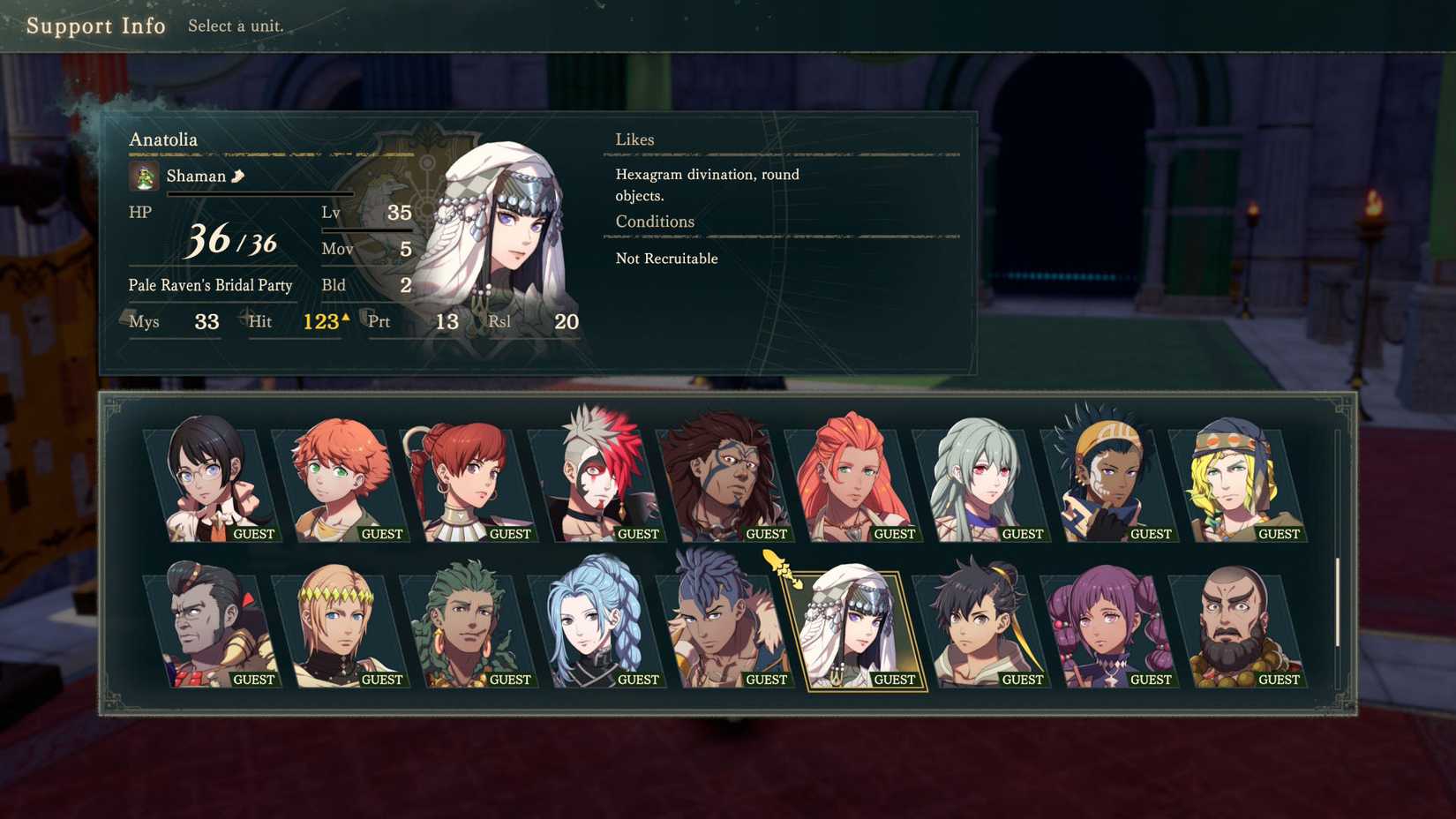
When you look at the math, the reality of my situation became painfully clear. I had spent hours and hours of real-world time wooing characters, only to have a full dozen of them sitting idle in my barracks. There are very few tactical scenarios in the game that call for a party composition consisting of six different mages, yet I had spent the better part of a week collecting them like trading cards. My most effective units weren’t the ones I had painstakingly recruited through gift-giving; they were the ones I had started with by default, or the select few I had actually bothered to take into combat and level up. The "rotating ensemble" of three or four key recruits that I invested actual combat time into became the backbone of my army, rendering the other forty-plus characters little more than window dressing.
A Lesson in Quality Over Quantity
It took me several hours longer than it should have to internalize this, but I finally reached a point of clarity. Trying to be everyone’s best friend in Fire Emblem: Fortune’s Weave is an exhausting, Sisyphean task. It is a cycle of effort that is, for all intents and purposes, doomed to failure because the game simply isn’t built to support such a broad focus.
The shift in my perspective has been liberating. I’ve started choosing a small, manageable number of characters who genuinely catch my eye early on, focusing my attention on developing their skills and their backstories. I have accepted that while a few of these pairings will result in a powerful bond, many others will simply be "duds" that don’t fit my current tactical needs. That is part of the charm of the experience. The game is much more rewarding when you stop trying to optimize the social aspect and start focusing on the actual tactical growth of a core group.
If there is one piece of advice I would offer to anyone just starting their journey, it is to stop worrying about the full roster. Don’t let the pressure of "completion" ruin the flow of your campaign. If you see a character you like—perhaps that sad goth girl with the cool hat—feel free to pursue them, but don’t feel obligated to curate a massive, unwieldy army of acquaintances you’ll never use. In Fortune’s Weave, as in so many other aspects of life, you are better off with a few deep, meaningful connections than a vast, shallow network of people who are just waiting for a fish sauce gift that you don’t actually need to give them. Play the game you want to play, not the one your completionist instincts tell you you must.