








The artificial intelligence landscape is undergoing a subtle yet profound shift. A growing number of users, developers, and organizations are moving away from purely cloud-based setups, choosing instead to run advanced machine learning models directly on their own hardware. Driven by a demand for heightened privacy, stricter data control, and predictable operating costs, this movement reflects a maturing ecosystem where powerful open-source alternatives are challenging the dominance of proprietary subscriptions.
For many enthusiasts and professionals, the primary barrier to adopting local AI has never been the models themselves—many of which match or exceed commercial offerings—but rather the lack of a polished user experience. Commercial platforms like ChatGPT have set high expectations for file support, tool integration, multi-model flexibility, and conversational interfaces. However, the open-source community has responded with robust frontends that replicate or even surpass these features while keeping data entirely on local machines or private servers.
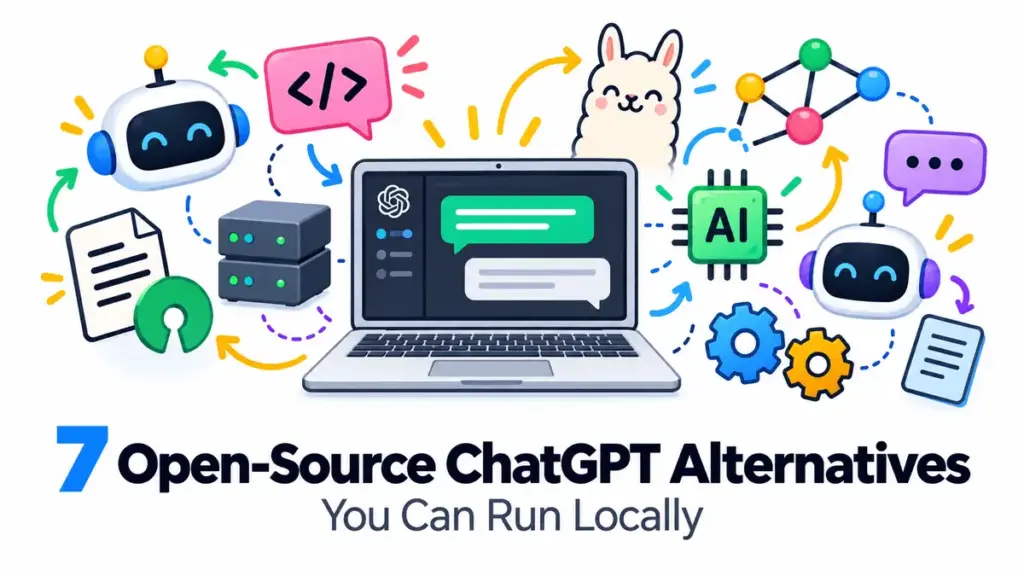
A comprehensive examination of seven leading open-source interfaces highlights the diverse ways users are bridging the gap between raw local model inference and a seamless, ChatGPT-style experience. These tools cater to varied needs, ranging from lightweight, single-model chat applications to enterprise-grade workspaces complete with document ingestion and autonomous agent capabilities.
Open WebUI
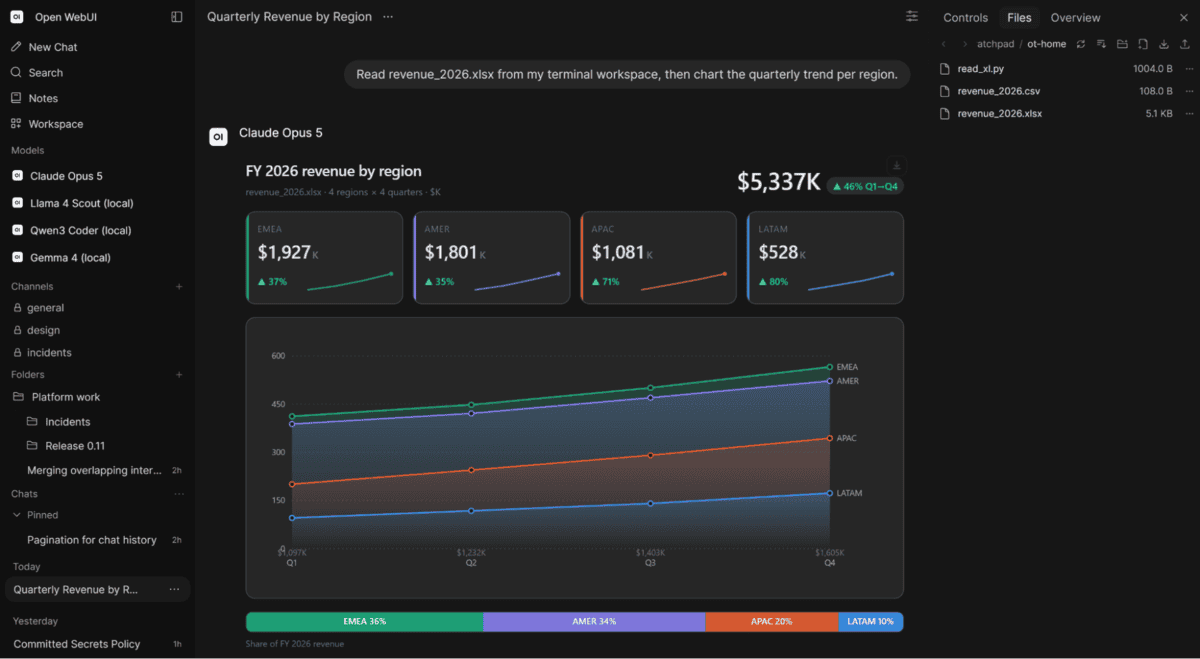
Among the earliest and most widely adopted interfaces for local deployments is Open WebUI. Designed with a polish that closely mimics commercial AI products, the platform allows users to interact with models, upload files, manage conversation histories, and switch between different underlying engines effortlessly.
The software integrates seamlessly with backends like Ollama, llama.cpp, or any OpenAI-compatible API, often automatically detecting local instances upon startup. Rather than functioning as a bare-bones chat window, Open WebUI positions itself as a comprehensive local workspace, accommodating multi-user environments and advanced tool integrations that make self-hosting accessible to non-technical users while remaining flexible enough for developers.
llama.cpp WebUI
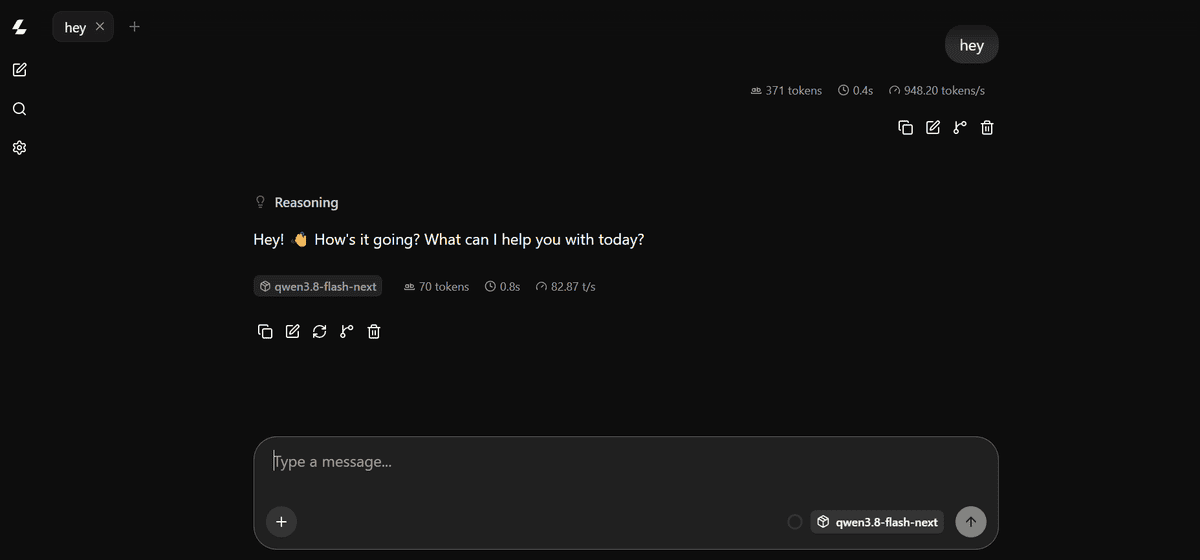
For users who prioritize minimal overhead and resource efficiency, the native web interface bundled with llama.cpp offers a streamlined solution. By executing the core server binary, administrators instantly gain access to both a high-performance OpenAI-compatible API and a browser-based chat window without the need to install separate containerization tools or complex software stacks.
This lightweight approach retains essential features such as streaming responses, reasoning outputs, parameter adjustments, and document attachments. By leveraging the same server instance for both backend inference and frontend interaction, users can run quantized GGUF models locally with minimal resource consumption, avoiding the performance penalties associated with heavier middleware layers.
LobeHub
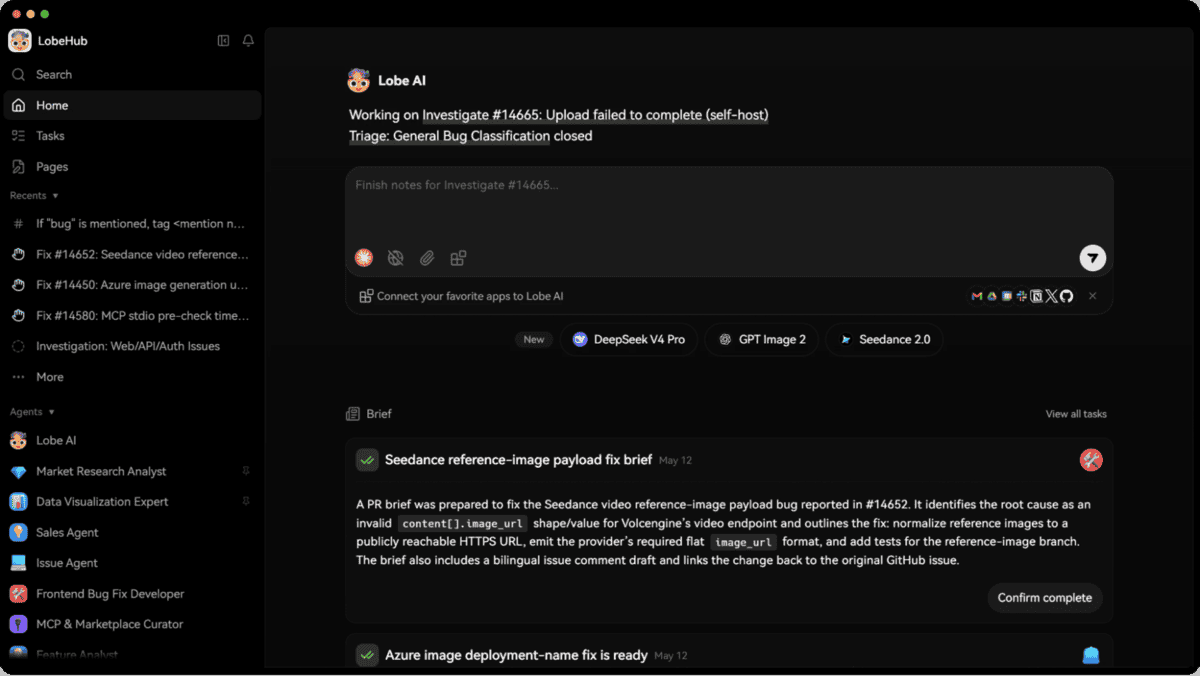
Expanding beyond standard text generation, LobeHub delivers a highly polished interface tailored toward productivity and task-specific automation. While it connects easily to local runtimes via Ollama for everyday conversation, its true strength lies in its agent-centric architecture.
Users can configure specialized assistants dedicated to coding, academic research, or technical writing, equipping each agent with distinct system prompts and localized tools. The visual presentation rivals commercial Software-as-a-Service platforms, making LobeHub an attractive option for individuals looking to transition from basic chat applications to a structured, highly personalized digital workspace.
AnythingLLM
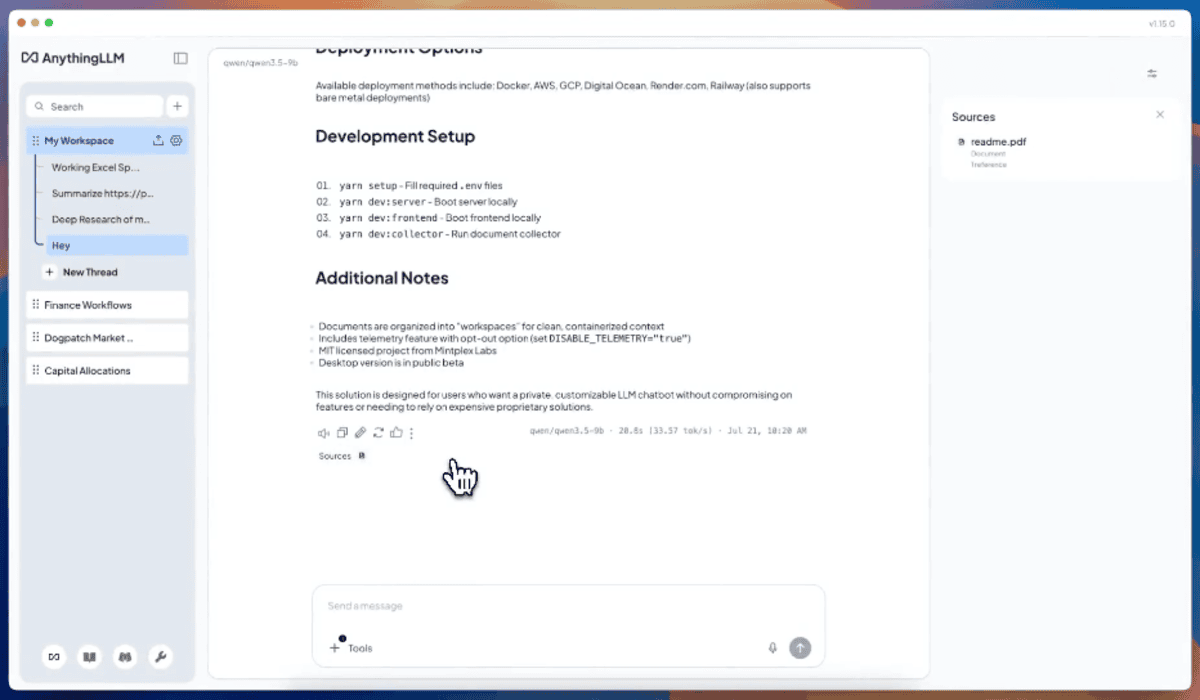
When the primary objective involves document analysis and retrieval-augmented generation, AnythingLLM provides a purpose-built environment. The platform enables users to ingest vast repositories of local data—ranging from technical documentation to academic archives—and organize them into isolated, compartmentalized workspaces.
The application abstracts away the complexities of vector database management, document chunking, and pipeline engineering. By handling ingestion entirely on local hardware, AnythingLLM transforms a standard large language model into a private knowledge assistant capable of citing internal sources without exposing sensitive corporate or personal data to external cloud providers.
Jan
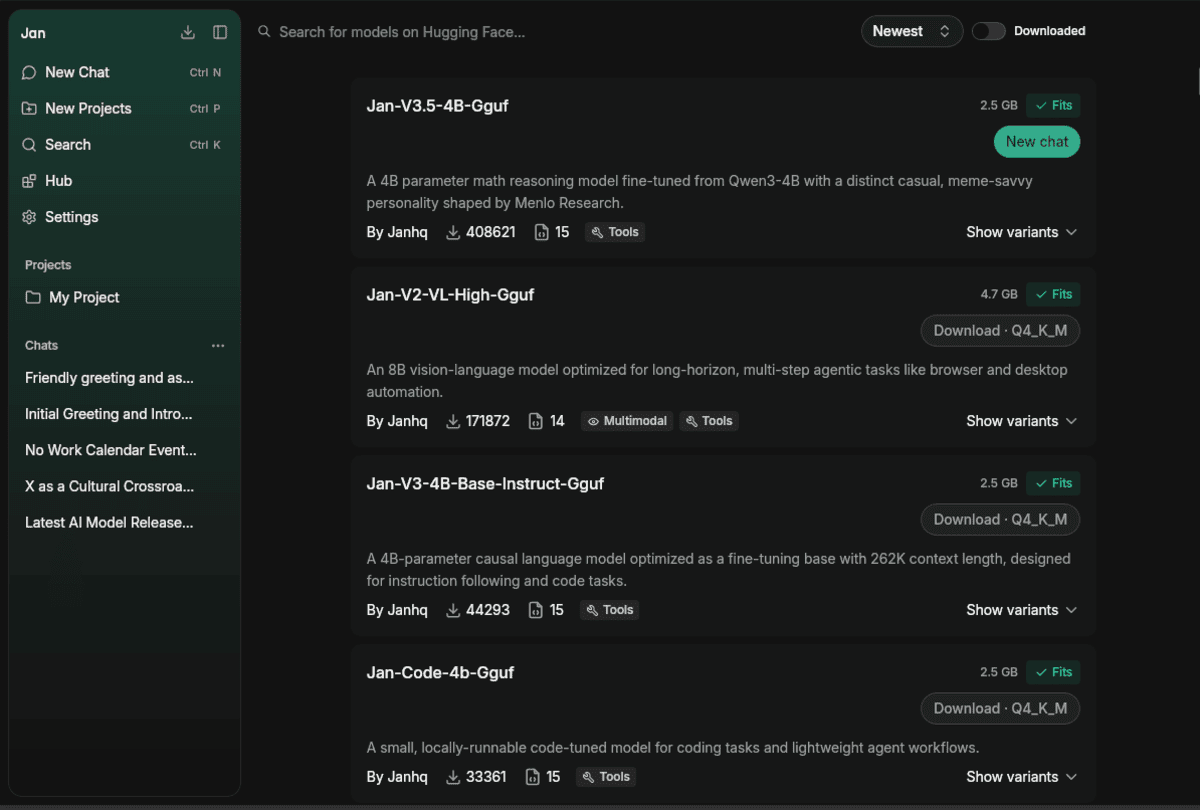
Addressing the friction often associated with configuring infrastructure, Jan offers a simplified, desktop-native approach to local AI. Distributed as a standalone application, it eliminates the requirement for Docker environments or command-line server management.
Users can install the software, download desired open-source weights directly through the interface, and immediately begin interacting with an offline assistant. While it hides much of the underlying technical complexity to ensure an effortless out-of-the-box experience, Jan still provides access to advanced configuration options for power users seeking deeper control over their hardware resources.
LibreChat
For environments demanding enterprise-grade flexibility, LibreChat stands out as one of the most feature-rich alternatives available. The platform supports complex multi-provider architectures, advanced user authentication, conversation search, and robust code execution environments.
Beyond standard text interfaces, LibreChat incorporates support for autonomous agents and modern protocol standards, allowing organizations to unify disparate local and remote model endpoints under a single administrative umbrella. While its extensive feature set may exceed the requirements of casual users, it serves as a powerful foundation for teams building private, scalable AI infrastructure.
Hugging Face Chat UI
Rounding out the ecosystem is the Hugging Face Chat UI, a clean, developer-focused frontend designed to interface directly with existing inference servers. Compatible with any OpenAI-compliant backend—including Ollama and llama.cpp—the platform avoids proprietary lock-in while delivering core functionalities like streaming text, multimodal inputs, and model switching.
Though it lacks the all-in-one workspace feel of platforms like Open WebUI, its lightweight footprint makes it an ideal choice for technical users who have already established their own inference pipelines and simply require a dependable, standardized chat interface.
Conclusion
Ultimately, platforms like ChatGPT function primarily as frontends connecting users to underlying intelligence models capable of text generation, coding, analysis, and task execution. The growing maturity of open-source alternatives demonstrates that users no longer need to compromise privacy or pay recurring subscription fees to achieve a comparable workflow.
Whether the priority is document management, lightweight efficiency, agent orchestration, or enterprise deployment, the current generation of open-source interfaces empowers individuals and organizations to reclaim complete ownership over their AI infrastructure, tailoring every layer of the technology stack to their precise operational needs.