









Apple’s highly anticipated entry into the foldable smartphone market, the iPhone Duo, has generated significant buzz since its formal announcement earlier this month. As the tech industry watches closely, the device represents Apple’s answer to the evolving foldable landscape—a space dominated for years by rivals like Samsung. With the iPhone Duo scheduled to hit retail shelves next month, initial public sentiment is a mixture of excitement and cautious skepticism. While early hands-on impressions have provided a glimpse into the device’s form factor and capabilities, the true test of its engineering—specifically the visibility and longevity of its screen crease—remains an open question that only time and real-world usage will answer.
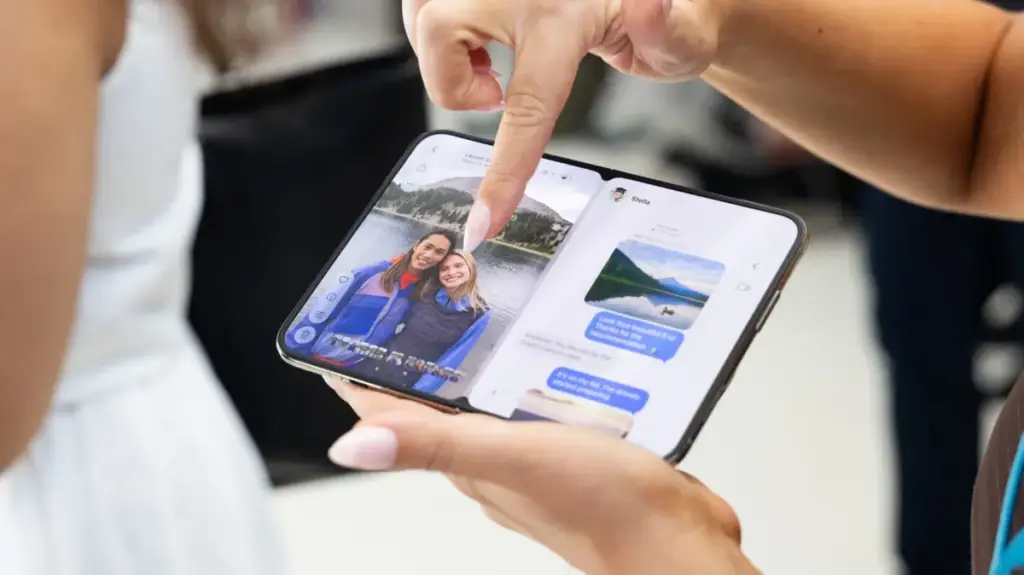
A focal point of the device’s marketing and technical discussion is its innovative nano-texture display. Designed to address one of the most persistent aesthetic drawbacks of foldable technology, this matte-finish coating aims to diffuse light and minimize the visibility of the hinge’s fold line. During initial demonstrations, the technology appears effective; observers have noted that the crease is significantly less noticeable than on competing devices. However, industry analysts and tech enthusiasts are tempering this optimism with a healthy dose of reality, acknowledging that a display fresh out of the box provides only a fleeting look at what may become a more pronounced feature after thousands of cycles of use.
The Inherent Challenge of Foldable Displays
The fundamental struggle with foldable smartphones has always been rooted in the laws of physics. Creating a display that is flexible enough to bend repeatedly while remaining durable and visually seamless is an engineering hurdle that manufacturers have spent years attempting to clear. Despite significant advancements in materials science and hinge design, the "crease" persists as an architectural reality of current foldable screen technology.

While brands have made measurable progress—making these folds shallower, thinner, and less intrusive to the touch—they remain a structural byproduct of the folding mechanism. Apple’s strategy with the iPhone Duo is to mitigate this visual disruption through its signature attention to finish. By applying a specialized nano-texture coating, Apple has successfully reduced the specular reflection that typically highlights a crease under ambient light. In controlled environments, this makes the center of the screen look remarkably flat.
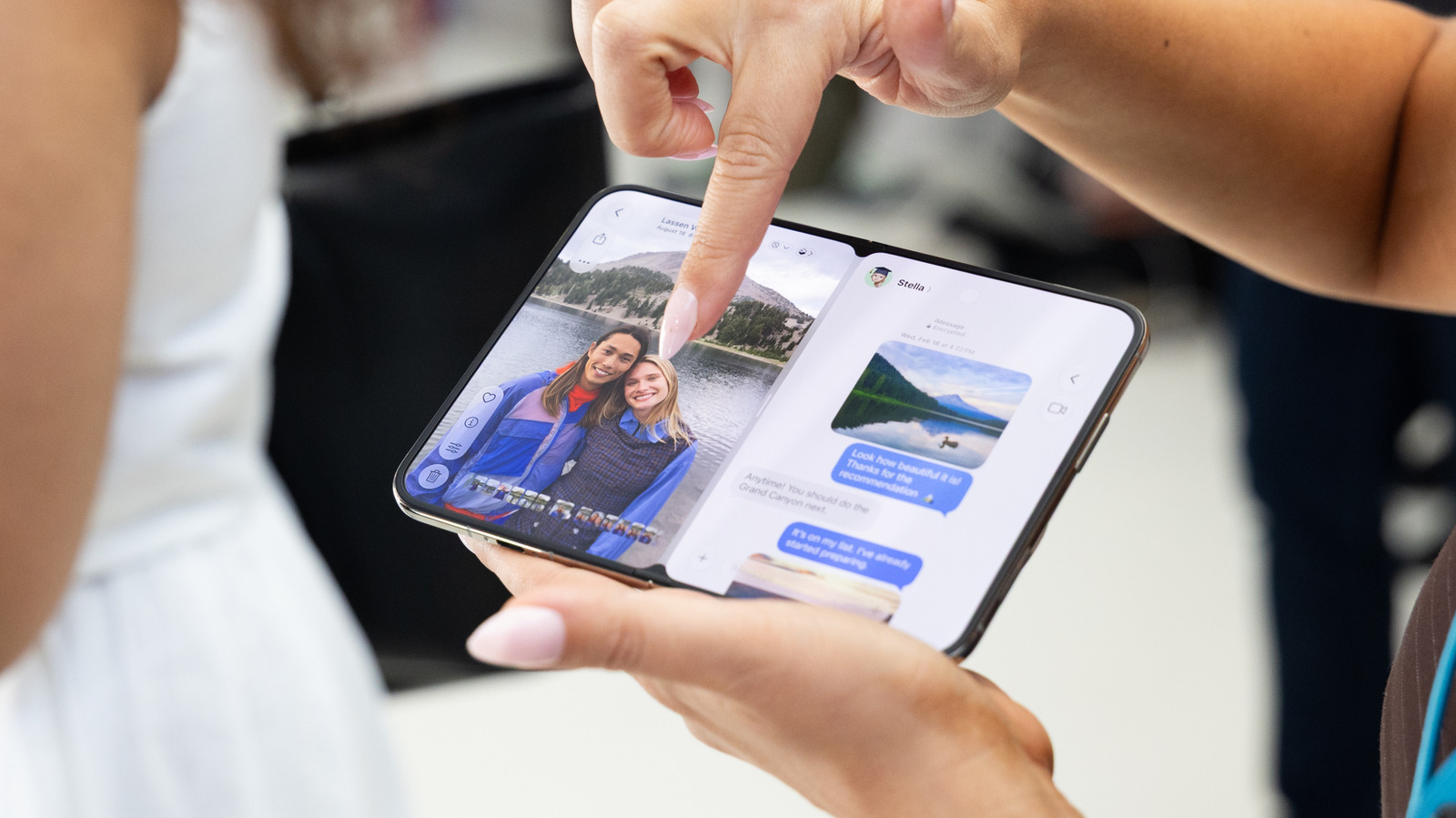
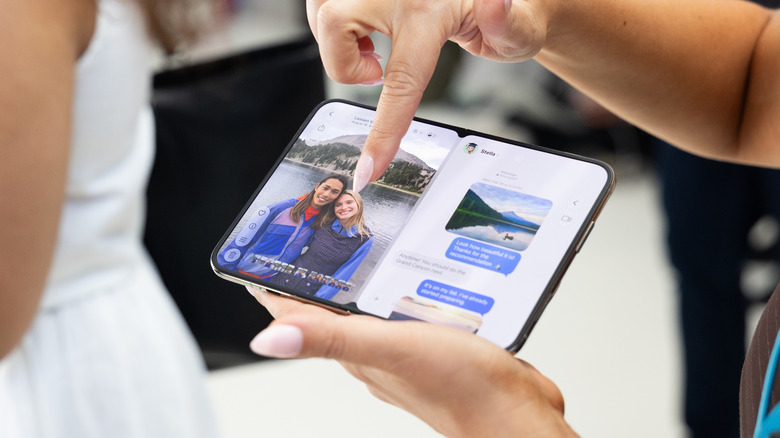
However, professional reviewers who have handled the device early on point out a nuanced distinction: the screen may look smooth, but it can still be felt. Our own hands-on experience with the iPhone Duo suggests that while the eye might be fooled by the clever light-diffusing surface, the tactile sensation of the hinge remains present. The question is no longer just about visibility, but about the long-term integrity of that material and the surface coating itself.
The Reality of Cumulative Wear and Tear
The skepticism surrounding the iPhone Duo is not a critique of Apple’s current implementation, but rather a reflection of the history of foldable smartphones. To understand the potential long-term performance of the iPhone Duo, one must look at the lifecycle of previous market leaders, such as the Samsung Galaxy Z Fold 8.
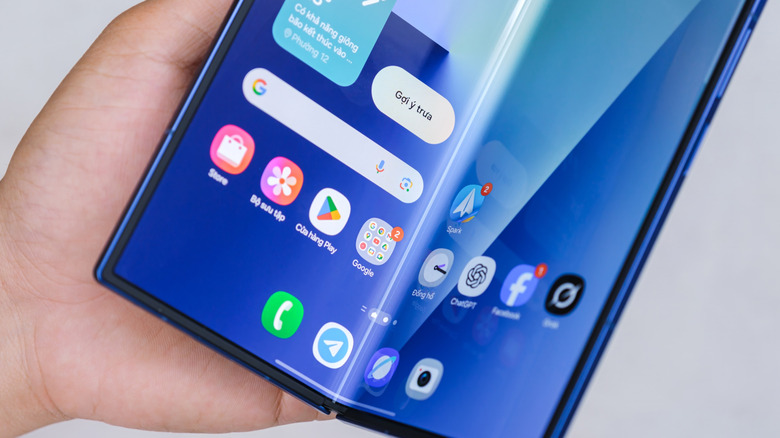
When devices like the Galaxy Z Fold are unboxed, they often appear pristine, with screens that seem almost entirely flat. Yet, the degradation of that visual uniformity is a known phenomenon. As a device is opened and closed thousands of times, the stress on the screen material, the underlying digitizer, and the protective top layer accumulates. Over months or years, what begins as a minor indentation can evolve into a more distinct crease, and in some cases, lead to surface micro-cracking or display damage.
This cumulative damage is the "silent" variable in the foldable equation. While Apple has certainly conducted rigorous internal testing to simulate years of folding, the chaotic nature of daily consumer use—varying temperatures, pocket lint, accidental drops, and the uneven pressure of typing or gaming—cannot be fully replicated in a laboratory. The online discourse surrounding foldable devices is already filled with user-reported issues concerning screen durability, making the public wary of the "newness" of any folding product.
Looking Beyond the Initial Hype
Apple executives have been vocal about their pride in the iPhone Duo, specifically highlighting the durability of the hinge mechanism and the resilience of the display’s protective layers. There is a palpable confidence emanating from Cupertino regarding the device’s ability to withstand the rigors of long-term ownership. However, corporate assurances are only one piece of the puzzle. The true litmus test will begin once the device is in the hands of millions of consumers, who will subject the phone to the unpredictable wear and tear of everyday life.
In the tech media ecosystem, this means the iPhone Duo is about to enter its most critical phase of review: the long-term analysis. While early "first impressions" provide value regarding the device’s software experience and initial build quality, they are effectively a snapshot in time. They cannot account for how the nano-texture coating will hold up against the oils from human skin, the friction of repeated folding, or the environmental stressors that eventually degrade screen protectors and glass surfaces alike.
We can expect a wave of "extreme durability" tests from various reviewers and content creators in the coming months. These tests, while sometimes unorthodox, often reveal the breaking points of new hardware, and they will likely be the first to show whether the iPhone Duo’s crease remains as subtle after six months as it is on day one.
Despite these valid concerns, it is impossible to ignore the significance of what Apple has achieved. If the iPhone Duo can indeed maintain its visual integrity better than its predecessors, it will represent a substantial leap forward for the entire category. By focusing on light management as a primary tool for concealing the crease, Apple is forcing the rest of the industry to reconsider how they approach the "foldable" user experience.
Even if the crease inevitably becomes more visible over time, Apple’s contribution to the foldable market has already generated a positive momentum. The mere fact that the crease is less intrusive out of the box than on previous-generation devices is a promising start. As the competition watches to see how the public receives the iPhone Duo, we are likely to see a rapid iteration cycle in display coatings and hinge technology across the industry.
Ultimately, the excitement surrounding the iPhone Duo is justified, but the verdict on its long-term viability remains reserved. For now, the screen is as impressive as it is untested. Consumers who purchase the device at launch will be participating in an ongoing experiment in engineering, one that will eventually tell us whether the crease is a permanent compromise or a problem that can finally be relegated to the history books of smartphone evolution. As the release date approaches, the industry waits with bated breath to see if Apple has truly redefined the foldable standard or if the laws of physics will, as they have before, eventually have the final say.