











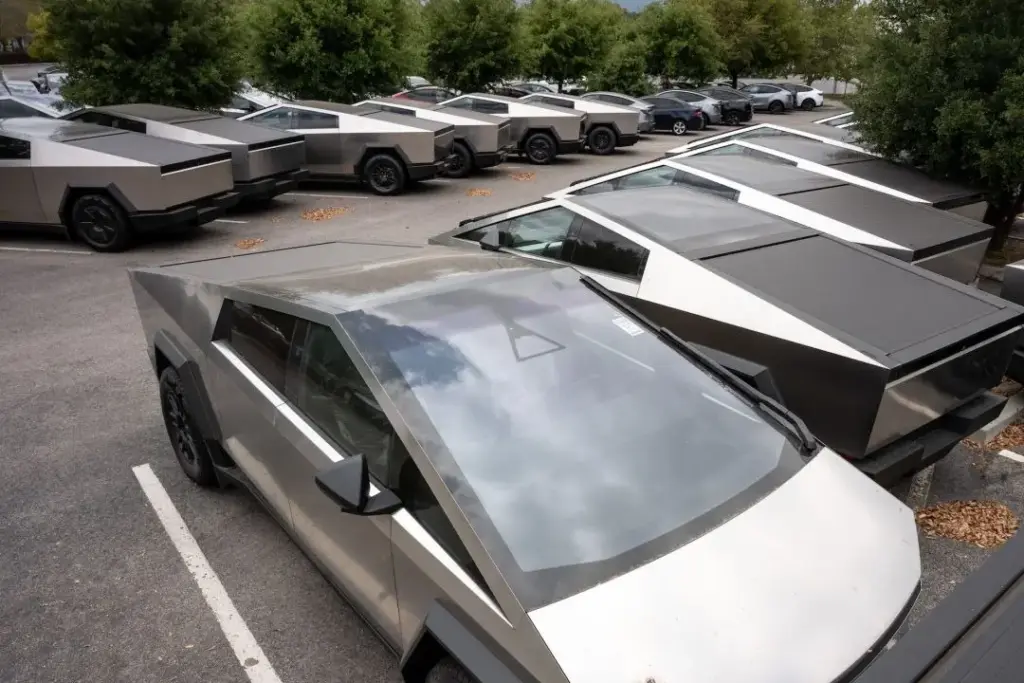
While the Tesla Cybertruck may have struggled to meet the lofty, high-volume production and sales projections originally set by CEO Elon Musk during its much-hyped launch, the futuristic, stainless-steel electric pickup is proving to be a surprising success story in a different arena: the pre-owned vehicle market. Despite its divisive design and a production lifespan that is now officially nearing its end, the Cybertruck has emerged as one of the most sought-after vehicles for buyers looking to skip the wait or capitalize on a unique asset, according to recent data analysis from the automotive research platform iSeeCars.com.
The findings, based on an exhaustive review of over 1.1 million sales of used vehicles—specifically those between one and five years old—conducted in October 2026, provide a granular look at how consumer preferences are shifting. By measuring the average “days on market,” iSeeCars was able to determine which vehicles move the fastest once they are listed for sale. The results place the Cybertruck at the head of the pack for the entire truck category, a significant achievement for a vehicle that has spent much of its life cycle shrouded in controversy and production delays.
According to the report, the Tesla Cybertruck averaged just 39.1 days on the market in October. This figure stands in stark contrast to the broader truck segment, which averaged 65.5 days to find a new owner. The Cybertruck’s performance outpaced other popular, albeit more conventional, contenders, including the Ford Maverick Hybrid, which secured the second-fastest spot, and the Rivian R1T, which followed in third place. This velocity suggests that despite the mixed reception of the vehicle’s aesthetic and its complex manufacturing requirements, there remains a persistent and vocal segment of the market eager to own one.

A Broader Shift Toward Electric Mobility
The rapid turnover of the Cybertruck is not an isolated phenomenon; rather, it is emblematic of a broader, accelerating trend within the used vehicle ecosystem. iSeeCars.com’s analysis highlights that used battery electric vehicles (BEVs) are currently among the most liquid assets on the secondary market. Of the 25 fastest-selling used vehicles identified in the October study, a staggering 16 were fully electric. This data point is particularly telling, as it suggests that the "EV revolution" is no longer confined to the new car showroom, but has firmly taken root in the used car lot.
The data further clarifies that the interest in electric vehicles is outpacing interest in traditional hybrids. On average, used EVs are staying on the market for 45.6 days. In comparison, hybrid vehicles take an average of 54.5 days to sell, while internal combustion engine (ICE) vehicles lag behind at an average of 61 days. This delta suggests that as charging infrastructure improves and a larger volume of used EVs enters the market, the traditional stigma or hesitation associated with owning a used battery-powered car is rapidly evaporating.
However, the trend is not universal. The iSeeCars data serves as a cautionary tale that the market is still highly selective. While some EVs are flying off the lots, others are languishing. The study highlighted the Cadillac Escalade IQ as the slowest-selling vehicle in the entire dataset, lingering on the market for an average of 134.3 days—more than double the industry average. This disparity suggests that buyers are looking for value, utility, and brand specificities rather than simply purchasing any available electric vehicle.
The Role of Economic Pressures and Fuel Costs
Karl Brauer, the executive analyst at iSeeCars.com, notes that these shifts in the secondary market are heavily influenced by external economic factors, most notably the persistent volatility of gasoline prices. Since March 2026, high fuel costs have fundamentally altered consumer buying habits. When faced with the prospect of long-term fuel expenditure, many prospective truck owners are pivoting away from traditional, gas-guzzling internal combustion pickups in favor of the lower “fueling” costs associated with electric drivetrains.
“High gasoline prices have changed consumer-buying habits, prompting more people to opt for an EV or hybrid over an internal combustion engine vehicle,” Brauer explained in an interview with TechCrunch. He suggests that if these elevated fuel prices persist, the trend toward electric and hybrid adoption in the used market will likely continue, creating a self-sustaining cycle of demand that manufacturers and dealers will need to navigate.
The Cybertruck’s unique position in this market is further bolstered by the nature of its ownership history. Because the truck has only been available for a relatively short period, a significant volume of units is currently coming off initial leases and entering the used market for the first time. For many buyers, the price point of a used Cybertruck—which is often attractive relative to its original MSRP—represents an entry point into a vehicle that was previously out of reach or constrained by supply bottlenecks.
The "Scarcity Effect" and Future Market Outlook
Perhaps the most critical factor influencing the Cybertruck’s current market performance is the looming end of its production run. The October sales data captured the market climate just weeks before Tesla officially announced that it would cease manufacturing the Cybertruck in 2027. Even before that news was made public, the relative rarity of the vehicle was driving a high level of interest. Once the announcement was confirmed, it introduced a new psychological driver for buyers: the “scarcity effect.”
“The canceling of the new Cybertruck is making people kind of aware—it’s like, ‘oh wow, these things aren’t going to be coming anymore,’” Brauer observed. “Whatever demand is for them, supply will not be continuing to grow.”
This realization is expected to create a complex, oscillating demand cycle over the coming year. As potential buyers process the fact that the Cybertruck will soon become a discontinued model, the urgency to purchase a pre-owned unit may intensify. For those who viewed the truck as a future collector’s item or a unique technological artifact, the cessation of production turns the vehicle from a mass-market product into a limited-run asset.
Brauer anticipates that the market will see a secondary surge in interest as the production deadline approaches. “When the last one is being produced, that’ll probably reignite things again, and for a few months after that,” he noted. As the summer of 2027 approaches—the expected date for the final assembly of the last Cybertruck—the secondary market will likely become the primary venue for anyone still hoping to acquire the vehicle.
Ultimately, the Cybertruck’s story in the used market serves as a fascinating case study in automotive economics. While its initial rollout was marked by ambitious promises and production struggles, its afterlife on the used market has been defined by rapid turnover, shifting consumer demand for EVs, and the inevitable allure of a vehicle whose manufacturing clock is ticking down. For now, the steel-clad truck remains a high-velocity commodity, proving that even as a product reaches the end of its life cycle, its impact on the market continues to evolve in ways that few analysts originally predicted.