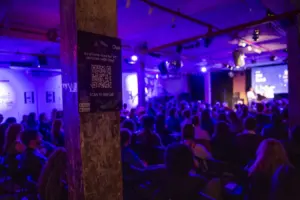







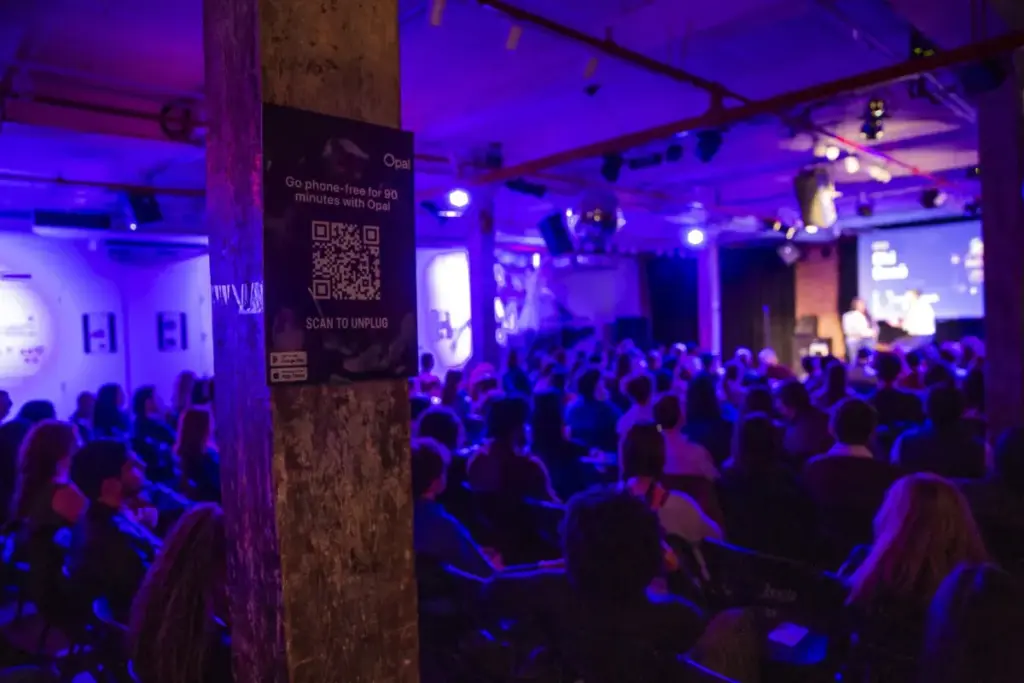
On a crisp Thursday evening, I stepped into a dimly blue-lit warehouse in Brooklyn, a space typically reserved for the city’s creative class but currently repurposed as a nexus for media, tech policy, and political discourse. My attire—neon yellow heels and a floral mini dress—felt perfectly at home in the quintessential New York fashion of mixing industry types with political strategists. The event, hosted by Newsreel, the media outlet founded by former Forbes and Newsweek reporter Jack Brewster, had been organized with a specific, somewhat optimistic goal: to encourage the crowd to put their phones away and engage in genuine dialogue about the upcoming midterm elections.
The guest list was a testament to the current intersection of power and policy. The evening featured a fireside chat with Kenneth Schlenker, co-founder of the focus-management app Opal, who discussed the "state of attention," followed by a midterm forecast from Aryan Banjan, the architect behind the campaign management software Barza. For my part, I spent the evening moderating a panel focused on the physical infrastructure of our digital future: data centers.
As the evening unfolded, however, it became clear that the curated agenda was secondary to a much larger, more pervasive anxiety. Regardless of the panel topic, one subject eclipsed everything else: the rise of artificial intelligence, the massive expansion of data centers, and the growing, palpable backlash against the rapid growth of the technocracy.
For a tech reporter, this shift has been both jarring and illuminating. My daily life is spent speaking with innovators who are deeply embedded in the promise of AI—people whose ambition and optimism often insulate them from the reality of how these advancements are perceived by the general public. Outside the bubble of Silicon Valley and its satellite offices, the conversation has moved past the abstract benefits of machine learning. Data centers have evolved from obscure industrial projects into intense, ballot-box issues that have the potential to influence the results of midterm races on November 3.

The scale of the tension is significant. According to a recent report from Data Center Watch, nearly $200 billion in proposed data center projects faced delays, stalls, or outright cancellations in the first half of 2026 alone. This is not merely a matter of bureaucratic red tape; it is the direct result of political and community-led opposition. From Pennsylvania and Georgia to Texas, New York, and Virginia—the latter of which is already known as the "data center capital of the world"—state legislatures are scrambling to implement guardrails and increase transparency for these massive, power-hungry facilities.
The tone for the night was set during a pre-panel fireside chat with New York City Council member Chi Ossé. When the conversation veered toward AI, Ossé was candid about his own relationship with the technology: he doesn’t use it. His stance was not necessarily one of total opposition, but rather one of skepticism toward the unchecked power of the tech elite. He emphasized the need for greater accountability for tech executives and suggested that trillionaires like Elon Musk should face significant tax burdens. Positioning himself as a "law and order" democratic socialist, he argued that when corporate leaders develop technologies that have the potential to disrupt the fabric of human civilization, they should be held accountable through the formal, public process of testifying before Congress.
Following that, I took the stage to moderate a discussion with Maia Woluchem, a technology and human rights researcher, and Hilary Flint, an environmental and public health advocate. Before we began, I wanted to gauge the sentiment of the room. I asked, "Who here is pro-AI data center?" The result was a definitive chorus of boos.
The ensuing discussion touched on a wide range of grievances. There is a deep-seated frustration regarding the opacity of these projects—specifically, the secret deals often struck between big tech companies and local officials. In many municipalities, zoning regulations are so antiquated that residents are unaware of what is being built in their backyards until it is too late to offer meaningful protest.

This is occurring against a backdrop of economic hardship. As average citizens grapple with the cost of living and struggle to maintain their footing in an uncertain economy, they hear tech leaders touting a future where AI replaces jobs—or potentially poses an existential threat to humanity. For these communities, data centers are the physical manifestation of a loss of control. They are tangible, energy-intensive monuments to a tech class that seems disconnected from local interests.
Hilary Flint offered a stark perspective when I asked about the economic benefits often promised to communities hosting these sites. "What is a life worth?" she asked. She noted that people continue to organize and protest because they "value their lives a little bit more than a temporary check."
The subsequent panel, which featured NewsNation host Batya Ungar-Sargon, political strategist Morris Katz, and Vox’s Astead Herndon, was intended to cover the future of the Democratic Party. Instead, the gravity of the data center issue pulled the conversation in again. Ungar-Sargon highlighted the nuance in the labor debate, noting that some unions support these projects for the construction jobs they provide. However, she pointed out the critical flaw: these jobs are rarely permanent once the facility is built.
"There used to be a lot of pride in a community in the Rust Belt about very ugly, enormous buildings in their communities because everybody worked there," Ungar-Sargon said, referencing the visual blight of these facilities. "And they knew that building represented prosperity for themselves, stability for their children, and a future and a piece of the American dream."

Astead Herndon pointed to a recent incident in Ohio where Vivek Ramaswamy was booed for attempting to defend the industry, noting that the "lack of consent" is a bipartisan issue. "It’s the same people who have taken so many union jobs away," Morris Katz added, echoing the sentiment that the institutional powers behind tech expansion are seen as the same forces that hollowed out the working class. "Now coming back to essentially finish the job and take whatever scraps remain."
Throughout the warehouse, the mood was captured on sticky notes left on the walls. One question—"Will we ever be able to get Big Money out of politics?"—was met with the weary, handwritten response: "God, I hope so."
As the event transitioned from formal panels to a more casual setting, with techno music filling the air, the conversations continued in hushed, private circles. I caught up with Jack Brewster to ask if he was surprised by the focus of the evening. He confirmed that AI and data centers were not only the dominant topic on stage but also the second most common subject mentioned in RSVP questions.
"AI has become an election issue for regular voters," Brewster observed. "In rural communities, the backlash is about feeling replaced. In a place like Brooklyn, it’s more about who gets rich from it."

Before heading out into the night, I surveyed a few attendees on the most "crazy" thing they had witnessed in tech this year. While some pointed to AI assistant startups or the ongoing saga of industry figures like Sam Altman, others focused on the aesthetic and cultural consequences of the AI age. One woman noted that AI-generated art has begun to signal a sense of "cheapness" to the average consumer. This, she suggested, explains why luxury brands are pivoting toward the handcrafted; Prada’s recent holiday campaign focused on hand-drawn illustrations, while Hermès has been emphasizing the tactile, handmade nature of its products on social media.
The evening ended on a personal note. I spoke with a software engineer who shared an anecdote about her hometown in Southern California, where residents are now placing signs in their yards depicting dragons choking a data center. The signs have been translated into multiple languages to ensure the message is clear to all. Hearing this, I found myself reflecting on the geography of our digital lives. As I walked out, I wondered for the first time how I would feel if one of those massive, humming buildings were to appear in my own neighborhood. The distance between the tech world and the rest of the country feels smaller than ever, and this November, the ballot box may prove it.