








Naming is hard. In the digital design and development space, the language teams choose shapes not only how they conceptualize interfaces, but also how designers, developers, and product managers converse about them. This persistent linguistic friction often leads to confusion around colors, icons, user interface components, and features, creating downstream struggles when trying to name design tokens, HTML classes, and variables.
Industry experts and engineering teams are now addressing these systemic communication gaps head-on. A wave of newly highlighted resources, repositories, and strategic frameworks aims to solve the perennial puzzle of digital nomenclature. These tools focus on striking a delicate balance: avoiding names that are overly generic, which leaves them vague and difficult to interpret, and steering clear of names that are overly specific, which strips away flexibility and reuse potential.

How To Name Things
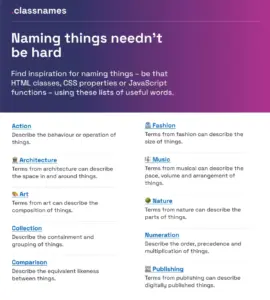
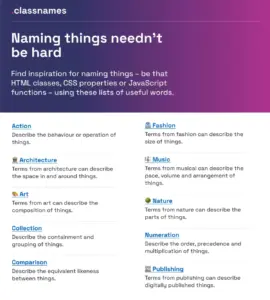
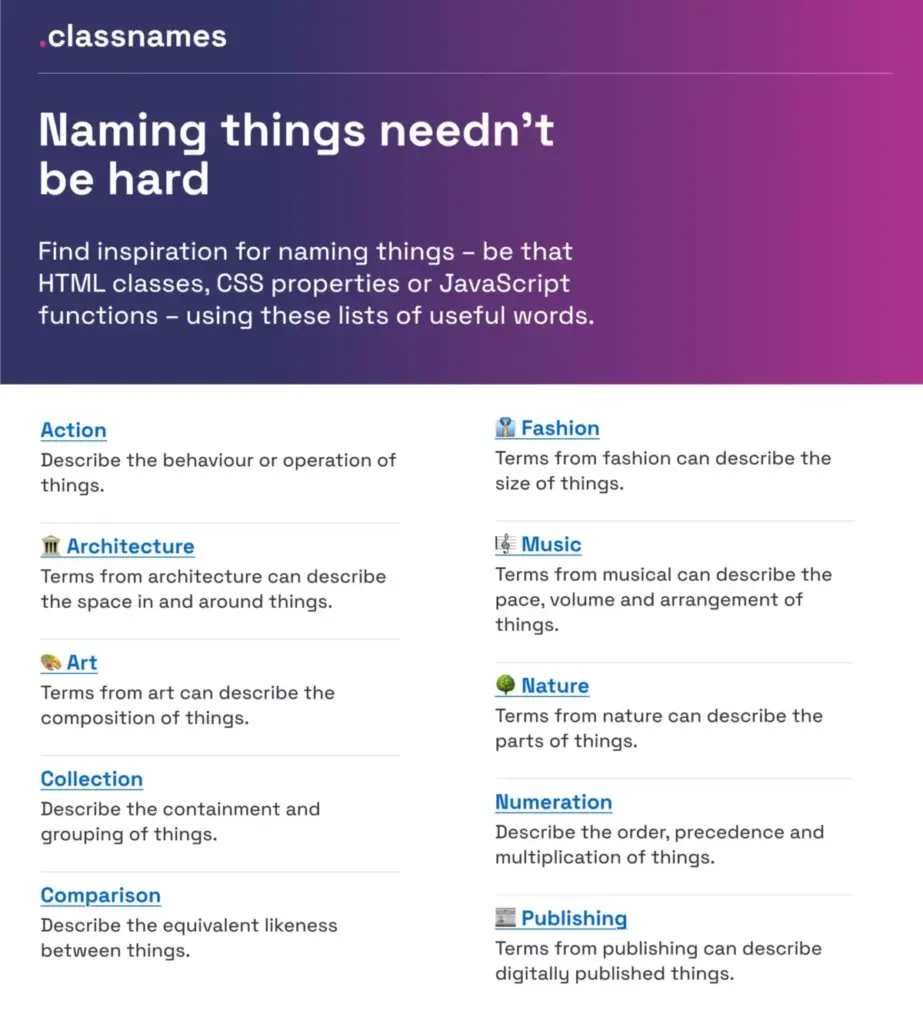
Finding the right inspiration for naming HTML classes, CSS properties, or JavaScript functions has historically relied on ad-hoc brainstorming. To combat this, developer Paul Robert Lloyd created Classnames, a resource jam-packed with ideas designed to get creators thinking outside the box.
The platform provides thematically grouped lists of words tailored for coding and design environments. Users can find terms describing different kinds of behavior, likeness, order, grouping, and association. Furthermore, the site offers themed collections drawn from nature, art, theater, music, architecture, fashion, and publishing—vocabulary that rarely comes to mind instantly during standard software development cycles.

How To Name Colors
Color nomenclature presents its own unique set of hurdles. Selecting the right identifier for a specific hue can often stall design system workflows. To address this, David Aerne maintains a massive repository of color names known as color-names, which currently houses over 30,355 unique color designations sourced from diverse references and thousands of community contributions.
Accompanying the repository is a color picker and name search system via Color Parrot, alongside various other integrations. This extensive collection serves as a vital reference point for design system architects seeking standardized or evocative color identifiers.

How To Name Layers and Groups
Establishing consistency within design files is equally critical for scalable product development. Designer Javier Cuello recently summarized a comprehensive set of naming best practices aimed at standardizing how teams label layers, groups, and components.
According to Cuello’s guidelines, an effective name possesses a logical structure, remains concise yet meaningful, is universally understood across cross-functional teams, and avoids reliance on transient visual properties. By outlining specific do’s and don’ts, the framework assists teams in navigating the minute details involved in naming sizes, colors, hierarchies, and atomic components.

How To Name Design Tokens
Scaling a consistent design language across multiple major products presents a massive structural challenge. This was the exact obstacle faced by the design system team at Intuit. As the parent company behind household financial and productivity brands like Mailchimp, QuickBooks, TurboTax, and Mint, the organization needed to develop a flexible design token taxonomy capable of operating across diverse brand themes and product ecosystems.
Nate Baldwin, a key contributor to the initiative, detailed the process in a comprehensive case study outlining the creation of Intuit’s design token taxonomy. The documentation explores the core pain points of their legacy systems, the strategic criteria established for the redesign, and the eventual implementation. The insights provide valuable takeaways for engineering teams seeking to construct robust, cross-product token structures.

Frequent Names For UI Components
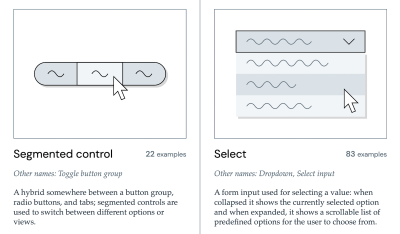
When teams struggle to name interface elements, observing how established design systems solve the same problem remains a reliable strategy. To save practitioners from falling into exhaustive design system research rabbit holes, Iain Bean developed the Component Gallery.
The curated collection maps out examples and alternative names for more than 50 distinct UI components, ranging from accordions to visually hidden utility classes. Complementing this is Name That UI, a visual dictionary designed to help practitioners quickly identify and align on common interface terminology.
How To Name New Features
Beyond codebases and design files, naming user-facing features directly impacts product adoption. Features frequently suffer from low engagement due to poor discoverability. True feature adoption requires a deliberate sequence: a user must discover the feature, understand its utility, try it, learn its mechanics, and eventually integrate it into their existing daily workflow.
Product strategist Erin Gannon addressed this challenge in a practical guide examining feature nomenclature. According to Gannon, effective feature names are driven by genuine user needs and problem spaces. They should signal the ultimate value or outcome of a capability—aligning with the user’s "job-to-be-done"—and leverage the exact language that users themselves employ when describing their goals.

How To Name Variables (Taxonomy Map)
Complex multi-brand and multi-themed ecosystems require rigorous variable management. A prominent example comes from the Vodafone UK Design System team, which published its Variables Taxonomy Map on Figma. The map breaks down the anatomy and categorization of design tokens into a structured hierarchy of collections.
Building upon foundational work by Nathan Curtis, Vodafone’s mapping illustrates four distinct collections—ranging from brand primitives to semantics and page-level variables—and maps out the pathways between them. This structure ensures that any contributor can immediately understand where a token is utilized and what it represents simply by reading its identifier. Romina Kavcic has further supported this space with interactive tools like the Design Token Naming Guide and a structured Design Token Names Inventory spreadsheet, allowing teams to manage themes and filters without losing track of their architecture.

Naming Products or Services
At the macro level, finding the right moniker for a new product, service, or brand vertical requires entirely different methodologies. Open-source repositories like Onym organize tools, brainstorming frameworks, vetting exercises, and sprint guides to assist teams through the high-stakes process of brand naming.
Ultimately, industry experts emphasize that the correct name is simply the one that is mutually understood and actively utilized by both the product team and its users. Countless hours are frequently lost when designers, developers, product managers, and end-users speak about the exact same system using disparate dialects. Recognizing and resolving these underlying naming conflicts remains a vital step in reducing friction, eliminating confusion, and fostering seamless cross-functional collaboration across the digital product lifecycle.