








Modern software development faces a structural bottleneck that has little to do with human typing speed and everything to do with automated volume. As AI coding assistants routinely generate hundreds or thousands of lines of code across dozens of files from a single prompt, the traditional paradigm of code review is buckling under the weight. In the pre-large language model era, developers spent days crafting small increments of logic, naturally building a mental map of the project context as they contributed. Today, a single query can spawn a sprawling web of files in minutes, shifting the developer’s primary role from writing code to evaluating massive, unfamiliar modifications.
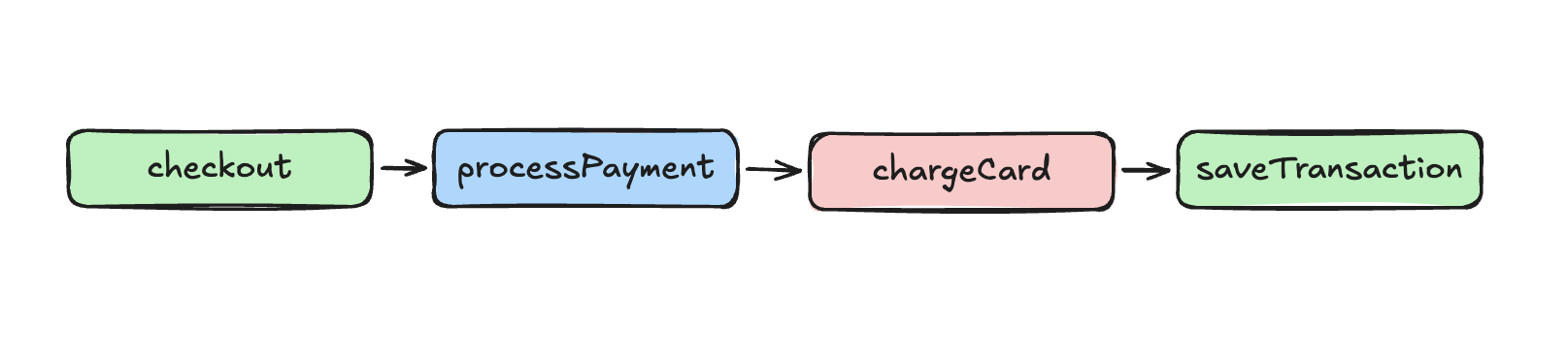
Answering even a foundational question like "What calls this function?" in a large TypeScript repository has become an exhausting exercise in searching files, jumping between definitions, and manually tracking imports and exports. To solve this navigation crisis, developers are increasingly looking at architectural alternatives that model codebases not as static collections of files, but as interconnected graphs. In this topological view, functions transform into graph nodes and execution calls become directed edges. This conceptual shift turns complex dependency and impact questions into standard graph traversal problems, unlocking automated clarity for massive projects.
Rather than building a custom parser and symbol resolver from scratch, engineers can harness the semantic intelligence already provided by modern development environments. By tapping directly into Visual Studio Code’s built-in language APIs and language servers, developers can construct robust code graphs that capture files, functions, methods, and call relationships without reinventing the wheel. The resulting graph can be visualized seamlessly within a VS Code Webview, offering a comprehensive map of the project architecture.

Understanding VS Code Language APIs
The foundation of any robust code-graph engine lies in leveraging existing platform capabilities rather than duplicating compiler work. VS Code exposes powerful commands that extensions can utilize to query deep language intelligence. Four distinct APIs are particularly vital for mapping call hierarchies: the document symbol provider for locating symbols within a document, the call hierarchy preparation command for resolving a specific editor position to a hierarchy item, and dedicated providers for discovering both incoming callers and outgoing callees.
These APIs do not operate in a vacuum; they sit directly above language-specific implementations. For JavaScript and TypeScript, the underlying TypeScript language service performs the heavy lifting of semantic analysis. Other ecosystems offer equivalent capabilities through their own specialized language servers, such as gopls for Go, rust-analyzer for Rust, and Pyright or Pylance for Python. This unified architecture means developers do not need to build dedicated parsers for every language they encounter. If a language extension supplies document symbols and call hierarchy support through the editor, a single graph-building architecture can consume that data directly.
Abstract syntax trees can confirm that a function contains a call expression, but they cannot automatically resolve which specific function that call refers to across complex modular boundaries, file imports, class aliases, and runtime abstractions. Because language servers already perform this semantic resolution, developers can simply query the editor for the information it already possesses, ensuring high fidelity without redundant parsing overhead.
Designing the Data Model and Symbol Registry
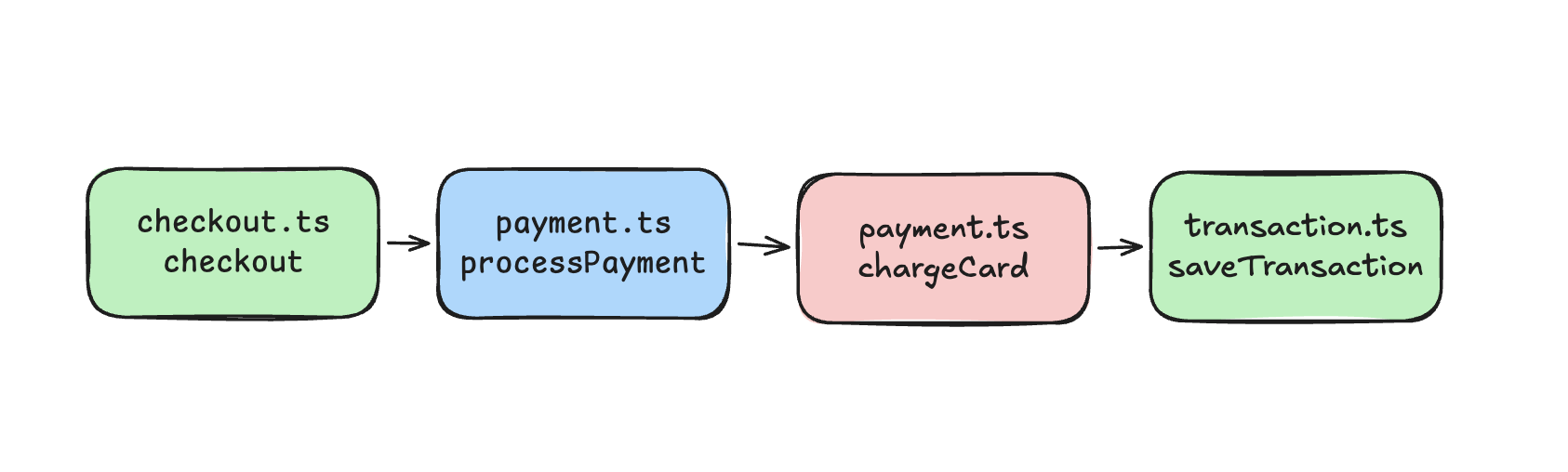
Constructing a dependable code graph requires a clean data model that clearly separates file containers, individual symbol rows, and call edges. A robust schema tracks each function or method by its unique identifier, name, kind, line number, and character position, grouping them cleanly within their respective source files. Call edges maintain a consistent, directed relationship from caller to callee, ensuring that whether a relationship is discovered via incoming or outgoing queries, the topological structure remains uniform.
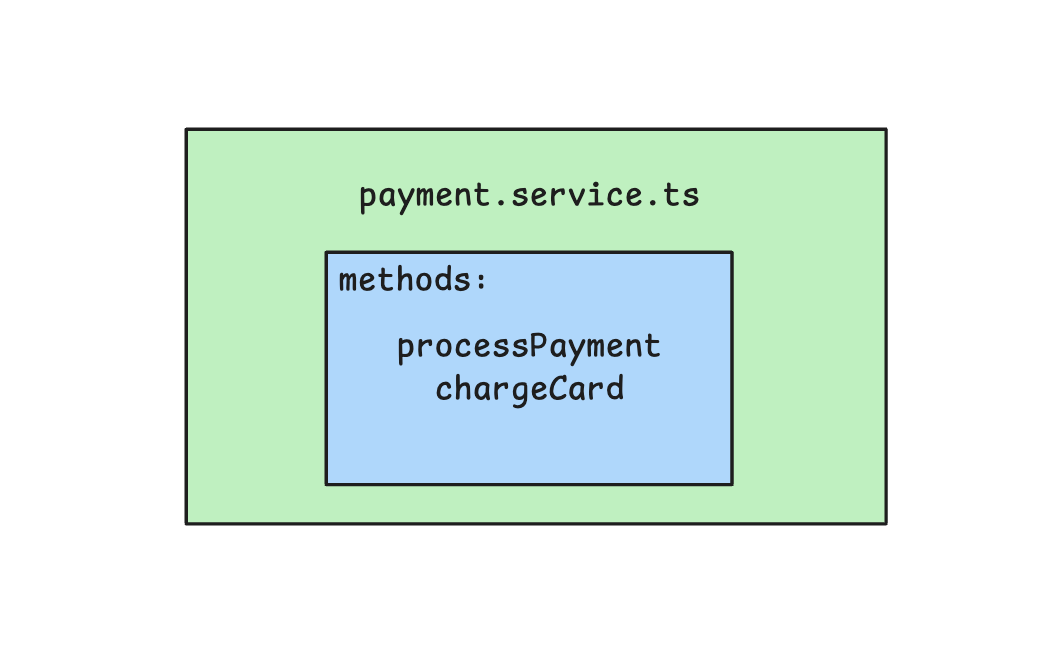
Function names alone are notoriously non-unique across large codebases, as multiple files frequently contain functions with identical names like save or init. To prevent collisions, stable symbol identifiers must be generated using a combination of the file URI and the precise line and character position of the symbol. Utilizing the selection range of a call hierarchy item is particularly effective because it isolates the symbol’s actual name identifier rather than its entire body range. This stable identification layer serves as the foundation for deduplication, ensuring that if the same function is reached through multiple traversal paths, the graph engine recognizes it as a single node rather than creating redundant entries.
When crawling a multi-file project, recursive traversal strategies such as breadth-first search are ideal for exploring relationships across multiple hops. However, real-world codebases are rarely tidy trees; they are dense graphs characterized by normal cyclical patterns where functions call back into one another. A naive traversal algorithm would loop infinitely in these cycles. Advanced graph builders solve this by tracking traversal depth dynamically, permitting the engine to revisit a node only if a subsequent path reaches it with a greater remaining depth than previously recorded.
Bounding the Graph and Managing Language-Server State
Because highly connected functions can quickly explode the size of a graph by pulling in dozens of callers and callees, practical graph engines must implement strict performance boundaries. Hard limits on total symbols and calls per symbol prevent unexpected memory bloat, while explicit truncation flags inform the user interface whenever a graph has been capped. Furthermore, language servers frequently return relationships pointing into external build artifacts or dependency directories like node_modules or site-packages. Filtering out these external paths ensures that the visualization remains strictly focused on the active workspace.
A persistent challenge in building language-server-backed extensions is the transient nature of editor state. Call hierarchy items are tied directly to active language-service sessions, which can expire or become stale during intensive asynchronous traversals. When state becomes stale, language APIs may return empty arrays, causing valid call edges to silently disappear from the graph.
To combat this, resilient graph engines store lightweight reference data rather than live editor objects, tracking the age of each prepared item against a global epoch counter. If a reference becomes too old, the crawler automatically prepares a fresh item from the stored symbol reference and retries the lookup. By treating empty results from stale sessions as potentially unresolved rather than definitively nonexistent, the extension minimizes missing connections and maintains structural accuracy.
Bridging the Extension Host and the Webview
Once the graph data has been successfully compiled, filtered, and deduplicated, the extension host transmits the serializable dataset to a dedicated VS Code Webview panel running in a browser environment. Modern layout libraries can then calculate optimal node positions without interfering with the core graph-building logic, rendering an interactive visual map directly beside the active editor.
This architectural separation between the extension host and the visualization layer ensures that the underlying graph engine remains modular and testable. Developers can isolate the graph-building logic from the live editor runtime by mocking language-service commands, allowing comprehensive verification of complex traversal and cycle-handling logic against deterministic test graphs.
Ultimately, modeling codebases as semantic graphs offers a powerful antidote to modern navigation fatigue. By building upon the existing intelligence of language servers rather than writing compilers from scratch, developers can transform raw source code into actionable, navigable networks. This approach not only streamlines routine code reviews and dependency exploration, but also lays a scalable foundation for advanced architectural analysis, change-impact tracking, and AI-driven context selection in increasingly complex software environments.