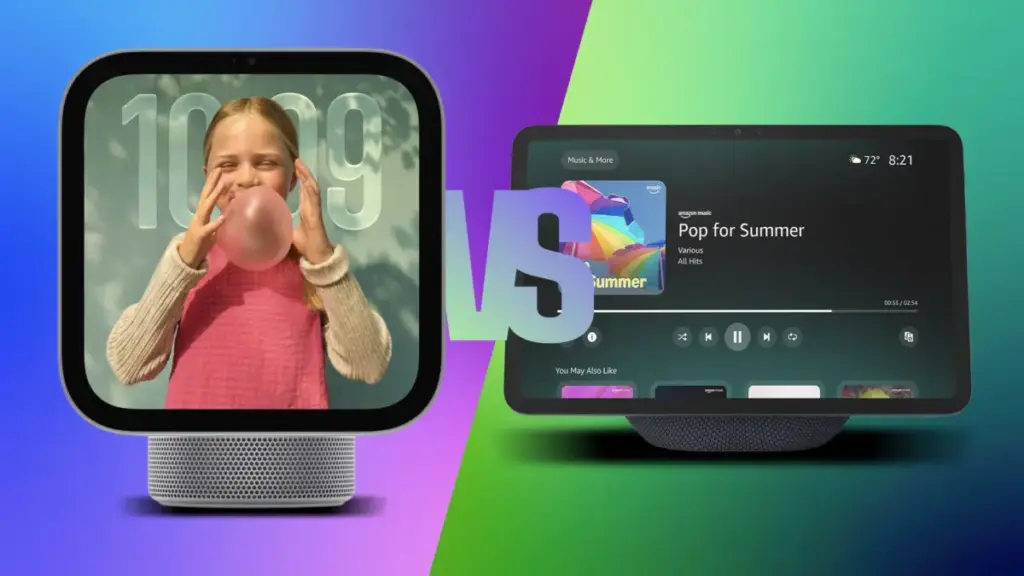
Apple is officially stepping into the smart home display arena with the announcement of the HomeView, a new device designed to serve as a centralized hub for managing smart home appliances and interacting with Siri AI. Scheduled for release on November 13 at a starting price of $299, the HomeView represents Apple’s first dedicated foray into a product category that has been dominated by Amazon and Google for nearly a decade.

For industry watchers and consumers tracking the evolution of automated living spaces, Apple’s entry introduces a fresh dynamic to a mature market. While established competitors like Amazon’s Echo Show and the Google Nest Hub have undergone multiple generations of iteration, feature additions, and occasional line cancellations, Apple arrives with a clean slate. The stylishly designed stationary display aims to capitalize on ecosystem integration and advanced software capabilities, though it faces an uphill battle against competitors that have spent years refining their hardware and service offerings.
Nuts and Bolts: Apple’s Stylish Display Faces a Challenge
The physical design of the HomeView draws immediate comparisons to existing hardware, bearing a strong resemblance to devices like the Echo Show 11. It features a modern screen mounted atop a low-profile, domed base that houses the internal speakers. Unlike Amazon’s discontinued Echo Show 10, which utilized an auto-rotating base that frequently tracked users around a room, the HomeView remains stationary, a design choice intended to avoid mechanical complications and spatial collisions in busy domestic environments.


At just 7 inches, however, the HomeView is notably compact. Hands-on evaluations during Apple’s recent press briefings highlighted concerns regarding the screen’s modest proportions. Compared directly against flagship competitor models occupying similar household spaces, such as the 10-inch Google Nest Hub Max or the larger Echo Show iterations, Apple’s display is significantly smaller. This sizing choice creates immediate questions regarding its utility, particularly for functions that rely heavily on screen real estate, such as displaying multi-step cooking instructions, facilitating family video calls, or viewing media from a distance.
Industry experience indicates that smart displays featuring screens under 8 inches often struggle to serve effectively as secondary entertainment hubs unless viewed from a distance of a foot or two. While Apple showcased high-end visual fidelity utilizing Liquid Retina technology to keep the entry price below the $300 threshold, the reduced scale inevitably limits certain immersive functions.

To address placement flexibility, Apple is offering a wall-mounting option for an additional $60. While early impressions suggest that a wall-mounted HomeView presents a sleek, aesthetically pleasing profile, it introduces practical hurdles. Concealing the wired power connection requires professional installation, which can push total deployment costs well past the initial hardware price. Furthermore, questions remain regarding how well a 7-inch display functions when mounted on a wall at eye level compared to larger alternatives like the 21-inch Echo Show.
The Battle of Voice Assistant AIs
Voice assistant performance remains a crucial differentiator in the smart home space, where Apple’s Siri AI, Amazon’s Alexa Plus, and Google’s Gemini for Home compete for user loyalty. Each ecosystem brings distinct strengths and limitations to the table, influencing how users interact with their environments on a daily basis.

Google’s Gemini for Home delivers a reliable, if understated, performance centered around high accuracy. Meanwhile, Siri excels at snappy, responsive control of native Apple Home accessories while trailing in broader contextual utility. However, for many users deeply embedded in smart displays, Alexa Plus has established a strong reputation through its conversational nature and diverse personality options—a level of customization absent in rival assistants.
A standout capability of Amazon’s platform is its deep integration with third-party applications. Users can execute complex tasks directly from an Echo Show, such as ordering food delivery through services like GrubHub and Uber Eats, booking rides, or purchasing tickets via Ticketmaster and OpenTable, entirely hands-free.

Apple’s approach with Siri AI on the HomeView handles third-party integration differently. While Apple notes that the device supports compatible audio and video applications originating from a paired iPhone, comprehensive third-party booking and service integrations remain less prominent. Instead, Siri AI leans heavily into personal context, leveraging natural language processing to search through local emails and text messages to retrieve specific information, recipes, or communications. Additionally, Apple provides unique accessibility features, allowing users to customize Siri’s speech pacing.
Ultimately, the choice of assistant may hinge on subscription costs and existing preferences. While advanced features on platforms like Alexa Plus or Gemini may require recurring monthly investments for non-subscribers, Apple’s pricing strategy could gain traction depending on whether full functionality relies on standard iCloud Plus tiers or specialized services.

Smart Home Controls Are Where Apple’s Ecosystem Shines
Managing a multi-brand smart home using the universal Matter standard often brings familiar frustrations, including wonky user interfaces, disconnected devices, and unpredictable voice command failures across Alexa and Google hubs. Apple’s tightly controlled ecosystem offers a stark contrast, leveraging the strict curation of the Apple Home app to streamline device pairing and operation.
Hands-on testing indicates that the HomeView discovers and pairs with compatible smart home accessories with the seamless efficiency characteristic of setting up a pair of AirPods. Facial recognition and manual profile creation allow Siri AI to deliver personalized responses quickly. Furthermore, features such as media handoff between iPhones and the display, alongside integrated Find My mapping for locating misplaced Apple items, provide a level of operational cohesion that rivals struggle to match.

The primary limitation of Apple’s approach lies in hardware support. While Apple has expanded its ecosystem with a new line of security cameras, smart locks, and smart thermostats designed specifically for seamless pairing with Siri AI and Apple Home, third-party support for everyday items like smart plugs and bulbs remains more selective compared to open platforms. Additionally, cross-platform compatibility barriers persist, as competing ecosystems like Amazon’s Ring and Blink remain strictly isolated from Apple’s network.
Always Double-Check Your Streaming Capabilities
Audio performance on the HomeView exceeds expectations for its compact footprint, driven by two custom full-range drivers, a down-firing woofer, and dual passive radiators. While it does not match the acoustic output of a full-size HomePod, it easily fills a standard room with sound, holding its own against competing models from Amazon and Google.

However, music and video streaming support remains a critical factor for prospective buyers. While Apple Music integration is guaranteed, Apple has provided limited details regarding support for competing audio platforms. By contrast, Amazon and Google smart displays natively accommodate an extensive array of third-party streaming services, including Spotify, Tidal, Pandora, and SiriusXM.
A similar caveat applies to video playback. The HomeView heavily emphasizes the Apple TV ecosystem, leaving the availability of other mainstream streaming apps uncertain. Meanwhile, Google Nest Hubs utilize Google Casting to support a broad spectrum of services like Netflix, Disney Plus, and Hulu, and larger Echo Shows leverage native Fire TV platforms to deliver comprehensive media libraries.

Pricing Is Comparable, But Apple’s Display Will Still Cost the Most
Priced at $299, the HomeView occupies a competitive space alongside flagship smart displays from other major manufacturers. Amazon’s Echo Show 11 starts around $250, though it frequently sees promotional discounts during holiday periods, a pricing strategy Apple rarely employs. Stepping up to larger wall-mounted alternatives like the Echo Show 21 increases costs to $500, while Google Nest Hub Max units generally retail between $230 and $250.
While the HomeView commands a slight financial premium relative to its screen dimensions, the price gap is narrower than what consumers typically encounter when comparing Apple products to industry norms.

For users weighing the purchase of a dedicated smart display against existing alternatives, the iPad remains an important consideration within Apple’s ecosystem. Equipped with a proper stand, an iPad can fulfill many of the same countertop and tabletop roles as the HomeView while offering a substantially larger display and broader application compatibility. However, tablets command a higher price tag—starting around $600 for the iPad Mini and $750 for the iPad Air—and lack the specialized acoustic engineering built into the HomeView’s dedicated audio base.
As the HomeView approaches its November release, consumers must weigh Apple’s streamlined ecosystem integration and advanced personal context features against limitations in screen size, third-party service compatibility, and app support.