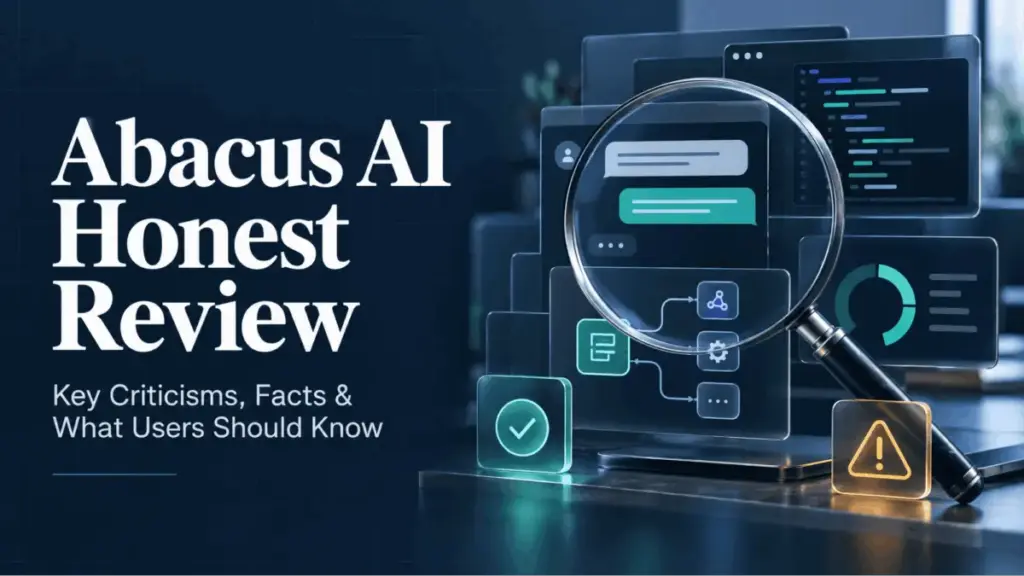
As the artificial intelligence landscape continues to evolve beyond simple conversational chatbots into complex autonomous workflows and multi-tool environments, platforms aiming to consolidate these diverse capabilities under one roof are drawing significant attention from developers, enterprises, and everyday technology enthusiasts. Among the entrants into this unified workspace category is Abacus AI, a technical environment designed to aggregate various AI models, autonomous agents, coding assistants, and media generation tools into a single platform. A recent evidence-based evaluation drawing from online discussions, user forums, video walkthroughs, and product features sheds light on how this expansive platform is perceived, its core capabilities, and the distinct challenges reported by its user base.
Online sentiment regarding Abacus AI generally presents two distinct perspectives. Positive assessments typically originate from power users who leverage the platform’s wide variety of underlying models, specialized agents, and comprehensive tooling, pointing to its overall value as a consolidated workspace. Conversely, critical reviews frequently highlight the friction points associated with navigating a feature-rich interface, managing consumption credits, adapting to a steep learning curve, and encountering occasional workflow interruptions. By analyzing both viewpoints, observers can gain a clearer understanding of where the platform excels and where users encounter hurdles.
A Unified Ecosystem of Specialized Tools
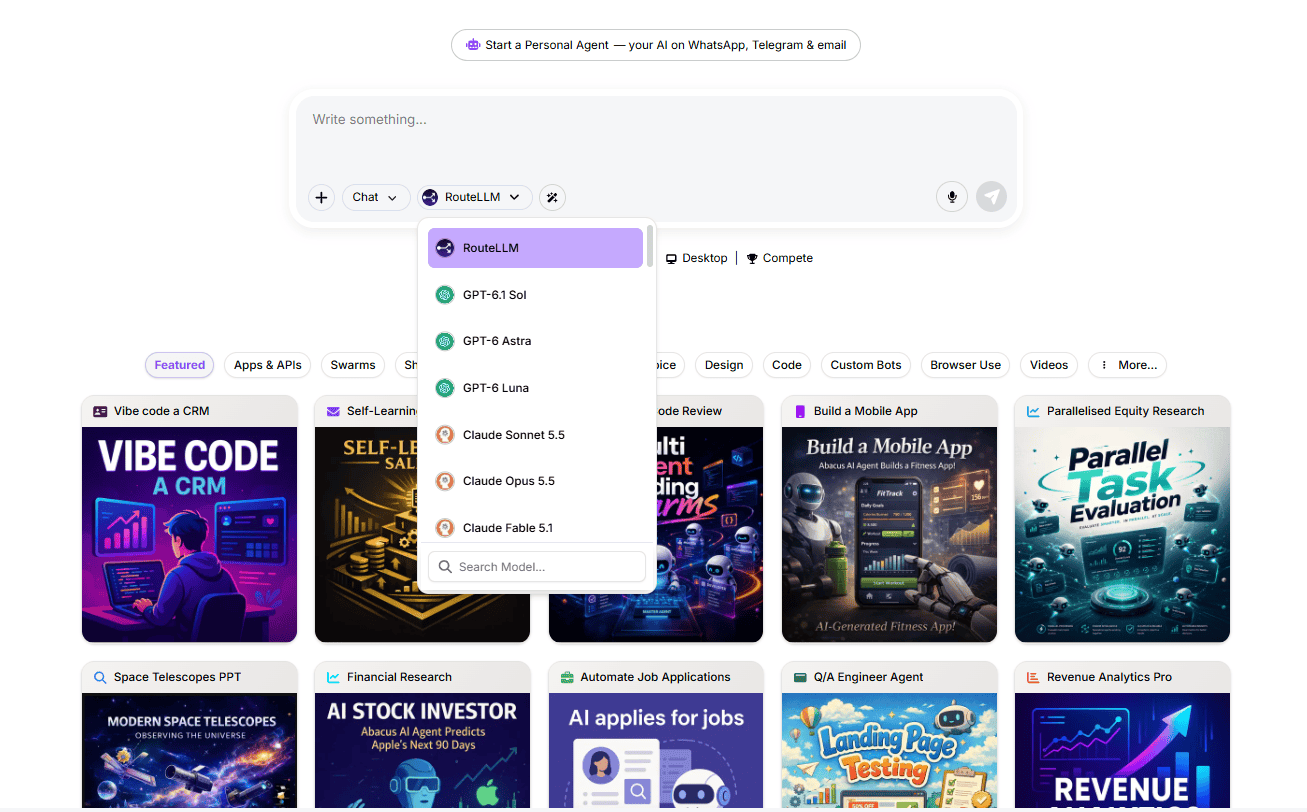
At its core, Abacus AI functions as a technical workspace that combines various AI models and functions, enabling activities ranging from text composition and advanced data analysis to image and video generation as well as software coding. For beginners entering the AI space, the platform offers ChatLLM, an interface that aggregates models from major providers such as OpenAI, Anthropic, and Google. This setup allows users to toggle between different foundational models without navigating across multiple separate applications.

While many observers draw comparisons between Abacus AI and conversational applications like ChatGPT or Claude, industry analysts note that these platforms serve fundamentally different objectives. Standalone conversational models specialize primarily in dialogue and text generation, whereas Abacus AI is structured to cover a broader spectrum of individual and commercial requirements through an extensive product ecosystem.
This ecosystem comprises several distinct services tailored to specialized technical tasks. Among them is the Abacus AI Agent, built to execute multi-step actions encompassing deep research, programming, web interactions, and application development. Complementing this is Claw, an agent designed to execute multi-step operations directly through messaging channels such as Slack, WhatsApp, and Telegram while maintaining conversational context across sessions. Another component, Hermes, functions as an agent capable of performing complex actions while learning reusable skills from prior task experiences.
For development tasks, the platform provides Abacus AI Desktop, a dedicated coding environment meant for pair programming and editing local files. Media creators can utilize the Studio component for generating images, videos, and audio using various underlying models. Meanwhile, features like AppLLM and what the platform terms "Vibe Coding" assist users in generating and deploying web applications simply through descriptive prompts.
To support these intensive operations, the architecture includes the SuperComputer, a cloud environment that keeps AI agents, code, and services running even after a browser session closes. Agent Swarms allow multiple AI agents to coordinate simultaneously to tackle different facets of a complex project. Additionally, the platform features Smaug, a family of open-weight AI models specifically optimized for reasoning, coding, and agent-driven workflows, alongside the Abacus AI Bot, an open-source coding agent designed to streamline user interaction with autonomous systems.
Evidence-Based Assessment of User Challenges
Despite the breadth of its feature set, public feedback and forum discussions highlight several recurring criticisms concerning the user interface, pricing structures, credit consumption, and overall workflow reliability.
Navigation emerges as an early hurdle for some users. Because the platform packs a wide array of tools and features into a single workspace, newcomers frequently report that the interface can feel complex and difficult to traverse. Furthermore, the ability to seamlessly switch between various underlying AI models can occasionally make it challenging to track precisely which model was utilized in preceding conversations. Combined with the advanced nature of autonomous agents and automated workflow creation, these factors contribute to a steep learning curve that often favors users with a technical background, even though basic ChatLLM features remain accessible to general audiences.
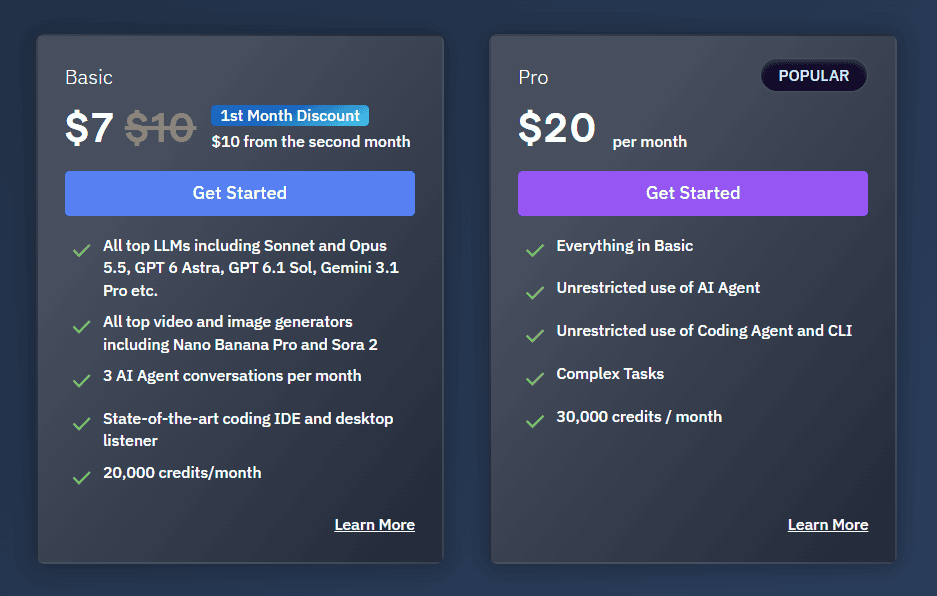
Financial predictability and the platform’s credit-based consumption model represent another significant category of user feedback. Abacus AI operates on a credit system where different actions consume varying amounts of resources—basic text queries require minimal credits, whereas intensive research, multi-step coding, or media generation deplete allowances at a much faster rate. Users have expressed frustration regarding the uncertainty of predicting how many credits a specific task will require, particularly when dealing with complex agent workflows that encounter errors or run longer than anticipated. Additionally, usage pacing rules can restrict how remaining monthly allowances are distributed throughout a billing cycle, creating budgeting challenges for individuals and smaller teams. Subscription adjustments moving from introductory rates to standard pricing have also occasionally sparked confusion among subscribers who fail to review billing terms closely.
Workflow reliability and performance represent another area of scrutiny. While autonomous agents are designed to execute complex, multi-step assignments, users note that these agents can occasionally halt prematurely before completing a workflow or produce outputs that necessitate substantial human intervention and troubleshooting. When an agent encounters an error or fails to complete a task mid-run, credits are often consumed regardless, prompting concerns over resource efficiency.
In business environments, integration requirements and analytics monitoring are critical considerations. Organizations evaluating the platform must verify whether their existing tech stacks and preferred integrations are fully supported. Teams looking for preconfigured, out-of-the-box workflows tailored for customer support or specialized IT functions may find that they need to configure their own custom pipelines. While the platform offers extensive versatility, critics in comparative reviews occasionally argue that a generalized environment may not deliver the same specialized, streamlined experience as software engineered for a single, specific business function.
Customer support response times and billing inquiries have also surfaced in online discussions. While some users report satisfactory interactions, others note delays in support resolutions or express frustration regarding subscription cancellations and unexpected charges. Industry observers frequently emphasize that such individual reports should be assessed contextually rather than viewed as universal indicators, advising users to thoroughly review renewal dates, credit allowances, and cancellation policies prior to subscribing.
Real-World Use Cases and Practical Demonstrations
To illustrate how these tools operate in practice, product demonstrations showcase the platform applied to diverse scenarios, ranging from website construction and mobile application development to automated invoice processing and equity research.
In web development demonstrations, the platform exhibits the ability to generate multi-page websites featuring integrated payment gateways like Stripe, allowing businesses to rapidly test consumer demand or launch functional workshop sign-up portals. However, evaluators point out that generating a functional checkout page is only part of the development process; the resulting application must also robustly handle successful, failed, and post-payment workflows.
Mobile application development examples highlight the creation of fitness trackers, meditation coaches, expense trackers, and simple mobile games equipped with daily objectives and progress monitoring. While demos illustrate features like live GPS tracking and background modes, tech analysts stress that such applications require rigorous testing on physical devices to ensure real-world reliability beyond a simulated demonstration.
Business automation capabilities are similarly displayed through CRM creation, invoice processing APIs, and automated browser workflows. Invoice processing demonstrations show the extraction of vendor information, line items, and payment due dates from PDFs and images for conversion into validated structured data. Meanwhile, scheduled browser workflows automate routine administrative tasks such as logging into external portals, downloading invoices, uploading data into spreadsheets, or monitoring competitor pricing to generate email reports. These automated pipelines, however, rely heavily on predefined error-handling mechanisms to prevent silent failures, such as generating empty spreadsheets when a login script fails.
Advanced analytical and research capabilities are addressed through automated revenue analytics and parallelized equity research projects, such as analyzing dozens of companies within major market indices to draft investment portfolios. Experts note that the value of AI-driven analytics remains entirely dependent on the precision of the underlying metrics and definitions provided by the user, as misinterpreting financial definitions can lead to flawed conclusions regardless of the sophistication of the generated charts.
Target Audience and Strategic Considerations
Abacus AI positions itself as a comprehensive environment for individuals and organizations seeking to transcend simple conversational querying and harness a fully integrated suite of artificial intelligence tools. Users who stand to gain the most from the platform include developers, technical hobbyists, and digital creators who actively utilize diverse AI capabilities—such as multi-model chat, autonomous agents, and application deployment—within a unified workflow.
Conversely, individuals or organizations seeking a straightforward, single-purpose conversational chatbot may find the platform’s extensive array of features and credit-management structures unnecessarily complex for their daily requirements.
As the platform continues to refine its ecosystem of models, agents, and desktop environments, observers recommend that prospective users carefully evaluate their specific workflow needs, monitor credit consumption closely during initial testing, and verify integration compatibilities before committing to long-term enterprise adoption.