In the rapidly evolving landscape of artificial intelligence, users and enterprises alike frequently find themselves juggling multiple subscriptions and interfaces to access various large language models, image generators, and coding assistants. Enter Abacus AI, a technical workspace designed to consolidate a vast array of AI models, agents, and specialized functions under a single, unified umbrella. Aimed at streamlining workflows that range from basic copywriting and data analysis to complex software development and multi-agent coordination, the platform has generated significant discussion across online forums, review sites, and video walkthroughs.
An examination of public discourse reveals a dual narrative surrounding Abacus AI. On one hand, power users and technical professionals frequently praise the platform for its cost-effectiveness, extensive variety of integrated models, and robust suite of autonomous agents. On the other hand, critics and newer users point to notable challenges, including a steep learning curve, complex interface navigation, and considerable unpredictability regarding pricing structures and credit consumption. By analyzing user feedback, platform features, and real-world deployment scenarios, a clearer picture emerges regarding the true strengths and limitations of this ambitious AI ecosystem.
Understanding the Abacus AI Ecosystem and Core Tools
At its core, Abacus AI functions as an expansive technical workspace rather than a simple conversational chatbot. While many consumers naturally draw comparisons between Abacus AI and standalone applications like ChatGPT or Claude, industry analysts emphasize that these platforms are built for fundamentally different purposes. Dedicated conversational interfaces specialize primarily in dialogue and text generation, whereas Abacus AI attempts to cover a much broader spectrum of individual and commercial demands through a diverse array of specialized tools.
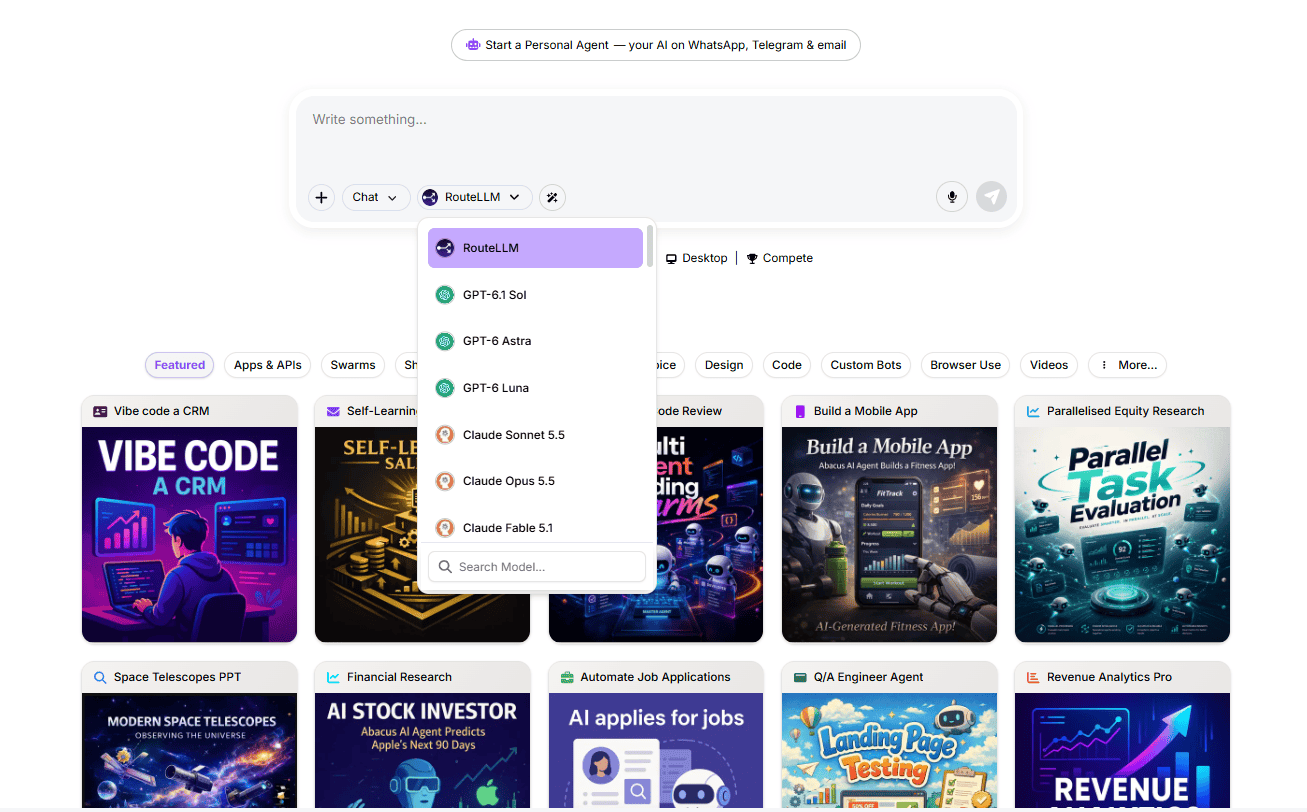
The foundational entry point for many users is ChatLLM, an interface that aggregates models from major providers such as OpenAI, Anthropic, and Google. By utilizing intelligent routing powered by RouteLLM, the application allows users to seamlessly toggle between different underlying models without needing to maintain multiple independent subscriptions. Beyond basic chat functionality, the platform extends into autonomous operations through services like the Abacus AI Agent, which handles multi-step actions including web research, application development, and coding tasks.
Other notable components within the ecosystem include Claw, an AI agent designed to execute multi-step actions directly through messaging channels like Slack, WhatsApp, and Telegram while maintaining conversation context across sessions. For software developers, Abacus AI Desktop provides a dedicated coding environment equipped for pair programming and local file editing. Similarly, the Studio product handles multimedia creation, enabling the generation of images, videos, and audio using a variety of specialized models.
For users interested in rapid prototyping, AppLLM, often referred to as "vibe coding," assists in creating and deploying web applications entirely through natural language descriptions. Meanwhile, the SuperComputer feature supplies a cloud-based environment where agents, code, and background services can continue running even after a user closes their browser session. Advanced technical workflows are further supported by Agent Swarms, which coordinate multiple AI agents to tackle different facets of a complex task simultaneously, and the Smaug family of open-weight models optimized specifically for reasoning, coding, and agent-based execution.
Evidence-Based Assessment of User Criticisms
Despite the breadth of its offerings, public evaluations and forum discussions highlight several recurring friction points for users interacting with the platform. Chief among these concerns is the complexity of the user interface. Because Abacus AI packs a vast array of features and tools into a single workspace, new users frequently report difficulties in navigation. Furthermore, the ability to switch rapidly between different underlying AI models can occasionally make it challenging to track which specific model was utilized in prior conversations.
The platform’s pricing model and credit consumption system represent another frequent source of user debate. Abacus AI operates on a credit-based system where different actions consume varying amounts of resources; basic text queries utilize minimal credits, whereas intensive tasks such as multi-step coding, autonomous web research, and media generation deplete allowances much more rapidly. Users have noted that predicting exact credit consumption for complex agent workflows can be difficult, occasionally leading to unexpected budget depletion or triggering platform pacing limits that restrict access during a billing cycle. Additionally, transitions between introductory promotional pricing and standard subscription rates have occasionally generated billing confusion among customers who did not closely review initial terms.
Workflow reliability and performance also draw mixed feedback. Autonomous AI agents occasionally stall before fully completing a complex, multi-step task, or they may produce intermediate outputs that require human intervention and debugging. Because credits are generally consumed during execution regardless of whether a run encounters an error, users handling intricate automation tasks must carefully monitor progress. Furthermore, while the platform’s multi-functional design appeals to developers and technical hobbyists, some comparative reviewers argue that businesses seeking preconfigured, specialized solutions for specific enterprise departments may find the generalized workspace requires significant custom configuration.
Customer support response times and billing inquiries round out the primary categories of user critique. While many subscribers navigate the platform without issue, online discussions contain reports of delayed support responses and subscription cancellation disputes. Industry observers recommend that prospective users thoroughly review renewal dates, plan limits, and cancellation policies before committing to a paid tier.
Real-World Use Cases and Practical Demonstrations
To evaluate how these tools perform outside of theoretical environments, video walkthroughs and case studies demonstrate Abacus AI applications across several professional domains. In web development, demos showcase the generation of multi-page websites integrated with Stripe payment processing, capable of handling workshop sign-ups, checkout procedures, and post-payment logic. While creating a functional checkout interface via natural language is impressive, developers note that robust testing is still required to manage edge cases such as failed transactions or webhook errors.
Mobile application development is similarly highlighted through examples like fitness trackers, meditation coaches, and expense management apps. Demonstrations of applications featuring live GPS tracking and background modes emphasize that while code generation can rapidly produce a working prototype, thorough testing on physical hardware remains essential to verify real-world functionality. In enterprise software scenarios, demos involving customer relationship management systems and invoice processing APIs illustrate the platform’s ability to extract structured data from PDF documents or organize employee directories, translating unstructured information into validated data formats.
Data analytics and automated software testing also figure prominently in the platform’s demonstration catalog. Revenue analytics tools process spreadsheets to identify financial patterns, though analysts point out that precise definitions of metrics—such as distinguishing between invoiced and collected revenue—remain vital to prevent AI-generated misinterpretations. Meanwhile, multi-agent code review systems and automated QA engineer agents simulate simultaneous pull request analysis and emulated user interactions to identify bugs, security flaws, and broken workflows across web applications.
Scheduled browser workflows and automated research tasks further extend the platform’s utility. Examples include competitor price monitoring, automated invoice downloading, and parallelized equity research reports analyzing dozens of corporate entities simultaneously. Across all these use cases, experts stress the importance of human verification, noting that automated content generation and research summaries must always be cross-referenced with primary sources to ensure factual accuracy and up-to-date information.
Target Audience and Overall Platform Value
Abacus AI positions itself as a comprehensive solution for individuals, developers, and organizations seeking to consolidate multiple artificial intelligence capabilities into a single workspace. Users who stand to gain the most from the platform include software developers, technical hobbyists, and digital creators who actively utilize diverse AI functions—such as multi-model chat, autonomous agents, media generation, and application prototyping—on a regular basis. For these power users, the ability to orchestrate complex workflows across a unified environment offers notable efficiency gains.
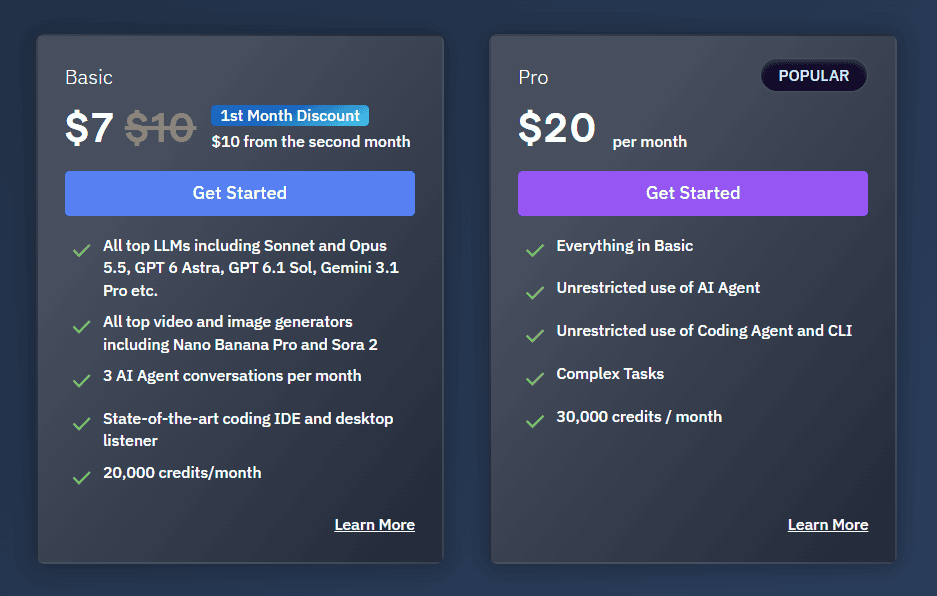
Conversely, users whose primary requirement is a straightforward, conversational chatbot for occasional writing assistance may find the expansive feature set and credit management system unnecessarily complex. Similarly, enterprise teams requiring deeply specialized, out-of-the-box integrations for specific department workflows may need to invest significant configuration effort to tailor the platform to their exact operational standards.
Ultimately, Abacus AI represents a powerful yet intricate technical workspace. By carefully monitoring credit consumption, defining clear project parameters, and rigorously testing AI-generated outputs, users can effectively harness the platform’s extensive capabilities while mitigating the learning curves and workflow challenges highlighted in public reviews.