











Artificial intelligence is rapidly moving from an abstract technological novelty into the physical infrastructure of modern cable broadband networks. As operators look for ways to stay steps ahead of service impairments, automatically remediate network issues, and dramatically improve the overall customer experience, they are weaving AI directly into the operational fabric of their systems. At the same time, broadband subscribers are accelerating their own personal and professional use of AI tools, though this consumer-driven data consumption has not yet dramatically altered aggregate network utilization figures.
This deep integration of artificial intelligence into cable network operations was a central theme at the recent SCTE Cable-Tec Expo in Atlanta, where industry leaders gathered to discuss the intersection of next-generation infrastructure, edge computing, and AI deployment. Broadband service providers are gaining unprecedented access to real-time data streaming from deep within their networks. This includes the network edge, where operators have begun aggressively deploying a new generation of nodes, amplifiers, and modems equipped with advanced, AI-capable neural processing units.
During a general session at the conference, Elad Nafshi, executive vice president and chief network officer at Comcast, highlighted the scale of these hardware upgrades. Comcast has already deployed more than 500,000 "smart" amplifiers as part of its ongoing DOCSIS 4.0 Full Duplex, or FDX, network architecture deployment. These smart devices allow operators to monitor and optimize performance dynamically, shifting the paradigm of network management from reactive troubleshooting to proactive self-healing.

However, gathering petabytes of real-time telemetry brings its own unique operational challenges. Network operators face a constant struggle to separate actionable intelligence from background noise, parse the precise context of complex network anomalies—such as a major fiber cut—and determine the exact automated steps required to mitigate them.
As Nafshi colorfully noted during the panel discussion, network engineers can easily become choked on data and fail to understand what to do with it. To solve this dilemma, Comcast is leveraging agentic AI systems to rapidly sort through massive volumes of alarms, filter out irrelevant signals, and consolidate related alerts into a single, cohesive trouble ticket when human intervention is genuinely required. Furthermore, the telemetry data being continuously captured and analyzed is fed right back into the system to retrain and refine the underlying AI models, with the ultimate goal of steadily improving analytical accuracy and automated recommendations over time.
Nafshi candidly acknowledged the probabilistic nature of machine learning, remarking that artificial intelligence models are often just as confidently wrong as they are confidently right. Despite this inherent hurdle, Comcast has achieved impressive milestones. Today, the operator’s root-cause analysis agents boast an accuracy rate exceeding 90%, a performance metric that Nafshi hopes to push closer to 99% by the time the industry convenes for next year’s conference.
Operational efficiency gains are manifesting across other vectors as well. Nafshi estimated that Comcast is now capable of successfully deconflicting more than 50% of incoming trouble tickets through automated systems, emphasizing that the company is only just getting started. The tangible benefits for consumers are already measurable. Geographic footprints within Comcast’s service territory that have been upgraded to support FDX are experiencing a 59% boost in quality-of-service improvements alongside a notable 21% reduction in overall outage durations.

While network operators lean on AI to optimize their backend systems, broadband customers are also ramping up their utilization of generative AI tools and applications. Industry projections strongly indicate that consumer-side AI usage will continue climbing exponentially in the years ahead. Interestingly, despite the massive media attention surrounding artificial intelligence, the immediate impact of these workloads on overall network traffic remains relatively modest.
Participating on the same executive panel, Justin Colwell, executive vice president of technology strategy and innovation at Spectrum, shared compelling metrics regarding subscriber behavior. More than half of Spectrum’s broadband customers now actively use some form of AI agent. While AI-related data traffic is expanding at a rapid pace—surging by an impressive 350% year-over-year—it still accounts for a tiny fraction of total network load, representing just 0.1% of downstream usage and 0.3% of upstream usage across the Spectrum network.
Nevertheless, that compound annual growth rate is widely expected to accelerate steeply. As the broader technology ecosystem adopts AI-assisted security cameras, physical robotics, and fully autonomous self-driving vehicles, the proliferation of connected devices will exert a material upward pressure on upstream bandwidth requirements. Colwell predicted that these emerging traffic trends validate the strategic foresight of upgrading legacy infrastructure to symmetrical gigabit speeds via DOCSIS 4.0, ensuring that the heavy capital expenditure will ultimately pay off.
Sharpening the Edge
Both Spectrum and Comcast are heavily investing in artificial intelligence while simultaneously pioneering entirely new commercial business lines situated right at the edge of the network, including traditional headends and local distribution hubs. These critical real estate sites are being outfitted with robust enterprise compute power and specialized Nvidia graphics processing units. By doing so, operators are unlocking lucrative secondary revenue streams, a transformation occurring in tandem with the broader industry migration toward the virtualization of access networks. This architectural shift allows cable providers to free up valuable floor space, physical power, and cooling capacity within their facilities.
At the Atlanta trade show, Spectrum showcased several practical use cases for deploying localized compute infrastructure and ultra-low-latency connectivity directly at the network edge. These demonstrations featured live deployments alongside a connected humanoid robot designed to highlight the real-world demands of physical AI. Spectrum, which recently finalized its merger with Cox Communications, emphasized that its distributed edge footprint places it in a prime position to deliver reliable compute capacity within a 10-millisecond window to roughly 500 million connected devices residing in American homes and businesses.
Physical AI is arriving rapidly, Colwell explained to attendees, and the strict latency requirements demanded by autonomous systems simply cannot function if forced to make a sluggish 100-millisecond roundtrip journey all the way up to centralized hyperscale cloud data centers and back. With more than 1,000 strategically positioned edge sites across its footprint, Spectrum has successfully turned its legacy real estate and newly liberated network capacity into a formidable strategic advantage.
Commercial monetization of this edge strategy is already well underway as third-party technology partners plug directly into the upgraded infrastructure, according to Gary Koerper, Charter’s senior vice president of emerging technology and innovation, who spoke during a press briefing on the exhibition floor.
For instance, Cast AI is actively utilizing Spectrum’s edge data centers—which Koerper characterized as an advanced neo-cloud concept—to support a flexible GPU-as-a-service model for internal product development. Similarly, a technology startup named Hydra is leveraging Spectrum’s localized edge infrastructure to function as an intermediary broker matching customers who urgently require temporary GPU compute capacity with entities that possess idle hardware resources.
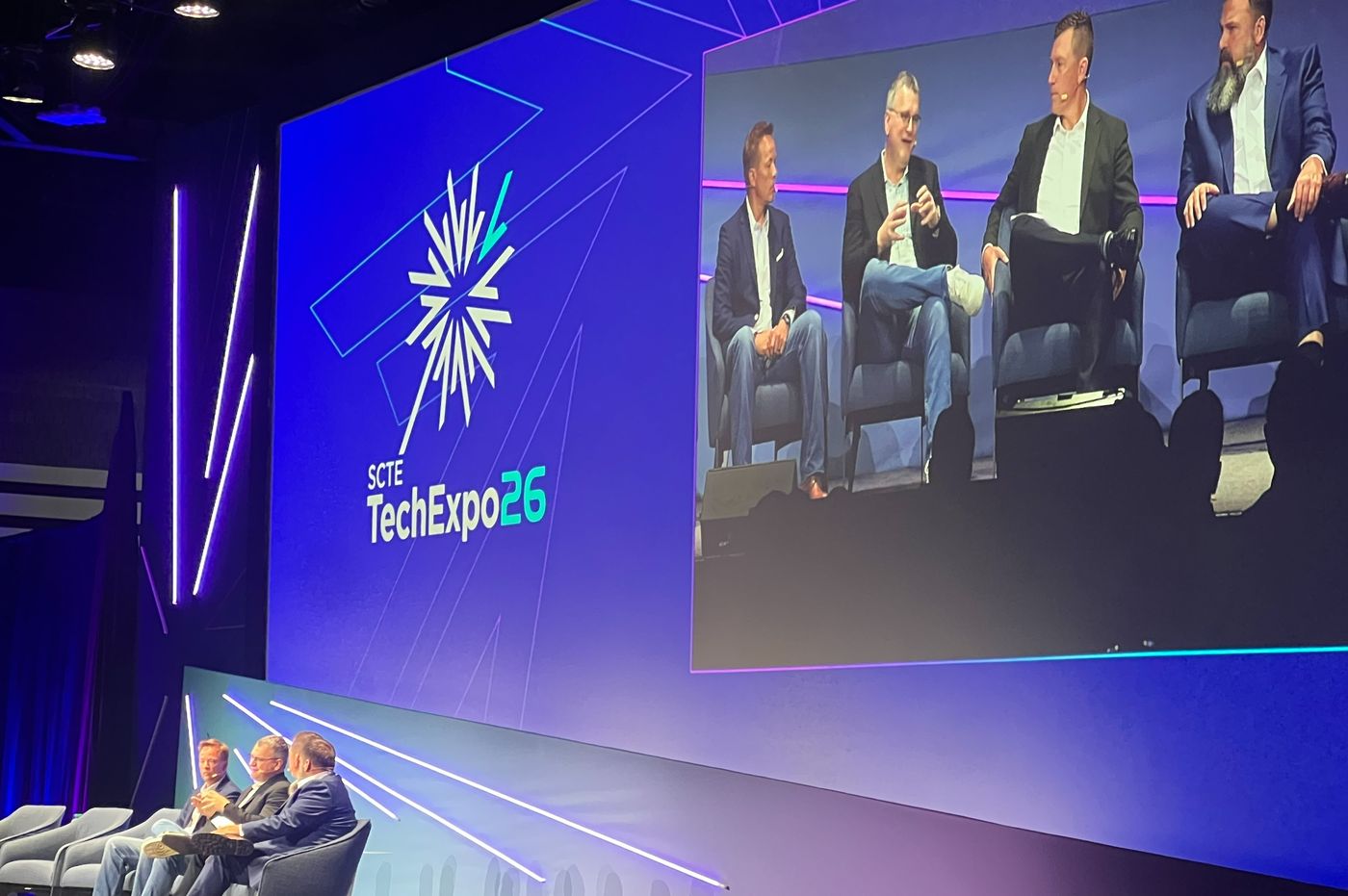
Meanwhile, hardware giant HP has tapped into the network to power its Z Solutions ecosystem, designed specifically for graphic arts studios requiring heavy computational horsepower for connected, high-performance professional workstations. In effect, HP is extending its local area network straight into Spectrum’s broadband infrastructure to seamlessly access distributed compute resources on demand, Koerper noted.
Comcast used the event to highlight its recently announced strategic partnership with Fastly, a prominent content delivery network provider. Under this arrangement, Fastly operates as a software container directly on Comcast’s decentralized edge platform. The primary objective is to offload heavy peak traffic events—such as massive concurrent streams of live sporting events—and cache or process them physically closer to the end consumer.
Peacock, the premium subscription streaming service owned by NBCUniversal, is already utilizing this integrated architecture to enhance the efficiency, reliability, and delivery latency of live sports broadcasts distributed across the platform. Comcast, which already prioritizes superior picture quality and minimal glass-to-glass latency through its sports-centric Real Time 4K video distribution system, estimates that it currently operates more than 200 AI-powered edge compute facilities spread across the United States.
Enterprise database titan Oracle was likewise unmasked as another major corporate partner utilizing Comcast’s network-as-a-service capabilities. Oracle views the infrastructure as an ideal opportunity to support low-latency media delivery for both live and on-demand video, catering specifically to the sudden "thundering herd" of viewers tuning into exceptionally popular live broadcasting events, according to Jon Dakss, vice president of interactive media platform services at Oracle, during a joint on-stage discussion with Nafshi. Live video truly represents the quintessential use case for this rapidly evolving edge computing architecture, Dakss emphasized.
Looking forward, Comcast intends to leverage its edge infrastructure to preposition other high-bandwidth digital assets, including massive video game downloads and critical software patches, while simultaneously bolstering consumer cybersecurity services. Nafshi revealed that Comcast has expressed strong interest in running domain name system infrastructure as a software container directly at the edge, a move designed to mitigate exposure to future large-scale, national DNS-related service outages.
Treating the physical telecommunications network as a versatile software platform has become the central operational philosophy at Comcast, Nafshi suggested, hinting that subscribers will see an array of entirely new service categories deployed at the edge over the next 12 to 18 months—offerings that do not even exist in the commercial market today.
Meanwhile, technology giants like Google have long maintained a collaborative relationship with cable operators by caching web content for services like YouTube and handling interconnection traffic. However, industry insiders expect this partnership to deepen significantly as cable providers infuse greater compute power and low-latency connectivity into the network edge.
With the explosive advent of artificial intelligence and generative AI technologies, that foundational relationship has evolved drastically over the past couple of years, observed Matt Anderson, global market lead for the telecom industry at Google Cloud, underscoring the broader industry consensus that the traditional boundaries of broadband networks are being permanently redrawn.