







The way most organizations are rolling out artificial intelligence feels less like a calculated business strategy and more like an elaborate corporate farce. If the current wave of enterprise AI adoption were adapted into a feature film, movie reviewers would likely dismiss it as completely unbelievable, arguing that no real-world management team could possibly be that short-sighted. Yet, businesses everywhere are living through this reality, and what makes the situation all the more frustrating for industry observers is that corporate leadership has traversed this exact path before.
Reflecting on the striking similarities between today’s artificial intelligence boom and the digital transformation era of a decade ago, digital strategist and author Paul Boag notes that organizations are making the exact same fundamental errors. Back in 2014, Boag published Digital Adaptation for Smashing Magazine to dissect the widespread missteps companies were making when approaching digital transformation and to outline what they should have been doing instead. Today, as enterprises rush to integrate generative artificial intelligence into their daily operations, the parallels between then and now are impossible to ignore. Examining those past lessons offers a critical roadmap for navigating the profound challenges of artificial intelligence adoption today, starting with the most pervasive error of all: treating a profound organizational shift purely as an IT upgrade.
It’s About People, Not Technology
Undoubtedly, both digital transformation and the artificial intelligence revolution represent monumental technological leaps forward, and some level of technical implementation is undeniably required. However, the software deployment itself is merely the tip of a very large iceberg.

During the height of the digital transformation era, internal IT departments busied themselves rolling out complex content management systems, customer relationship management software, and internal intranets. Meanwhile, customer-facing teams rushed to publish websites, mobile applications, and personalized portals. Yet, organizations poured almost zero emphasis into understanding how actual human beings were going to interact with and use these new systems. Internal software platforms proved notoriously difficult to navigate, while customers often found that the digital products being built did not align with their actual needs or preferences.
A strikingly similar phenomenon is playing out with artificial intelligence today. Buoyed by relentless industry hype, senior management teams authorize company-wide licenses for enterprise tools like Microsoft Copilot Studio and consider their job finished. Aside from a handful of generic, organization-wide training webinars, little else is provided. Consequently, frontline staff are left staring at intimidating new interfaces, wondering what they are supposed to do with them, and feeling immense, unspoken pressure to immediately deliver measurable productivity results using tools they barely understand.
Organizations must urgently recognize that artificial intelligence represents a profound cultural shift as much as a technological one, and that shift carries enormous, high-stakes implications for their staff. This time around, the psychological hurdle is significantly higher because employees are acutely aware of the broader economic conversation. They have read the exact same alarming headlines about automation and job displacement as leadership, and empty reassurances from senior executives do little to quell their underlying anxieties.
Why Would Staff Want To Adopt AI?
Examining the current enterprise landscape from an ordinary staff member’s perspective reveals why organic adoption remains sluggish. Artificial intelligence offers very few tangible personal benefits to the average worker, particularly when employees suspect that management’s ultimate goal is to use automation to downsize headcounts.
The primary driver behind executive enthusiasm for artificial intelligence is the promise of enhanced productivity—the capability for employees to accomplish more in less time. However, this metric rarely translates into a benefit for the workers themselves. Staff members are still expected to log their standard forty-hour workweeks, but they now face implicit expectations to output a higher volume of work within those exact same hours. They receive no reclaimed time off and no corresponding increase in compensation, leaving many to wonder why they should embrace a technology designed to squeeze more labor out of their daily routines.
Before pressuring employees to enthusiastically adopt artificial intelligence, leadership teams must first answer a fundamental question: how do they intend to genuinely motivate their workforce to do so?
One effective strategy involves helping staff identify the most tedious, frustrating parts of their daily jobs and demonstrating how artificial intelligence can shoulder those burdensome tasks to make their work lives less painful. People are inherently far more receptive to technological change when it is framed as a direct opportunity to improve their working conditions rather than a mechanism for exploitation. Beyond streamlining daily frustrations, organizations may also need to consider offering meaningful incentives tied to artificial intelligence adoption, ranging from professional development opportunities and compensation adjustments to exploratory time allowances.
Staff Need Time And Support To Adopt AI
Adopting artificial intelligence is far from a trivial task. It requires employees to challenge and dismantle operational habits and working practices that they have painstakingly built up over years or even decades. Entire frameworks of procedural knowledge must be completely rebuilt. Asking workers to undergo this level of professional disruption is a massive hurdle under even the best of circumstances, yet the vast majority of modern employees are currently operating under less-than-ideal conditions.
Most workers are already overworked, perpetually firefighting, and struggling simply to stay on top of overflowing daily to-do lists. They lack the luxury of unscheduled hours to sit quietly, learn a completely unfamiliar software tool, and figure out how it integrates into their complex existing workflows.
Adapting to these tools requires deep consideration and hands-on experimentation. Simply sending an employee to a standardized, generic training seminar and expecting them to harness the full potential of artificial intelligence is bound to fail. At a bare minimum, staff require role-specific training tailored to the unique demands of their departments. Furthermore, organizations need to develop sophisticated, ongoing support structures that grant employees dedicated time to experiment, make mistakes, and discover the most effective ways to incorporate artificial intelligence into their day-to-day responsibilities.
Formal training programs, however, have inherent limitations. In practice, the most effective support consistently comes from peers rather than top-down directives. Every organization possesses a small contingent of enthusiastic early adopters who are already experimenting with artificial intelligence on their own initiative, often without formal prompting. Bringing these internal enthusiasts together, providing them with the time and space to share what is already working, and allowing their organic enthusiasm to spread naturally across teams proves far more powerful than any corporate memo.
During the digital transformation era, this peer-led approach yielded remarkable results. Showcasing successful internal projects at staff-led conferences did infinitely more to drive genuine adoption than executive mandates ever could. People are naturally inclined to try new approaches when they witness a colleague in a similar role utilizing them successfully, rather than when they are simply told to do so by senior leadership. Rather than focusing initial energy on winning over the most resistant employees, organizations should empower their natural experimenters and let social proof do the heavy lifting. Unfortunately, this experimentation inevitably comes with a distinct organizational challenge: the inevitability of failure.
It Needs To Be Safe To Fail
Many organizations maintain corporate cultures rooted in subtle fear, where mistakes are interpreted as direct evidence of professional incompetence. Yet, by its very nature, mastering an advanced, unpredictable tool like artificial intelligence requires a process of trial and error. When a mistake carries professional penalties, employees quickly conclude that experimentation is an unnecessary career risk.
This exact dynamic crippled numerous digital transformation initiatives in the past. Senior management would passionately demand sweeping digital modernization while remaining completely baffled when progress stalled. They failed to realize they were broadcasting contradictory messages. While executives demanded digital innovation, they simultaneously continued to enforce rigid key performance indicators and penalize minor operational missteps during annual performance reviews. The pressure to deliver flawless execution was relentless, leaving zero safe space to fail.
In the current artificial intelligence landscape, these mixed messages appear even more pronounced. Reports circulate of employees being reprimanded for incurring excessive token usage fees mere weeks after being explicitly instructed to integrate artificial intelligence into their workflows. Others face such exhaustive lists of compliance warnings regarding what they can and cannot do that they ultimately decide it is safer to abandon the tools entirely and revert to familiar, traditional methods. If leadership genuinely expects a workforce to embrace artificial intelligence, they must establish an environment where experimentation carries no punitive risk. This requires adjusting performance metrics, revising review processes, and relaxing administrative governance while workers navigate the steep learning curve.
Handle Governance With Care
Naturally, enterprise-grade artificial intelligence cannot be rolled out in a complete vacuum without reasonable governance frameworks in place. However, governance is historically an area where corporate organizations falter significantly.
During the digital transformation era, governance either remained entirely absent or manifested as suffocating bureaucracy that paralyzed innovation. The exact same pattern is currently emerging around artificial intelligence adoption. Employees require clear governance boundaries to understand what is expected of them, where they stand, and what operational boundaries apply to their use of automated tools.

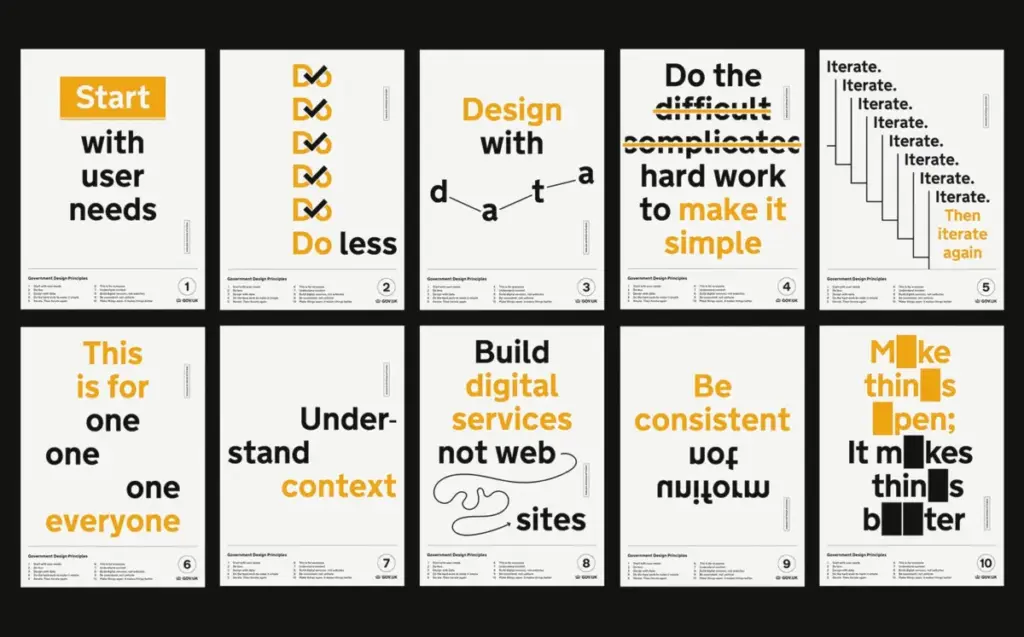
When organizations impose overly restrictive compliance regimes consisting of endless pages detailing prohibited data inputs and restricted workflows, they inadvertently foster the exact culture of fear that halts adoption entirely. Instead, companies require concise, accessible sets of guiding principles—frameworks compact enough to fit on a few posters—complemented by a genuine baseline of trust in their employees’ professional common sense. While mistakes will inevitably occur along the way, they represent the unavoidable cost of modernization and organizational evolution.
Adaptive Technological Rollout
Organizations must exercise equal care when managing the technical rollout of artificial intelligence from an IT infrastructure perspective. Once again, the temptation to lock down technological access tightly to maintain absolute control risks stifling adoption altogether.
In 2014, overstretched IT departments frequently selected a rigid suite of enterprise technologies and mandated their use organization-wide, offering little consultation to the actual end-users. Any software or tool falling outside that narrow corporate catalog required navigating a labyrinthine approval process overseen by cautious steering committees. The resulting glacial pace of operational change contributed heavily to the notoriously high failure rates of early digital transformation projects.
Today, enterprises are mirroring those exact missteps. Many IT departments purchase enterprise-wide access to a single platform like Copilot, declare the technological integration complete, and move on. In reality, this one-size-fits-all approach frequently falls far short of specialized departmental requirements.
When corporate tools prove incapable of supporting specialized workflows—such as distinct research repositories or tailored domain models—ambitious teams find themselves bogged down in months of administrative bureaucracy trying to secure alternative software approvals. Understandably, staff enthusiasm wanes rapidly under the weight of red tape.
Rather than waiting indefinitely for official approvals, impatient employees frequently resort to workarounds reminiscent of the "shadow IT" phenomenon seen during the digital transformation era. When official internal tools prove too restrictive, workers simply open personal accounts on consumer platforms using their personal devices to get their jobs done. This behavior introduces severe security risks: sensitive corporate data ends up in external repositories completely outside organizational control, lacking oversight or audit trails.
The instinctive corporate reaction to shadow artificial intelligence is often a heavy-handed clampdown involving blocked websites, aggressive monitoring policies, and threats of disciplinary action. However, punitive measures rarely alter underlying behavior; instead, they simply drive employee activity further underground. Shadow artificial intelligence should be viewed as a valuable diagnostic symptom, highlighting precisely where official enterprise tooling fails to meet operational demands. Rather than attempting to stamp out these workarounds entirely, organizations should investigate what external tools are achieving and use those insights to inform future infrastructure rollouts.
Navigating this transitional phase inevitably introduces a degree of operational messiness and administrative complexity as employees explore the boundaries of what is technologically possible. Organizations must tolerate a certain amount of early experimentation, allowing staff to test various applications to determine what best suits their specific professional roles.
While managing organizational change always carries inherent risks, moving too slowly in the current technological landscape remains vastly more dangerous than moving too quickly. The most critical peril facing modern enterprises is treating artificial intelligence adoption as a purely technical challenge while overlooking the human, cultural, and change management dimensions required to make it succeed.