In the world of cloud computing, there are statistics that defy easy comprehension. They are numbers so vast that they remain abstract until one pauses to consider the sheer mechanics required to sustain them. Last week, as part of a retrospective on Amazon Prime Day 2026, the AWS team unveiled a collection of metrics that highlight the staggering resilience and capacity of their infrastructure. Among these, the most arresting figure was the 2.3 quadrillion requests per day handled by Amazon ElastiCache at the peak of the event.
Prime Day took place back in June, and as is tradition, this post-event analysis arrives months later. This temporal gap is, in many ways, the point of the exercise. By the time these numbers are compiled and shared with the public, the primary evidence that such a massive logistical and technical feat occurred is the fact that nothing went wrong. For the end user, the shopping experience was seamless, yet beneath that silence was a massive, orchestrated symphony of global computing power.
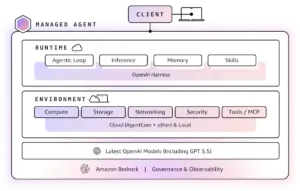
While the retrospective on Prime Day dominated the headlines, the broader ecosystem of Amazon Web Services continued to move in a different, more nuanced direction throughout the week: a trend toward smaller, more efficient, and more controlled AI integrations. The introduction of Claude Haiku 5.5 on Amazon Bedrock, priced at roughly 75 percent less than its predecessor, reflects a persistent push toward cost-efficiency in large language models. Similarly, the debut of Amazon Nova 2.5 Sonic suggests a focus on reducing latency for voice agents, making them more conversational and responsive. Furthermore, the introduction of Strands Box signals a maturation of the AI space, placing necessary boundaries and safety rails around what autonomous agents are permitted to accomplish.
The Scale of Prime Day 2026
The tradition of analyzing Prime Day infrastructure dates back to 2016, and each year serves as a benchmark for the evolution of cloud scale. The 2026 data reveals a system operating at a magnitude that is difficult to visualize. Over the four-day span of the event, Amazon DynamoDB, the backbone of Amazon’s transactional data, processed more than 59 trillion requests. At its height, it hit a throughput of 192 million requests per second—a velocity that sustained single-digit millisecond response times throughout the entirety of the event.
The compute layer proved equally formidable. AWS Lambda, the serverless engine that powers much of the event’s backend, handled more than 2.3 trillion invocations per day. Storage infrastructure was pushed to similar extremes, with Amazon EBS peaking at over 24.8 trillion I/O operations, moving more than an exabyte of data every twenty-four hours. Orchestration was handled by Amazon ECS, which launched an average of 158.3 million tasks per day on AWS Fargate, representing a 47.7 percent increase compared to the previous year. Furthermore, the reliance on proprietary silicon continues to pay dividends, as AWS Graviton processors handled up to 49 percent of the Amazon EC2 compute capacity utilized by Amazon.com.
However, beyond the raw throughput numbers, the most significant metric involves the philosophy of resilience. The engineering teams conducted more than 44,000 AWS Fault Injection Service (FIS) experiments in the months leading up to the event. This represents a six-fold increase over the number of experiments run in 2025. These are not accidental failures; they are deliberate, controlled, and simulated catastrophes injected into the production environment to stress-test the system’s self-healing capabilities. By forcing the infrastructure to recover from artificial failures months in advance, the team ensured that the massive spikes in traffic during Prime Day resulted in nothing more than a standard, quiet afternoon for the average shopper. This methodology serves as a blueprint for any organization preparing for their own period of peak demand, with tools like AWS Countdown Premium designed specifically to facilitate that level of rigorous planning and execution.
Looking Toward the Future of Development
While the retrospective on Prime Day provides a look at the current ceiling of cloud performance, the weekly rhythm of AWS news continues to center on the rapid evolution of developer tools and AI capabilities. The shift toward more specialized, efficient models like the new iterations of Claude and Amazon Nova underscores a shift in industry priorities. It is no longer just about the largest model or the most raw compute power; it is about performance-per-dollar and the ability to integrate AI into real-time, voice-enabled, and safety-constrained applications.
As the industry continues to push the boundaries of what is possible, the tools available to developers are becoming increasingly sophisticated. The focus is shifting from simple access to intelligent, high-throughput systems to the orchestration and governance of those systems. Whether through the implementation of guardrails like Strands Box or the utilization of automated testing frameworks, the goal remains the same: to make the most complex systems in the world operate with the predictability and stability of a standard utility.
For those interested in the ongoing evolution of the cloud, the "What’s New with AWS" page remains the primary source for comprehensive updates. The complexity of the ecosystem means that innovation is happening at every layer—from the underlying silicon of the Graviton chips to the high-level abstractions of Bedrock’s agentic frameworks.
Connecting with the broader community remains a vital part of this development lifecycle. Through platforms like the AWS Builder Center, developers are encouraged to share their own solutions, challenges, and architectural patterns. As the industry moves forward, the ability to exchange knowledge is what allows these individual service improvements to translate into tangible value for businesses and end users alike.
The scale of Prime Day 2026 was a testament to the endurance of cloud infrastructure, but the week’s news serves as a reminder that the work of building—and constantly improving—that infrastructure never stops. As we look ahead, the integration of more efficient models and the refinement of safety and orchestration tools will likely define the next chapter of cloud computing.
Check back next Monday for another installment of the Weekly Roundup, as we continue to track the developments and announcements that shape the cloud landscape.