







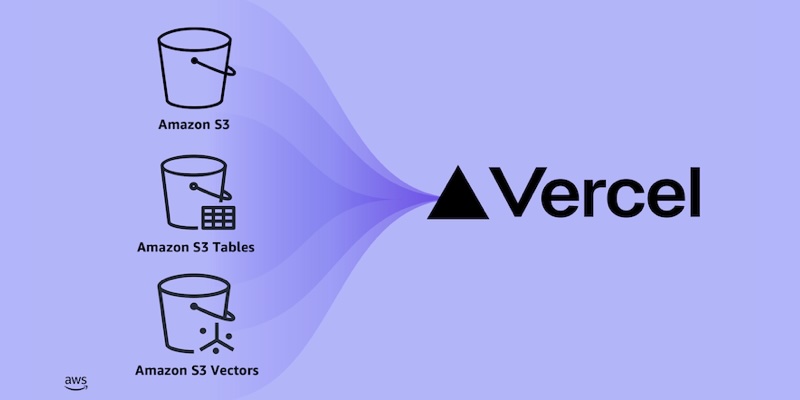
Developers building web and AI-driven applications on Vercel now have a more streamlined path to enterprise-grade storage. In a significant expansion of its platform capabilities, Vercel has announced that Amazon Simple Storage Service (Amazon S3)—including advanced features such as Amazon S3 Tables and Amazon S3 Vectors—is now natively available directly through the Vercel Marketplace and the AI-powered development tool, v0. This integration marks a shift in how developers interact with AWS infrastructure, effectively bridging the gap between Vercel’s rapid, user-centric provisioning workflow and the massive scalability and durability of the AWS ecosystem.
For millions of developers who rely on Vercel to build, deploy, and scale their applications, the complexities of cloud infrastructure have often required a departure from their primary workspace. Historically, provisioning robust storage meant navigating to the AWS Management Console, configuring complex security policies, managing IAM roles, and carefully handling credentials. This "context switching" between the application environment and the infrastructure management console often created friction in the development lifecycle. With this new integration, S3 storage is brought directly into the Vercel developer experience, automating resource provisioning and connection configuration.
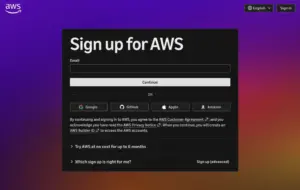
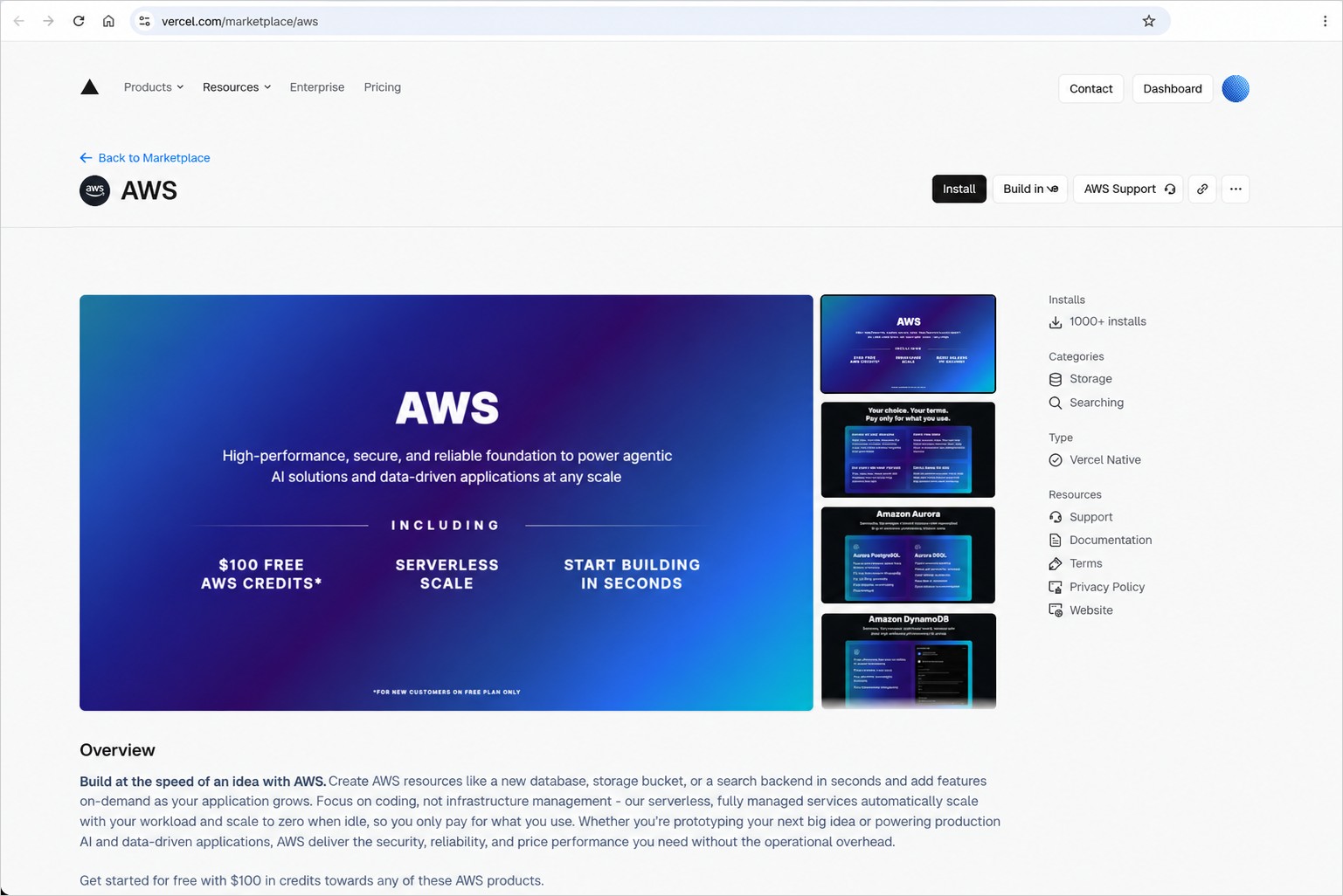
This development completes a broader strategic push by Vercel to offer a comprehensive application stack within its own interface. By integrating S3 alongside existing support for Amazon Aurora, Amazon DynamoDB, and Amazon OpenSearch Serverless, the platform now provides a cohesive experience where developers can manage object storage, vector databases, and relational data without leaving the Vercel ecosystem. All these services are tied to a single AWS account, ensuring that teams can maintain a unified billing structure while benefiting from the high-performance capabilities of AWS.

Streamlining the Development Workflow
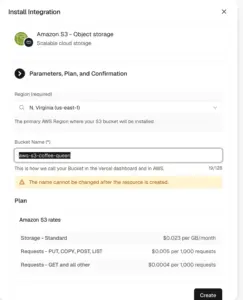
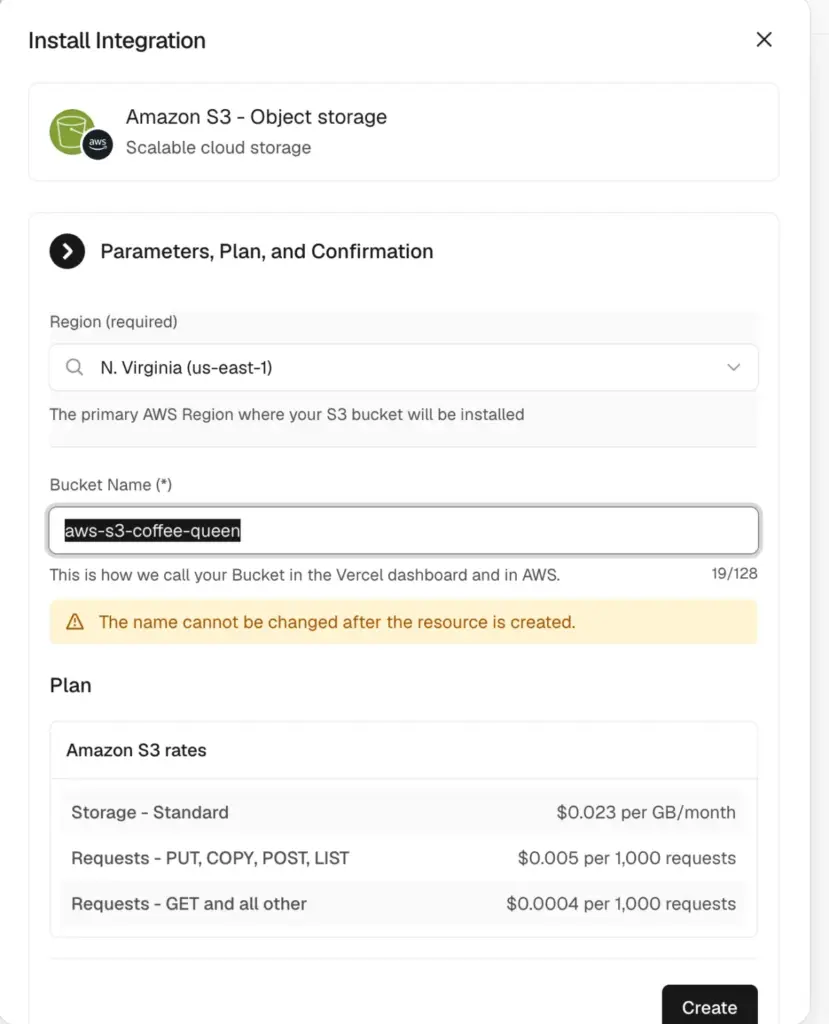
The integration is designed for three primary workload categories: everyday object storage, large-scale analytics, and modern AI-driven applications. From the Vercel dashboard, developers can navigate to the Storage tab and initiate the creation of a new bucket. The process is remarkably straightforward: after selecting the AWS option, users pick their desired S3 bucket type and the appropriate geographic region. Provisioning typically completes in mere seconds, drastically reducing the time required to stand up storage infrastructure.
Once the bucket is provisioned, connecting it to a project is handled through the Vercel CLI. By running standard link and environment pull commands, the system automatically injects necessary variables such as AWS_REGION, AWS_ROLE_ARN, and the specific bucket identifier. A standout feature of this integration is its security posture. At runtime, the platform utilizes the awsCredentialsProvider from the @vercel/functions/oidc library. This mechanism exchanges a short-lived OIDC token with the AWS Security Token Service (STS) to provide temporary, scoped credentials for the specific resource. By moving away from static keys, Vercel ensures that developers do not have to manage or expose sensitive credentials, a common pain point that often leads to security vulnerabilities.
Advanced Capabilities for Analytics and AI
The inclusion of Amazon S3 Tables and S3 Vectors signals Vercel’s commitment to supporting data-intensive and AI-native applications. S3 Tables are specifically engineered for analytics, offering a managed environment for Apache Iceberg tables. These tables are designed to optimize query performance automatically as data volumes scale, providing features like automated maintenance and compaction. Because they are compatible with any Apache Iceberg REST Catalog-compliant engine, developers can leverage tools like DuckDB within a Vercel Function to perform lightweight, efficient analytical queries on their data.

Similarly, the support for S3 Vectors addresses the growing demand for semantic search and AI agent capabilities. S3 Vectors provides cost-optimized, purpose-built storage that allows applications to store and query high-dimensional vector embeddings. This eliminates the need for developers to manage a separate, specialized vector database. In a typical RAG (Retrieval-Augmented Generation) workflow, a developer might generate embeddings using their preferred machine learning model and then use the S3 Vectors integration to perform efficient similarity searches, retrieving the most relevant context for their AI models.
AI-Assisted Provisioning via v0
Perhaps the most intuitive aspect of this update is the integration with v0, Vercel’s generative AI development tool. Developers can now use natural language prompts to dictate the infrastructure they need. For instance, a developer might ask v0 to "build a photo gallery where users upload images using AWS," and the tool will automatically provision a general-purpose S3 bucket. Similarly, requesting a "support bot that answers questions from my PDFs" will trigger the setup of S3 Vectors, while asking for an "analytics dashboard for clickstream data" will deploy S3 Tables.
Beyond simply creating the resources, v0 handles the boilerplate code and connection configurations, presenting a working prototype in the preview panel. This capability is expected to significantly lower the barrier to entry for developers who may be familiar with web application architecture but less experienced in configuring AWS cloud services.
Unified Infrastructure Management
One of the key design philosophies behind this integration is the retention of AWS-native tooling. When a developer creates an S3 bucket through the Vercel Marketplace, the resource lives entirely within their own AWS account. This means that while the provisioning is simplified, the developer retains full access to the broader AWS ecosystem. They can use AWS-native tools for monitoring, auditing, and complex lifecycle management, ensuring that the integration does not create a "walled garden" effect.
For teams already invested in AWS, the ability to link an existing account is a critical feature. Vercel allows users to connect their current AWS account, which preserves existing billing cycles and organizational policies. When using an existing account, Vercel scopes its actions to new buckets created specifically through the platform, preventing conflicts with existing, manually managed infrastructure.
The platform also encourages developers to think of their data as a unified ecosystem. Because every AWS service on Vercel shares the same authentication model, developers can easily build complex architectures—such as storing file metadata in an Amazon Aurora database while keeping the actual assets in an S3 bucket, or pairing document text in DynamoDB with vector embeddings in S3.
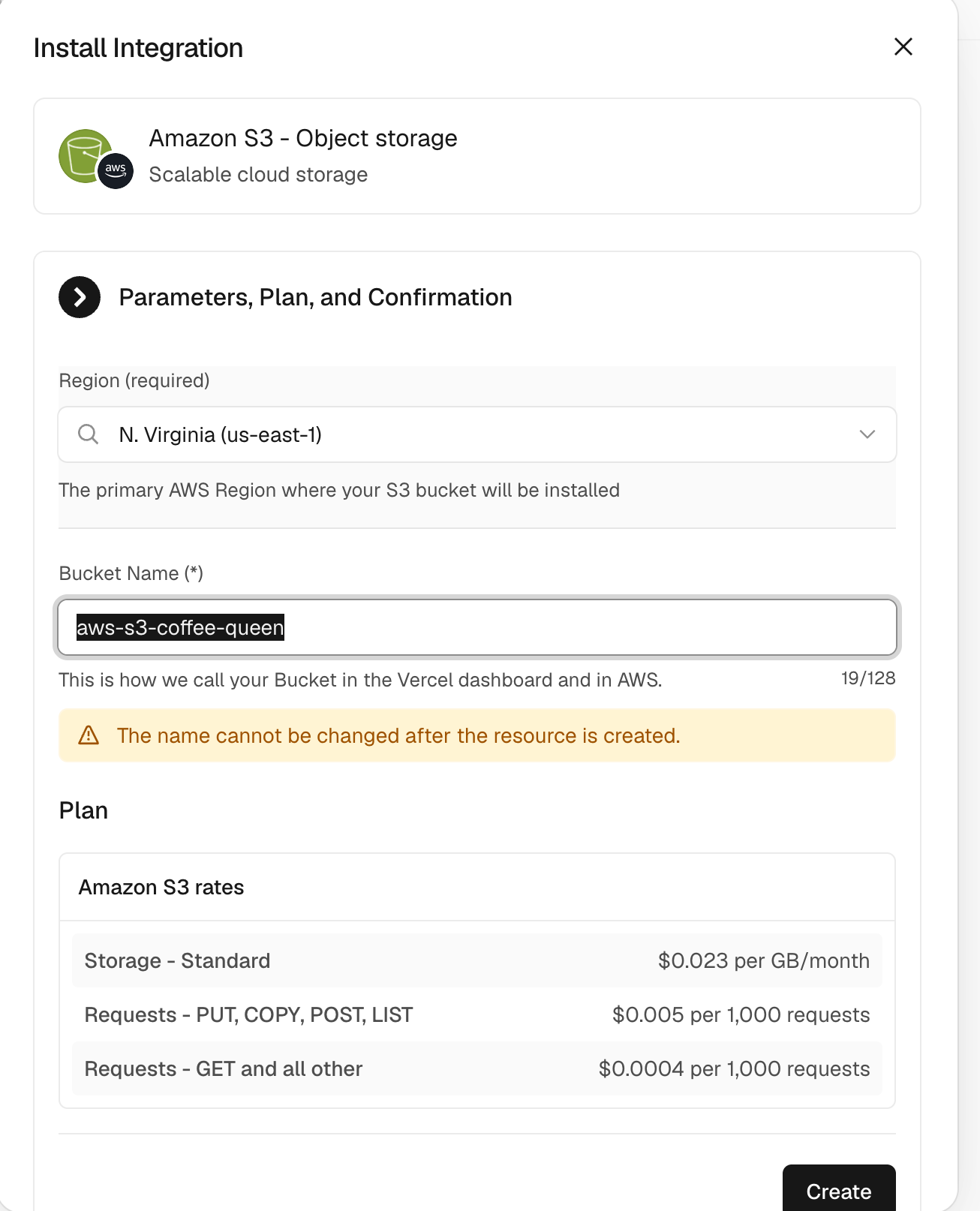
The integration is available at no additional cost beyond the standard Amazon S3 pricing for the resources utilized. To encourage adoption and facilitate testing, new AWS accounts created through the Vercel portal are eligible for $100 in AWS credits, valid for six months. As the developer ecosystem continues to lean into AI and serverless architectures, the ability to rapidly provision and securely manage cloud storage within a familiar development workflow is likely to become an essential requirement. For those looking to deepen their integration or troubleshoot specific configurations, AWS has also provided resources through the AWS MCP Server and community support via the AWS re:Post forums.