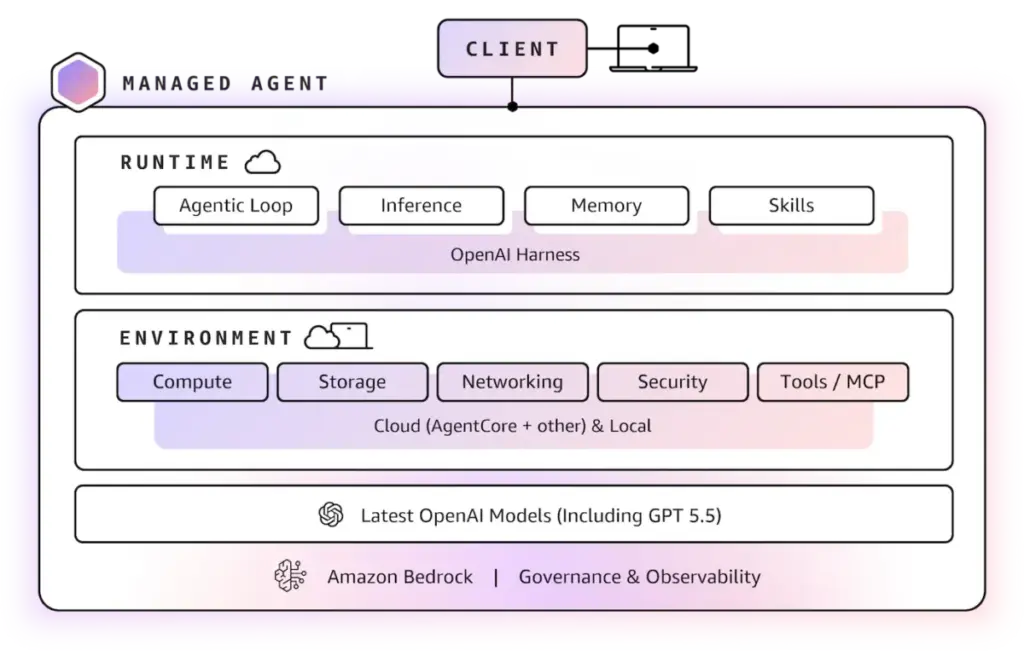
Amazon Web Services (AWS) has officially initiated a public preview of Amazon Bedrock Managed Agents powered by OpenAI. This significant development, announced late last week, represents a strategic evolution in how enterprises can integrate sophisticated generative AI capabilities into their existing cloud infrastructure. By building upon a customized version of OpenAI’s Agents API, AWS has engineered a solution that is inherently "AWS-native," designed to operate seamlessly within the established security, governance, and identity frameworks that organizations already utilize to manage their cloud resources.
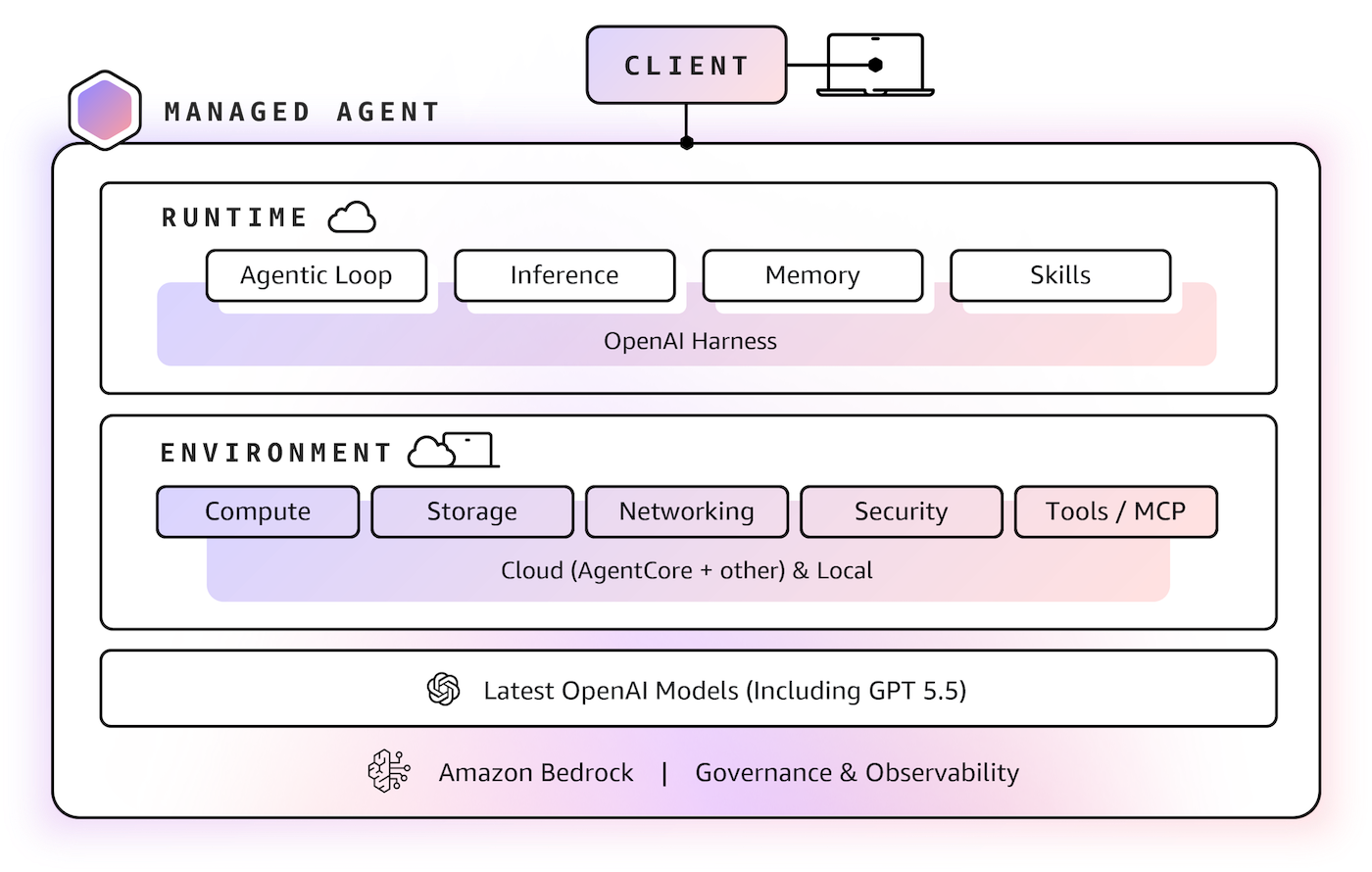
The introduction of these managed agents allows developers to harness the power of OpenAI’s advanced models while maintaining the strict operational oversight required in enterprise environments. Because these agents run entirely within the AWS ecosystem, users are empowered to apply their existing AWS Identity and Access Management (IAM) policies, encryption standards, and compliance monitoring tools directly to their AI workloads. This integration removes the traditional friction associated with connecting third-party AI models to sensitive internal data and private cloud architectures, effectively providing a bridge between frontier model performance and enterprise-grade security.
Architecturally, the new offering provides users with significant flexibility regarding the execution environment. Organizations can choose between a self-hosted compute model—ideal for teams that prefer to manage their own development machines, containers, or specific compute environments—or the Amazon Bedrock AgentCore Runtime. The latter option offers a fully managed experience, providing managed runtime sessions and configurable storage options directly within the user’s AWS account. This dual-path approach ensures that both highly specialized engineering teams and those seeking a streamlined, managed service can leverage the technology according to their specific infrastructure requirements.
The significance of this launch lies in its focus on the "managed" aspect of the agentic workflow. Historically, deploying agents that could reliably access data, execute functions, and maintain context across multi-step tasks required substantial manual orchestration. By integrating this functionality into the Amazon Bedrock ecosystem, AWS is aiming to simplify the lifecycle of agent development. This includes the automation of session management and the integration of storage, which are critical components for maintaining state and context during complex user interactions. The preview serves as an invitation for the developer community to begin testing these workflows, providing feedback that will ultimately shape the final, generally available release of the service.
Beyond the immediate introduction of OpenAI-powered agents, AWS continues to focus on its broader strategy of model diversity. The platform is actively expanding its roster of available frontier models, acknowledging that the rapidly evolving AI landscape requires customers to have access to a wide variety of architectures and capabilities. This strategy of "model choice" is a hallmark of the Bedrock value proposition, allowing developers to experiment with, evaluate, and eventually deploy the model that best suits their specific use case—whether it be for coding, creative writing, data analysis, or complex process automation.
In addition to these advancements in AI, the past week has seen a series of updates regarding the AWS service portfolio. AWS consistently reviews its service offerings to ensure that customers have access to modern, high-performance tools while providing clear guidance on the lifecycle of legacy features. Maintaining a stable and reliable cloud environment requires the periodic retirement or transition of older services, a process that AWS manages through its Product Lifecycle Changes notifications.
These updates serve as a crucial touchpoint for operations and DevOps teams. When a service or a specific feature reaches a point in its lifecycle where it is superseded by more efficient or secure alternatives, AWS provides explicit guidance to minimize potential disruptions. For instance, services that are moving into a "Maintenance" phase—where they are no longer accessible to new customers—are often accompanied by documentation detailing migration paths. This proactive communication is designed to help organizations plan their infrastructure updates well in advance, ensuring that their systems remain resilient and up-to-date with current best practices.
The lifecycle management process is categorized into distinct stages, including Maintenance, Sunset, and End of Support. Each stage carries specific implications for current users, ranging from limited support availability to the complete decommissioning of the service. By clearly defining these phases, AWS ensures that enterprises can perform risk assessments and allocate engineering resources to necessary migrations without facing unexpected downtime. The latest round of updates, issued toward the end of September 2026, reinforces the importance of monitoring the "What’s New with AWS" and the "AWS Product Lifecycle Changes" pages to remain informed about these shifts.

For developers and architects who are looking to deepen their engagement with the AWS ecosystem, the current period is particularly busy. The platform is not only rolling out new AI features and service lifecycle updates but also maintaining a robust schedule of community and educational events. These range from high-level conferences like AWS re:Invent to localized, community-driven events such as AWS Community Days. These gatherings provide essential forums for builders to exchange knowledge, share architectural solutions, and learn from the collective experience of the global developer community.
Furthermore, resources like the AWS Builder Center have become increasingly vital for those seeking to stay ahead of the curve. By connecting with fellow builders and accessing a curated library of content, developers can navigate the complexities of cloud-native development more effectively. As the industry shifts toward more complex, agentic AI systems, the value of these community-led initiatives—where developers share practical implementations and troubleshooting tips—cannot be overstated.
The pace of innovation within the cloud computing sector remains relentless. The ability to integrate third-party AI models like those from OpenAI into a secure, managed environment, while simultaneously maintaining the operational stability of a vast cloud infrastructure, is a testament to the current direction of the industry. AWS is positioning itself not just as a provider of raw compute and storage, but as an orchestrator of the entire AI application lifecycle.
As we move toward the final quarter of 2026, the focus for many organizations will likely shift toward optimizing these new agentic workflows and preparing for the upcoming cycle of industry events. The introduction of Bedrock Managed Agents for OpenAI is a clear indicator that the future of cloud development is increasingly intertwined with the deployment of intelligent, autonomous, and secure AI agents. Developers and enterprise leaders are encouraged to consult the official Amazon Bedrock documentation to understand the full scope of the current preview and to begin evaluating how these new capabilities might integrate into their existing roadmaps.
As always, the "What’s New with AWS" page remains the definitive source for the latest announcements, providing a comprehensive view of the rapid changes occurring across the platform. Whether it is a new model integration, a feature enhancement, or a lifecycle update for a legacy service, staying informed is the first step toward leveraging the full potential of the cloud. The coming months promise further developments as the platform continues to evolve, and the community can expect more updates as these new features move from preview to general availability.