










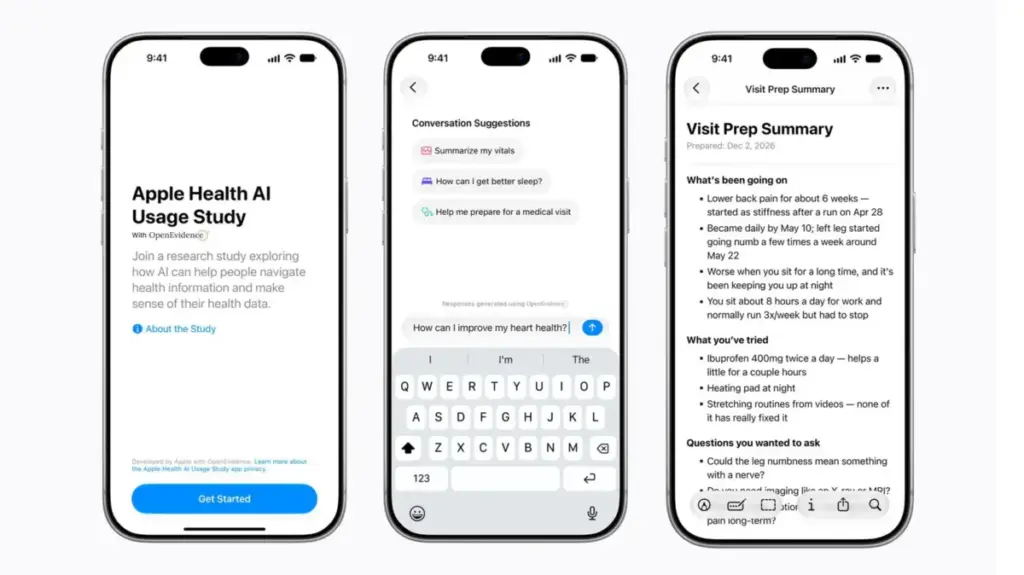
In a significant move to bridge the gap between complex medical literature and everyday consumer health needs, Apple has officially unveiled a new research initiative focused on the practical application of artificial intelligence in healthcare. The company is launching the Health AI Usage Study, a large-scale project designed to gain a deeper understanding of how individuals interact with AI-driven health tools, with the ultimate objective of making these systems more effective, accessible, and user-friendly for the general public.
This initiative is being conducted in strategic partnership with OpenEvidence, a highly regarded clinical AI platform known for its rigorous approach to medical data. OpenEvidence is frequently utilized by healthcare professionals and researchers because of its ability to synthesize vast amounts of medical information from authoritative, peer-reviewed sources, such as the New England Journal of Medicine. By leveraging this high-fidelity data, Apple aims to ensure that the AI responses generated within the study are grounded in clinical accuracy rather than speculative or generalized information.
The centerpiece of this research is a dedicated application, now available for public download, which serves as the primary interface for study participants. Apple has set an ambitious goal for the project, seeking to enroll up to 200,000 participants. To qualify for the study, users must be at least 21 years of age, reside within the United States, and possess an iPhone 15 Pro or a more recent model running iOS 26 or later. These hardware requirements underscore the computational demands of the app, which is designed to provide a high-performance experience as users engage with the AI tools.

A critical aspect of the study design is the optional integration of the Apple HealthKit ecosystem. Participants are given the choice to grant the app access to their existing health data, which may include information on activity levels, sleep quality, and previous laboratory results. By opting to share this information, users provide the research team with vital context that helps the AI better understand the individual’s health profile, thereby allowing the system to provide more personalized and relevant health-related insights.
The functionality of the app is intentionally straightforward. Participants will use the interface to pose medical questions via text-based prompts. Examples of these interactions, as showcased in the application’s promotional materials, include inquiries such as, "How can I improve my heart health?" or other wellness-related queries. Upon receiving these prompts, the AI is designed to deliver responses that are stripped of overly complex medical jargon, ensuring that the information is easy to digest for the average user. Crucially, these responses will be accompanied by direct links to the peer-reviewed clinical sources from which the data was derived, maintaining transparency and allowing users to verify the information against reputable scientific literature.
The primary objective for Apple in conducting this research is to refine the design of future AI health tools. The company seeks to identify the types of information that users find most helpful and the specific formats that make that information actionable. By observing how real people interact with the technology—and allowing them to rate the quality and clarity of the responses they receive—Apple hopes to foster a new generation of health technology that provides users with clear, evidence-based guidance to support their personal health journeys.
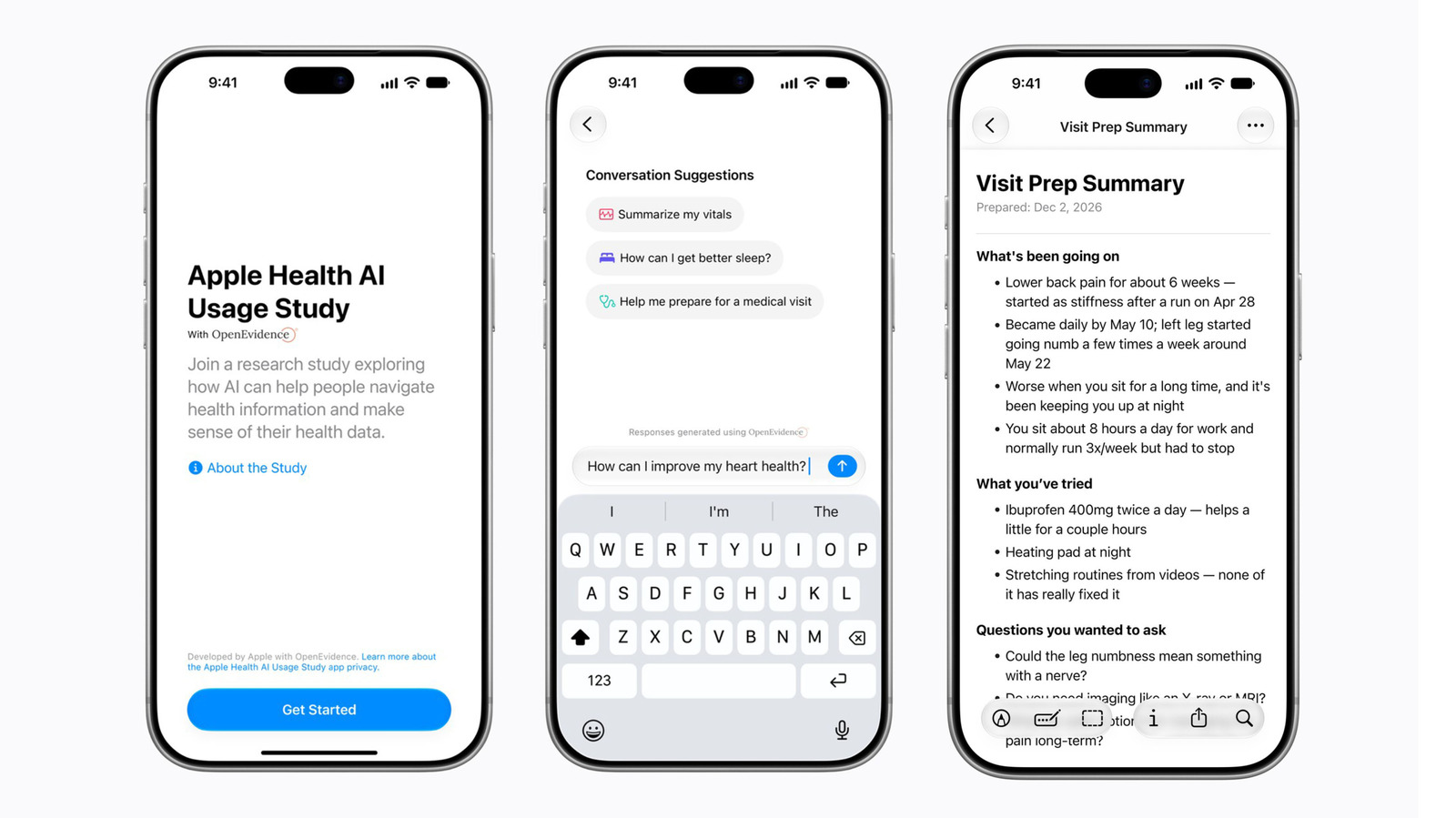
Despite the focus on artificial intelligence, Apple has been careful to delineate the boundaries of this specific project. The company has explicitly stated that the new research app is not integrated with Siri or Apple’s broader Apple Intelligence suite. Furthermore, to address potential privacy concerns, Apple has emphasized that the data collected during this study will remain confidential. The company has provided assurances that the participant data will not be used to train Apple’s general-purpose AI models, a distinction that is likely intended to build trust with users who may be hesitant about sharing personal health information with technology companies.
The launch of this study reflects a growing trend in the technology sector where major players are increasingly focusing on "clinical grounding" as a prerequisite for health-related innovations. Dr. Sumbul Desai, Apple’s Vice President of Health and Fitness, underscored this philosophy in a recent statement. According to Dr. Desai, Apple believes that responsible innovation must be rooted in scientific rigor and clinical accuracy. She noted that the insights gained from this study will contribute to the broader scientific conversation regarding the intersection of medicine and technology, ensuring that as these tools evolve, they continue to serve as trusted companions that genuinely support users in their daily health management.
As the study progresses, the data collected will provide a unique look at how technology can be optimized to improve health literacy. By focusing on non-jargony, actionable responses that are tied to peer-reviewed sources, Apple is attempting to solve one of the most persistent problems in digital health: the prevalence of conflicting or inaccurate medical information online. By centralizing this information through a platform that prioritizes user feedback and scientific validity, the company hopes to create a blueprint for the future of patient-facing health AI.
For the 200,000 participants Apple hopes to recruit, the study offers an opportunity to be at the forefront of digital health development. The experience is designed to be low-friction, focusing on the quality of the dialogue between the user and the AI rather than invasive or overly complex data collection methods. By allowing users to rate the responses they receive, the study effectively treats the participants as active stakeholders in the refinement process, rather than just passive subjects.
The decision to limit participation to those with newer iPhone models is a reflection of the intensive processing power required to handle the AI queries locally or via secure cloud-based pipelines that meet Apple’s internal privacy standards. As iOS 26 becomes more widely adopted and hardware requirements become more accessible, the lessons learned from this study are expected to inform the development of future health features that may eventually be integrated into the broader Apple ecosystem.
As the tech industry continues to grapple with the ethical and practical implications of artificial intelligence in healthcare, Apple’s approach—combining high-level clinical partnerships with a user-centric, transparency-focused research study—represents a deliberate, cautious expansion into the medical space. By prioritizing participant confidentiality and relying on the expertise of institutions like those featured in the New England Journal of Medicine, the company is signaling that it intends to maintain its reputation as a steward of user privacy even as it pursues the cutting edge of AI-driven health management. The results of this study, once concluded, will likely set a new benchmark for how health-focused AI tools should be developed, tested, and deployed to meet the evolving needs of the public.