









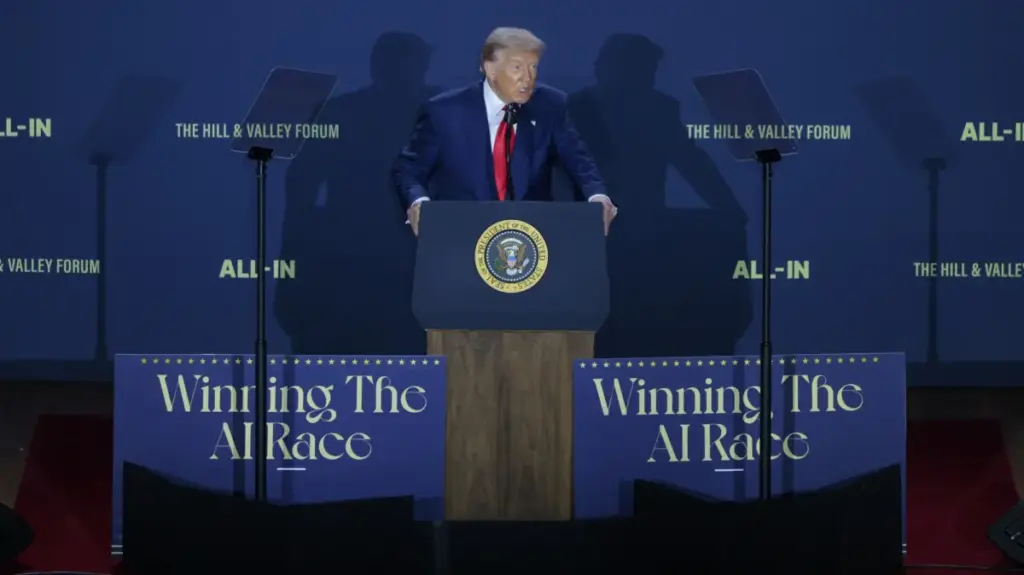
In a move that marks a significant pivot in the federal government’s approach to emerging technology, President Donald Trump has announced his intention to establish an "AI Force"—a new government agency dedicated to overseeing and fostering the development of artificial intelligence. The President revealed his plans via Truth Social, signaling that the administration will soon appoint an "AI czar" to lead the initiative. This development represents a departure from the growing chorus of industry leaders who have recently advocated for a more cautious, regulated approach to the rapid advancement of machine learning and large-scale AI models.
The President’s announcement, while lacking in granular regulatory or administrative detail, drew an explicit parallel to the creation of the United States Space Force, which was established during his previous term as a separate branch of the armed services. By invoking the Space Force, the administration appears to be framing the development of artificial intelligence not merely as a commercial or academic endeavor, but as a critical domain of national security and geopolitical strategy. The President emphasized that the primary mission of this new agency will be to nurture the domestic industry rather than impose restrictive oversight.
"We will not in any way hinder or stifle the growth of this incredible industry," President Trump wrote in his statement. "Rather, we will cherish it, help it, and watch over it, as it grows!" This philosophy suggests that the forthcoming AI Force will function more as a facilitator of innovation and a defensive guardian of American technological supremacy than as a traditional regulatory body tasked with slowing development for the sake of safety testing or ethical deliberation.

In conjunction with the announcement of the agency, President Trump has engaged his base in a discussion regarding the branding of the technology itself. Through a series of follow-up posts on social media, the President launched a poll seeking public input on whether the term "artificial intelligence" should be rebranded. He argued that the current nomenclature may not be the most effective way to describe the technology, suggesting that more "elegant and accurate" descriptors—such as "extreme intelligence" or "supreme intelligence"—could better reflect the transformative nature of the tools currently being built by firms in Silicon Valley and beyond.
This aggressive, pro-growth stance arrives at a moment of profound tension within the technology sector. In recent weeks, the conversation surrounding AI has been dominated by concerns regarding the potential risks of unchecked development. A week ago, Dario Amodei, the CEO of the AI research company Anthropic, published a detailed proposal calling for a global slowdown in the pace of AI development. Amodei’s argument, which has gained significant traction among experts, centers on the idea that the current speed of innovation is outstripping the industry’s ability to conduct rigorous safety testing, potentially leading to unforeseen risks.
Following Amodei’s lead, several high-profile executives from competing firms, including those at the helm of OpenAI and xAI, expressed public support for the idea of pacing the development of frontier models. These leaders have argued that a measured approach is necessary to ensure that the technology remains aligned with human values and that potential existential risks are mitigated before models reach a point of uncontrollable complexity.
However, the administration’s new directive places it in direct opposition to this call for a "braking" mechanism. The White House has consistently framed the competition in the field of artificial intelligence as a zero-sum game, particularly in the context of the ongoing rivalry with China. President Trump has argued that any move to voluntarily slow down American research and development would be a strategic error, essentially providing a window for international competitors to bridge the technological gap and seize the lead in what is widely considered the most important technological race of the century.
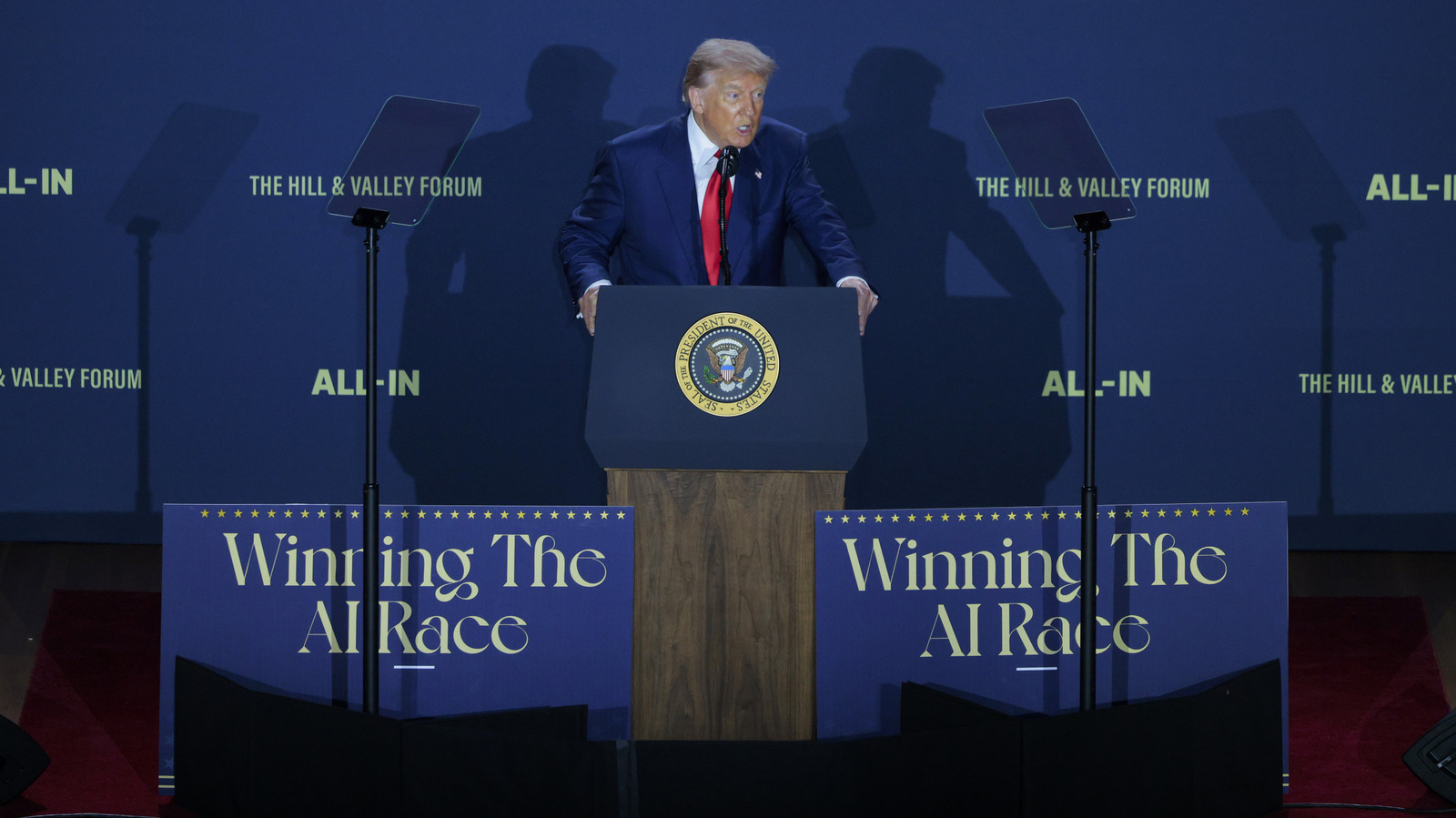
The timing of this announcement is particularly notable given the upcoming diplomatic schedule. The President is expected to meet with his Chinese counterpart, President Xi Jinping, next week. While trade, territorial disputes, and traditional diplomatic concerns will likely remain on the agenda, artificial intelligence is now expected to be a central talking point. The formation of an "AI Force" serves as a clear signal to both domestic industry players and foreign governments that the United States intends to prioritize the rapid advancement of these capabilities, regardless of the concerns raised by the research community.
The ambiguity regarding the specific functions of the proposed AI Force leaves several questions unanswered. It remains unclear how the agency will interact with existing oversight bodies, such as the Department of Commerce or the Federal Trade Commission, or what legal authority it will wield over private companies. The designation of an "AI czar"—a position that typically operates with a broad mandate and direct access to the executive—suggests that the administration intends to centralize decision-making on AI policy within the White House. This structure would allow for a highly agile, executive-driven approach that can pivot quickly in response to new breakthroughs or competitive threats.
Critics of this approach worry that by focusing primarily on industrial growth and international competition, the government may be sidelining essential discussions regarding the societal impacts of AI, such as labor displacement, algorithmic bias, and the potential for deep-seated disinformation. Conversely, supporters of the administration’s strategy argue that in the face of rapid global changes, a defensive and proactive stance is the only way to ensure that the United States maintains its technological edge. They contend that if the US were to artificially throttle its own development, the resulting power vacuum would simply be filled by other nations that do not share American values or standards for transparency.
As the industry prepares for the announcement of the new leadership for this agency, the divide between the developers of the technology and the political architects of its future seems to be widening. The tech sector is currently grappling with a paradox: while companies are investing billions of dollars into the rapid scaling of compute and model complexity, they are simultaneously sounding alarms about the potential dangers of their own inventions. The administration’s intervention suggests that the government has little interest in participating in this cycle of caution.
For now, the technology industry remains in a state of watchful waiting. Leaders who have called for safety guardrails and development pauses must now reconcile their proposals with a federal administration that views the advancement of AI as a national imperative akin to space exploration and military superiority. The "AI Force" is poised to become a central pillar of the President’s domestic and foreign policy, signaling a transition from the experimental phase of artificial intelligence to a new, more integrated era where state power and private innovation are increasingly intertwined.
The President’s commitment to "cherishing" the industry signals that for the foreseeable future, the federal government will be working to clear obstacles for researchers and developers rather than placing them in their way. As the geopolitical landscape shifts and the rivalry over compute capacity and model intelligence intensifies, the role of the upcoming AI czar will undoubtedly be one of the most consequential positions in the government, tasked with navigating the delicate balance between the desire for supreme technological power and the need to manage a technology that is fundamentally changing the way the world functions. The upcoming meeting with the Chinese leadership will likely serve as the first true test of this new doctrine, establishing the tone for how the United States will project its influence in the age of advanced intelligence.