










In a move set to streamline the operations of data engineers and architects worldwide, Amazon Web Services has announced a significant enhancement to its data lake ecosystem. The company is introducing a new, managed path for migrating legacy Apache Hive tables to the modern Apache Iceberg table format through Amazon S3 Tables. This development represents a shift in how organizations handle the modernization of their data infrastructure, promising to remove the heavy operational burden previously associated with transitioning large-scale analytics datasets.
The migration capability is designed to work seamlessly with Parquet-formatted tables currently residing in Amazon S3 and registered in the AWS Glue Data Catalog. By automating the technical complexities of such a transition, AWS is allowing enterprises to upgrade their data architectures without the need to build custom migration pipelines or provision additional compute resources. Crucially, the process is engineered to support ongoing production workloads, ensuring that businesses can modernize their data foundations without interrupting the flow of mission-critical analytics.
The Rise of Apache Iceberg in Modern Analytics
To understand the significance of this update, one must consider the current landscape of big data. Apache Iceberg has rapidly ascended as the industry-standard open table format for large-scale analytics. Its architecture addresses many of the limitations inherent in older, file-based table formats by offering advanced features such as schema evolution, hidden partitioning, and time-travel queries. These capabilities allow data practitioners to maintain granular control over petabyte-scale datasets while ensuring that the data remains accessible to a wide variety of compatible query engines.


However, the transition to Iceberg has historically been a non-trivial undertaking. Organizations looking to modernize their data lakes often faced weeks of intensive engineering work. The process required the design and maintenance of bespoke infrastructure to handle data type conversions, file recompression, and the implementation of robust rollback capabilities—all while maintaining data integrity. For many teams, the operational overhead required to move from Hive to Iceberg was a significant deterrent, often resulting in legacy data remaining stuck in older, less performant formats.
Amazon S3 Tables addresses this friction by offering a fully managed, API-driven solution. By integrating the migration logic directly into the S3 Tables platform, AWS has effectively turned a complex architectural project into a manageable administrative task. The platform now handles the entire end-to-end workflow, including the validation of source data, compatibility assessments, and the technical heavy lifting of reformatting and compacting files.
A Managed Approach to Migration
The migration process is built with safety and operational continuity in mind. Before any data is physically moved or altered, the S3 Tables service conducts a thorough assessment of the source table, identifying every object in scope and generating a detailed compatibility report. This report acts as a safeguard, allowing engineers to verify that their source data is ready for the transition before committing to the process.

Flexibility is a core component of this new feature. Recognizing that modern data lakes are rarely static, AWS has designed the migration flow to be iterative. Users can perform multiple synchronization operations to keep the destination Iceberg table aligned with the source Hive table as new data arrives. This "sync" capability allows for continuous data flow without the need to halt writes to the source table. The only period of downtime occurs during the final cutover, which is designed to last only a few minutes, significantly minimizing the impact on downstream analytical applications.
From a financial perspective, the managed migration is structured to be cost-effective. AWS has confirmed that users are charged only for the actual data copied during the migration process. There are no additional service fees for the Hive-to-Iceberg conversion logic itself. Furthermore, the architecture is designed to respect the existing state of the data; source objects stored in S3 Intelligent-Tiering retain their current access tiers throughout the process, preventing unnecessary costs associated with data movement or storage class changes.
Implementing the Migration
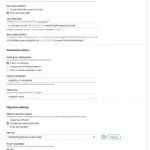
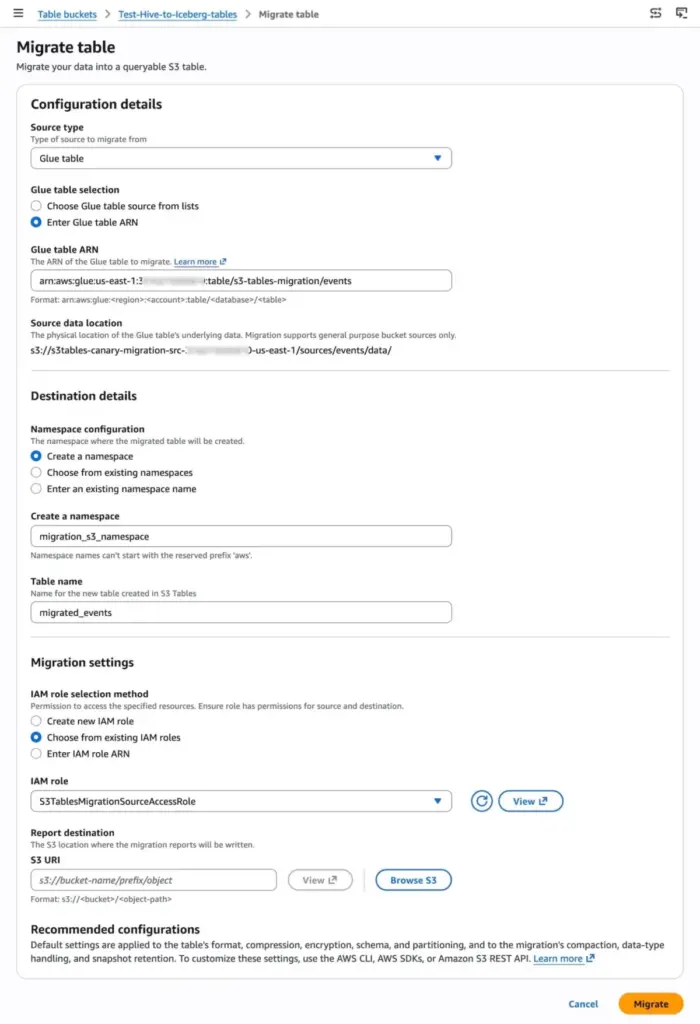
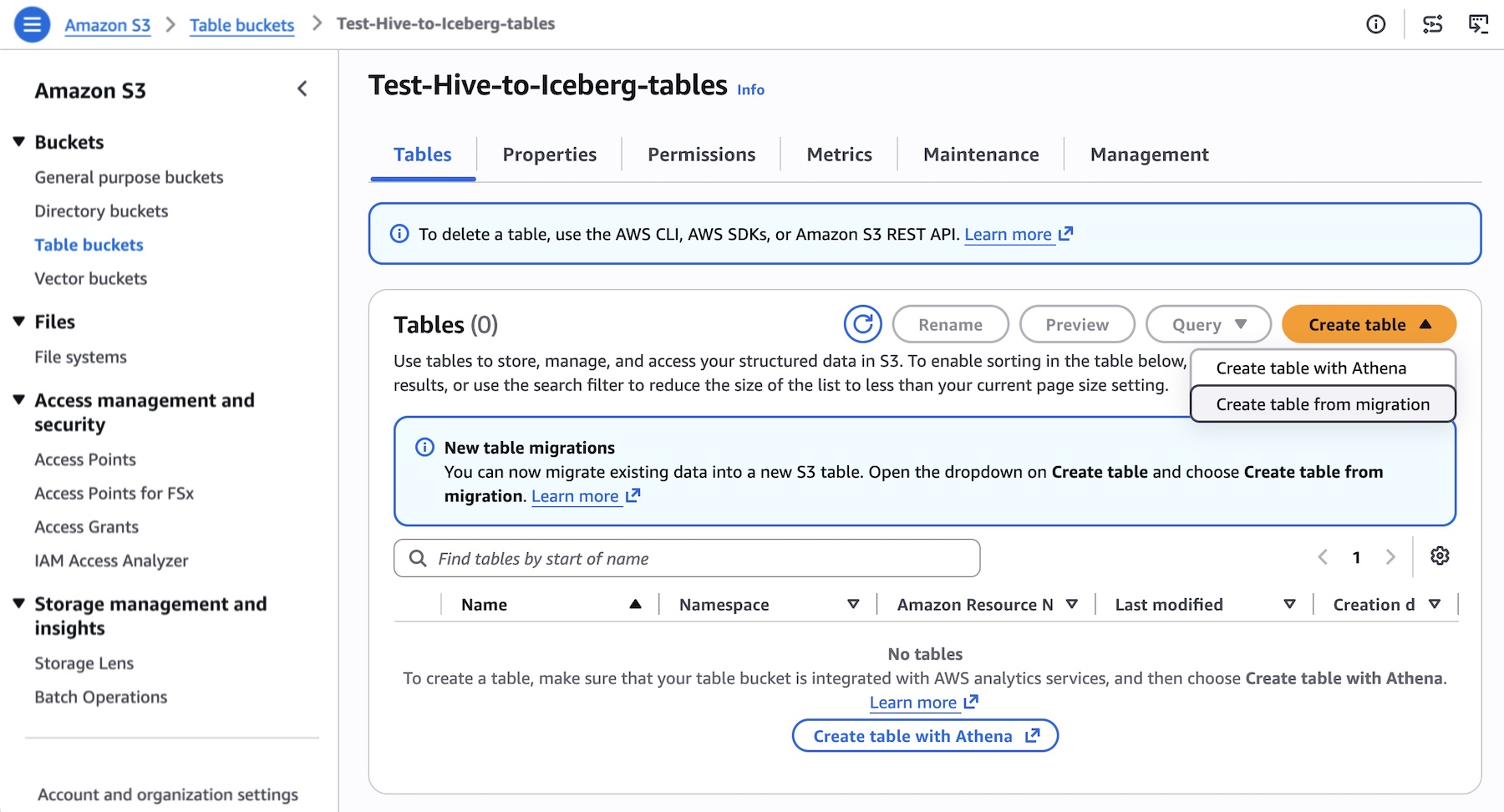
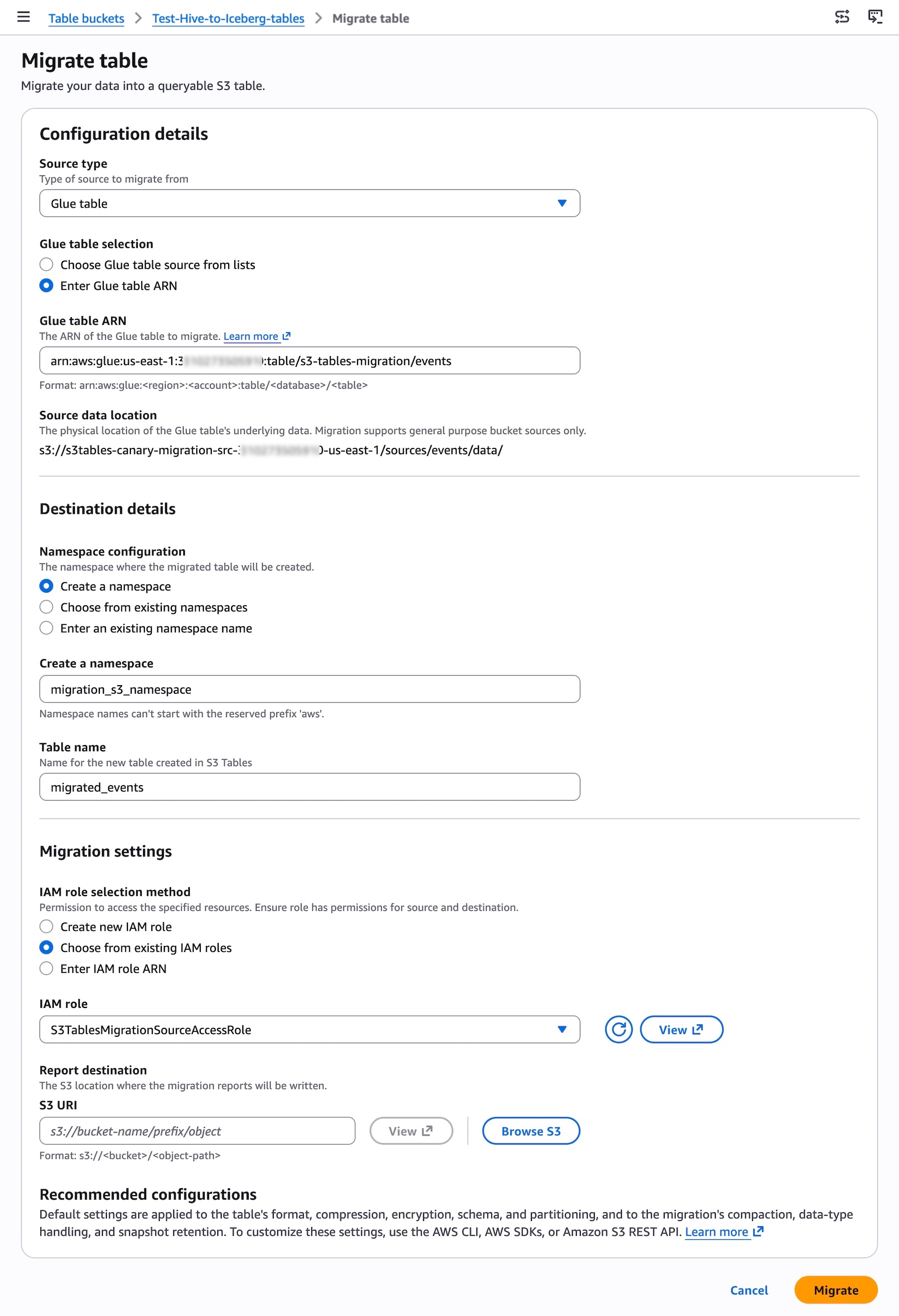
For users looking to initiate a migration, the process has been integrated into the familiar Amazon S3 console. By selecting the destination table bucket and choosing the "Create table from migration" option, administrators can quickly establish a new Iceberg table. The service automatically applies recommended default settings optimized for query performance and storage efficiency, though users retain the ability to configure these parameters to meet specific workload requirements.
Once the migration is underway, the destination table remains in a read-only state, acting as a sandbox for the incoming data. Upon completion, the table is promoted to a read-write status, ready to be utilized by the broader AWS analytics ecosystem. Direct integrations with services such as Amazon Athena and Amazon SageMaker Unified Studio allow data teams to begin querying and analyzing their newly migrated data almost immediately. For those who prefer programmatic control, the migration can also be executed via the AWS Command Line Interface (AWS CLI), various AWS SDKs, or through specialized tools designed for AI-driven automation.
The use of automation is further extended through the Agent Toolkit for AWS. Developers utilizing coding agents like Kiro can leverage the migrating-hive-tables-to-s3-tables skill, which provides structured, step-by-step guidance. This integration includes built-in safety guardrails, ensuring that even complex migrations are handled with high precision and adherence to best practices.
Availability and Future Outlook
The managed migration feature for Amazon S3 Tables is available immediately across a wide range of AWS Regions, including US East (N. Virginia and Ohio), US West (Oregon), Asia Pacific (Mumbai, Singapore, Sydney, and Tokyo), and Europe (Frankfurt, Ireland, and Stockholm). At the time of this launch, the service supports AWS Glue-registered Hive tables stored in Parquet format, provided they are housed within the same AWS account and region.
As data lakes continue to grow in complexity and size, the ability to transition to modern, performant formats like Iceberg becomes an essential capability for organizations that prioritize data-driven decision-making. By removing the technical barriers to this transition, AWS is facilitating a smoother path for enterprises to optimize their storage and compute costs while unlocking the advanced query capabilities that modern table formats provide.
For those navigating the complexities of this transition, AWS has provided extensive documentation and resources, including support through the AWS MCP Server and various community channels like AWS re:Post. As the industry moves further toward standardized, high-performance open formats, tools like the S3 Tables managed migration serve as critical infrastructure that enables organizations to stay agile and efficient in their data management strategies. The ease with which this migration can now be performed suggests that the adoption of Apache Iceberg will likely accelerate as more teams leverage these managed services to modernize their legacy analytical footprints.