









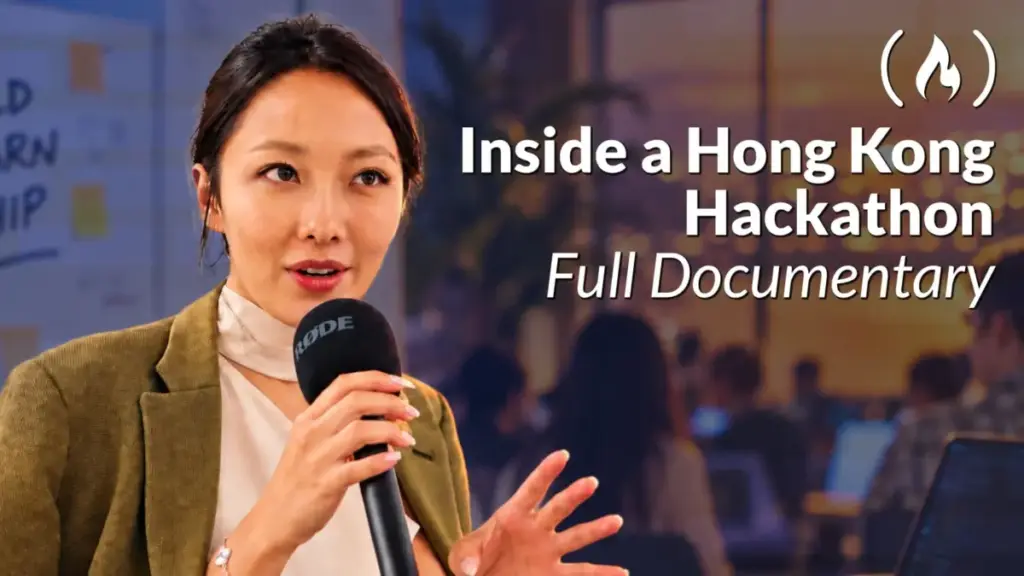
The freeCodeCamp community has officially released a brand-new documentary-style video on its primary YouTube channel, offering viewers an exclusive behind-the-scenes look into the intense, high-energy environment of a 24-hour hackathon. The newly published feature chronicles a major international tech gathering where creativity, sleep deprivation, and cutting-edge artificial intelligence collided under a strict, unforgiving timeline.
Quincy Larson, founder of freeCodeCamp, traveled directly to Hong Kong to participate in the event as an official judge for SeaHack. The high-stakes competition brought together more than 250 talented developers, builders, and innovators representing over a dozen distinct countries. Gathered in a single dynamic venue, the primary challenge set before these diverse teams was deceptively straightforward yet fiercely demanding: form groups, brainstorm innovative concepts, and build a fully functioning AI startup from absolute scratch before the digital clock ran out.
For anyone who has ever wondered what it genuinely feels like to step inside the pressurized crucible of a high-stakes hackathon, or for those simply searching for a fresh wave of creative inspiration for their next software engineering project, the newly released documentary provides a comprehensive window into this world. Throughout the intense competition, Larson walked the busy floor, conducting impromptu interviews with exhausted yet determined developers who were battling severe sleep deprivation to get their Minimum Viable Products deployed onto live servers ahead of a rigid 3:30 PM deadline.
Witnessing the sheer output of these compact teams serves as a powerful testament to modern technological capabilities. It demonstrates quite clearly what small groups of dedicated individuals can accomplish when they harness modern artificial intelligence tools while operating under an extremely tight time constraint. The collaborative atmosphere buzzed with frantic keyboard strokes, urgent architecture discussions, and the constant hum of problem-solving as participants raced against time to bring their visions to life.
Beyond the immediate mechanics of writing code and deploying software, events like SeaHack underscore the profound and expanding global scale of the contemporary tech community. Organizers and participants alike frequently emphasized that the future of artificial intelligence development is by no means confined exclusively to traditional Silicon Valley boardrooms or Western tech campuses. Instead, there are vibrant, thriving hubs of technological innovation flourishing all across the globe in strategically pivotal locations like Hong Kong, a historic crossroads where Eastern and Western cultures, markets, and engineering philosophies continuously intersect.
The demographics of the hackathon further reinforced this inclusive, borderless ethos. Whether individuals arrived as seasoned, veteran software developers with decades of professional experience or as absolute novices who had never previously touched a text editor or a line of code—a reality shared by a few surprising participants Larson interviewed during his floor walks—the environment offered something transformative for everyone involved. Hackathons of this caliber repeatedly prove themselves to be extraordinary catalysts for accelerated learning, professional networking, and the rapid translation of a raw, abstract concept into a tangible, live-running demonstration.
Those interested in experiencing the full scope of the event can watch the comprehensive documentary video on the official freeCodeCamp YouTube channel. The footage captures everything from the quiet intensity of the early brainstorming phases to the frantic, nail-biting final minutes of server deployment. Viewers are also treated to the polished live presentations delivered by the exhausted teams and the nuanced, analytical deliberations of the final judging process as they evaluated which projects successfully transitioned from a wild idea into a viable AI startup framework.
Events of this nature continue to reflect the core mission of open educational initiatives worldwide, reinforcing the idea that practical, hands-on creation remains one of the most effective pathways for individuals entering the technology sector. As open-source curricula and global platforms continue to equip tens of thousands of people with the fundamental skills required to secure employment as professional software developers, gatherings like SeaHack illustrate the boundless potential of a globally connected, tech-literate generation ready to build the future of artificial intelligence from the ground up.