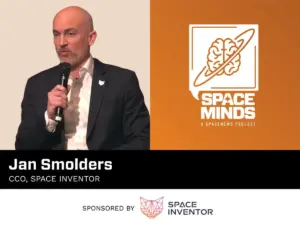









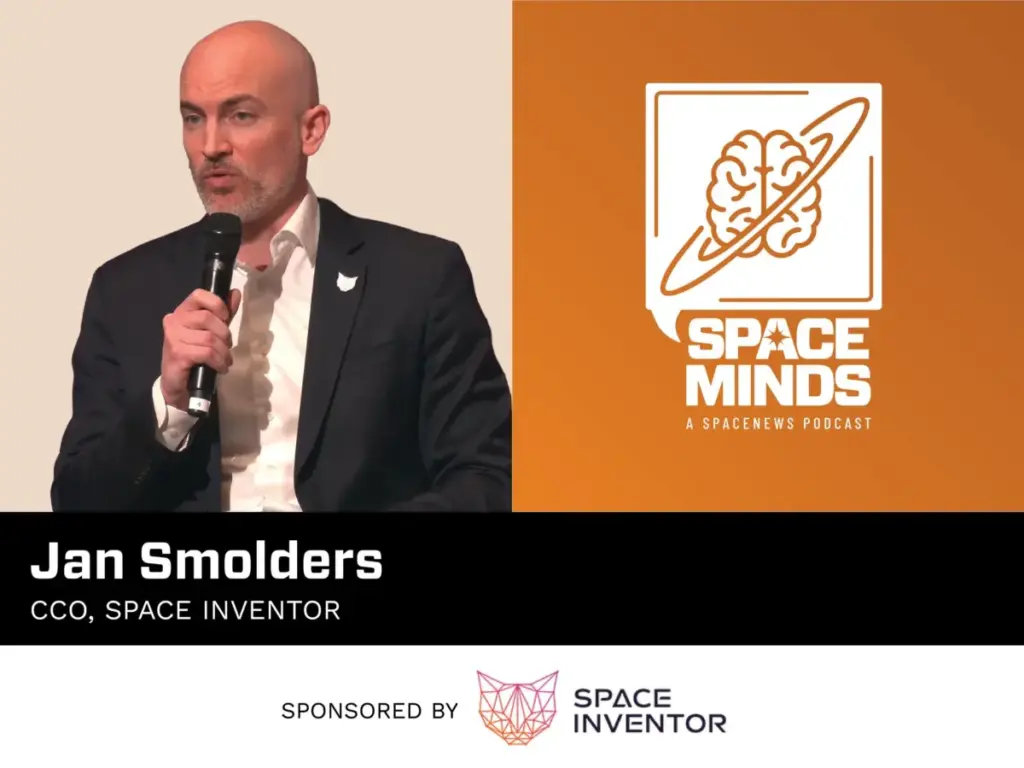
As the global space industry rapidly evolves, the approach to designing, building, and deploying orbital assets is undergoing a fundamental transformation. Gone are the days when space exploration and commercial utilization were exclusively the domain of massive, multi-ton satellites requiring decades of planning and billions of dollars in capital. Today, the conversation has shifted toward agility, resilience, and responsiveness. In the latest episode of Space Minds, the premier audio and video podcast from SpaceNews, host Mike Gruss sits down with Jan Smolders, the Chief Commercial Officer at Space Inventor, to explore these critical shifts shaping the modern space economy.
Recorded live during the bustling Space Tech Expo Europe, the conversation delves into the strategic advantages of mini-constellations, the pressing need for European governments to accelerate their investment timelines in space technologies, and the rising tactical value of advanced capabilities like tipping and cueing—particularly in strategically sensitive regions such as the Baltic Sea. As satellite manufacturing shifts toward modular, payload-centric architectures, industry leaders are increasingly rethinking what it takes to achieve mission success efficiently and effectively.
Rethinking Orbital Architecture: The Rise of Mini-Constellations
For decades, large monolithic satellites dominated the orbital landscape. While these heavy spacecraft offered extensive capabilities, they also presented significant financial risks, prolonged development cycles, and single points of failure. If a multi-billion-dollar satellite experienced a critical malfunction or was compromised, the loss to the operator was catastrophic. Furthermore, replacing such assets could take years.

In recent years, however, the industry has witnessed a paradigm shift toward smaller, more agile formations known as mini-constellations. During their discussion on Space Minds, Gruss and Smolders explore what is often referred to as the "sweet spot" for constellation size. Rather than deploying hundreds or thousands of satellites—or relying on just one or two massive platforms—many commercial operators and defense agencies are finding that smaller, highly coordinated fleets of mini-satellites offer the optimal balance of coverage, redundancy, and cost-efficiency.
Space Inventor, a Danish aerospace company known for building satellites that combine pioneering technology with absolute reliability, has positioned itself at the forefront of this movement. The company specializes in developing everything from individual satellite modules to complete mini-constellations centered around specific payloads. By focusing on payload-centric fleet designs, manufacturers can tailor spacecraft to meet precise mission objectives without unnecessary complexity or wasted mass. This modular approach allows operators to scale their capabilities incrementally, replacing or upgrading individual nodes within a constellation as technology advances, rather than waiting for an entire generational overhaul of a massive satellite system.
Accelerating European Space Investments
One of the central themes of the conversation between Gruss and Smolders centers on the geopolitical and economic realities of the European space sector. While Europe boasts world-class scientific talent, robust engineering capabilities, and innovative startups, the continent has historically faced structural hurdles when it comes to speed and agility in procurement and investment.
In a rapidly changing global security and commercial environment, the traditional pace of government budgeting and bureaucratic decision-making can leave European players at a disadvantage. Smolders addresses how European governments must learn to move faster when it comes to committing capital and integrating cutting-edge commercial space solutions into their national infrastructure and defense frameworks. The modern space race is characterized by rapid technological iteration and commercial-off-the-shelf adaptation. When institutional investors and government agencies take years to evaluate technologies that evolve in months, domestic industries risk losing their competitive edge on the global stage.

The discussion highlights the urgent need for a cultural and procedural shift within European procurement offices. By embracing the agility demonstrated by agile commercial entities like Space Inventor, European institutions can foster a more dynamic ecosystem where innovation moves seamlessly from the laboratory drawing board to low Earth orbit. This acceleration is not merely a matter of economic competitiveness; it is increasingly tied to strategic autonomy and security in an interconnected world.
Tactical Insights: Tipping and Cueing in the Baltic Sea
Beyond manufacturing and procurement, the conversation on Space Minds touches on real-world operational applications that demonstrate the immediate value of modern satellite constellations. Smolders highlights why "tipping and cueing" has become an invaluable operational concept, drawing specific examples from the Baltic Sea region.
Tipping and cueing refers to the coordinated use of multiple sensors or assets, where the detection of an event or anomaly by one system (the tip) directs another sensor or satellite to focus on that specific location for a closer look (the cue). In maritime domains like the Baltic Sea—a body of water marked by heavy commercial traffic, geopolitical sensitivity, and critical underwater infrastructure—the ability to rapidly detect and track activities in real time is paramount.
Mini-constellations excel in this capacity. By deploying a distributed network of smaller satellites equipped with diverse payloads, operators can maintain persistent wide-area surveillance while retaining the capability to quickly redirect high-resolution or specialized sensors toward areas of interest. This capability enhances maritime situational awareness, aids in environmental monitoring, and provides critical data for security and defense operations. As the operational demands in regions like the Baltic Sea continue to grow, the integration of tipping and cueing mechanisms across flexible satellite fleets is proving to be a game-changer for tactical decision-makers.
About Space Minds and the Future of Space Journalism
The discussion between Gruss and Smolders is part of the broader mission of Space Minds, a weekly audio and video podcast series launched by SpaceNews. Designed to spotlight the most inspiring leaders, breakthrough technologies, and exciting commercial opportunities across the global space sector, the podcast provides a platform for deep-dive conversations with the scientists, founders, and industry experts driving the new space economy.
Every Thursday, SpaceNews journalists bring listeners compelling interviews that explore the developments capturing the imagination of space enthusiasts and industry professionals alike. Available across multiple platforms including SpaceNews.com, YouTube, Spotify, and Apple Podcasts, the series serves as a vital bridge between complex aerospace engineering and public discourse.
As companies like Space Inventor continue to push the boundaries of what is possible with modular satellite design and mini-constellations, platforms like Space Minds ensure that industry stakeholders remain informed about the strategies, challenges, and successes defining the next era of space exploration and utilization.