











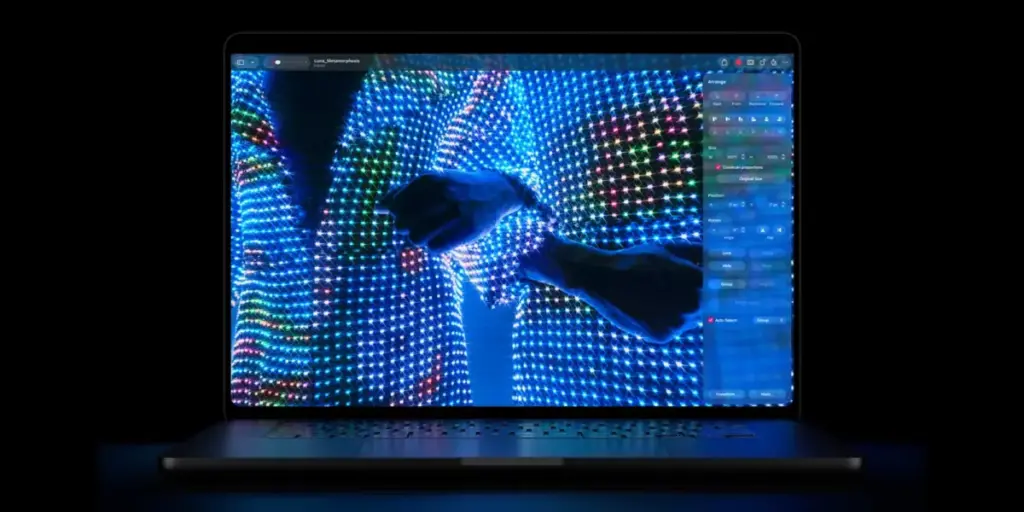
Apple has officially ushered in a new era for its Mac lineup with the launch of the highly anticipated touchscreen MacBook Pro. By integrating advanced tandem OLED technology into its flagship portable, the company is not only providing a significant hardware upgrade for its professional user base but is also acting as a primary catalyst for a broader market transition. According to a new report from the market intelligence firm TrendForce, this move is set to reshape the competitive landscape of the global notebook industry throughout 2027 and beyond.
The new MacBook Pro, announced just yesterday, marks a milestone in Apple’s hardware history. It is the first Mac to feature a touchscreen interface, a development that has been the subject of intense speculation, industry rumors, and supply chain analysis for several years. By adopting the same tandem OLED technology first introduced in the 2024 M4 iPad Pro, Apple is promising a display experience that balances the vibrant, high-contrast, and deep-black benefits of OLED with the enhanced durability and brightness required for professional-grade creative work.
Tandem OLED technology works by stacking two distinct organic light-emitting diode layers atop one another. This architectural choice is crucial for notebooks; it addresses the traditional brightness limitations of single-layer OLED panels while simultaneously improving power efficiency. For a professional machine like the MacBook Pro, which often requires sustained peak brightness for video editing, color grading, and high-fidelity design work, this technology represents a significant leap forward over the previous-generation Mini-LED panels that have defined the high-end Mac experience for years.

A Long-Awaited Arrival
The transition to OLED was not a surprise to those following Apple’s supply chain. In September 2025, industry reports from The Elec indicated that Samsung Display was gearing up for mass production of 14-inch and 16-inch OLED panels specifically tailored for Apple’s MacBook Pro. At the time, analysts estimated an annual production capacity of approximately 2 to 3 million units, signaling that Apple was preparing for a substantial, albeit measured, rollout of the technology.

This development followed a long period of internal testing and industry-wide speculation. Over the past two years, the roadmap for Apple’s display transition has been mapped out by various analysts, with firms like TrendForce consistently highlighting 2026 as the pivotal year for the MacBook Pro’s OLED integration. While the company’s plans for the more consumer-focused MacBook Air have seen adjustments—with the expected arrival of OLED in the Air lineup now pushed back to 2029—the focus remains squarely on establishing the premium MacBook Pro as the benchmark for display quality in the laptop market.
Market Impact and Shipment Forecasts
TrendForce’s latest analysis offers a window into the expected volume of these new machines. The firm projects that Apple will ship between 1.2 million and 1.5 million units of the new OLED MacBook Pro throughout 2027. While this represents a measured initial volume, the broader impact of Apple’s entry into the OLED space cannot be understated.
Historically, the OLED notebook market has been driven by Windows-based manufacturers, including industry giants like Lenovo, HP, and ASUS. These companies have spent years slowly integrating OLED displays across various price tiers, attempting to educate consumers on the benefits of the technology. However, Apple’s entry is expected to provide the market with significantly more momentum. By legitimizing OLED as the standard for high-end productivity machines, Apple is likely to encourage competitors to prioritize OLED integration in their own future product roadmaps, ultimately accelerating the shift away from traditional LCD and even current-generation Mini-LED technologies.
TrendForce anticipates that global OLED notebook shipments will see a robust trajectory, growing by nearly 40% year-over-year in 2026, followed by an additional increase of more than 40% in 2027. This growth is a direct result of increased consumer acceptance, which is almost certain to follow as Apple integrates the technology into its most popular and influential product line.

Balancing Innovation with Market Realities
Despite the optimism surrounding the technology, analysts are keeping a close watch on how the market reacts to the premium pricing strategy accompanying this transition. The new 14-inch MacBook Pro arrives with a starting price of $2,899. TrendForce notes that this price point, coupled with the fact that Apple continues to offer existing models equipped with high-quality Mini-LED displays, may temper the immediate rate of replacement.
Many enterprise and creative users currently utilizing recent-generation MacBook Pros may find that their existing machines remain highly capable, potentially slowing the upgrade cycle. Furthermore, the presence of two distinct high-end display technologies—Mini-LED and the new tandem OLED—within the same store shelf may create a period of consumer evaluation as buyers weigh the benefits of current performance versus the cutting-edge visual fidelity of the new OLED panels.
Future Outlook for the MacBook Air and Beyond
While the MacBook Pro takes the spotlight today, the industry is already looking ahead to the next stage of Apple’s display strategy. The delay of the OLED MacBook Air to 2029 suggests that Apple is being deliberate about its manufacturing requirements and cost structures before bringing the technology to a more mass-market device.
Currently, a fierce competition is underway among display manufacturers to secure their place in Apple’s future supply chain. LG Display, BOE, and TCL CSOT are all reportedly vying for the opportunity to supply OLED panels for the future MacBook Air. These companies are aggressively developing their manufacturing capabilities, specifically focusing on the complex processes required to produce large-format, high-efficiency OLED panels that meet Apple’s rigorous quality control standards. The competition among these suppliers is expected to drive down costs over the coming years, which will be essential for the eventual democratization of OLED across the entire MacBook lineup.

Looking at the broader industry horizon, TrendForce projects that global shipments for all OLED-equipped notebooks will reach approximately 46.6 million units by 2030. While the firm expects the initial explosive growth to eventually normalize, with year-over-year growth rates slowing to roughly 30.8% following a projected peak of 42.8% in 2028, the trajectory is clear: OLED is rapidly becoming the standard for the modern notebook.
As Apple continues to iterate on its hardware, the integration of touch interfaces and OLED technology suggests a departure from the traditional laptop experience toward a more tactile, visually immersive workspace. With the launch of the new MacBook Pro, the company has officially signaled that its vision for the future of professional computing relies on this advanced display technology. Whether this transition will trigger a total industry pivot remains to be seen, but the data suggests that the hardware landscape is entering its most significant shift in years.