












The Dragon Quest franchise occupies a singular space in the history of interactive entertainment. Having debuted in 1986, it stands as one of the true pioneers of the Japanese Role-Playing Game (JRPG) genre, establishing design tropes that would influence thousands of titles that followed. For decades, the arrival of a new Dragon Quest installment has been treated as a cultural event, particularly in Japan, where the series holds a near-mythic status. While modern gaming discourse might focus on the massive, industry-shifting launches of titles like Grand Theft Auto 6, there was a time when the Dragon Quest name was synonymous with national obsession, prompting dedicated fans to take sick days just to dive into the latest battle against a wicked dragonlord.
However, the North American trajectory of the series was far more tumultuous. The franchise’s seventh main entry, Dragon Quest 7, serves as the perfect case study for this complex history. Known as Dragon Warrior 7 at the time of its Western release—the final game in the series to bear that localized title—it arrived in North America on November 1, 2001, following a period where two previous installments had been skipped entirely for the Western market. By the time it finally reached store shelves, the franchise’s momentum had significantly waned, and the game itself was notoriously difficult to track down. When players finally secured a copy, many were met with a sense of disappointment. Yet, over the subsequent twenty-five years, Square Enix has revisited this specific adventure multiple times, refining the experience with each iteration. Looking at the trajectory from 2001 to the recent release of Dragon Quest 7 Reimagined in February 2026, it is clear that each new release has successfully improved upon the last, transforming a flawed relic into a polished masterpiece.
The primary hurdle for the original PlayStation release was its timing. Dragon Quest 7 had spent a notoriously long period in development, and by the time it reached Western audiences, it felt distinctly old-fashioned. While it technically offered a step up from the Super Nintendo era with its 3D environments and rotatable camera, the visual presentation felt lacking when compared to the late-PS1 era polish of titles like Final Fantasy 9. For many players, the game felt like a relic from a bygone era, a sentiment exacerbated by its unconventional opening hours.


Unlike the series’ typical high-energy, combat-focused starts, Dragon Quest 7 famously began with a slow, meditative pace. Players could spend upwards of three hours traversing the opening sections without engaging in a single monster battle. This was a jarring departure for fans accustomed to the earlier games, where stepping outside the castle walls almost immediately led to combat, level-ups, and a sense of forward momentum. Instead of the traditional JRPG rhythm, the early game was bogged down by tedious puzzle-solving and a lack of urgency. While the narrative eventually opened up into a sprawling, epic quest with significant emotional appeal, the barrier to entry was high enough that many players never reached the more rewarding chapters.
This narrative of frustration finally shifted with the release of Dragon Quest 7: Fragments of the Forgotten Past for the Nintendo 3DS on September 16, 2016. Despite being confined to portable hardware, this version proved to be a watershed moment for the game’s reputation. Square Enix recognized the fundamental pacing issues of the original and took decisive action. The most significant improvement was the streamlining of the early game; the infamously long, lever-heavy introductory dungeon was removed, allowing players to reach the core gameplay loop much faster. While the introduction still required a time investment, it no longer felt like a chore, keeping players engaged and eager to continue.
The 3DS iteration also introduced a suite of quality-of-life features that addressed the archaic frustrations of the original. The game utilized the handheld’s dual-screen setup to provide a glowing visual cue whenever players neared the elusive stone tablet shards, which were essential for progression. This eliminated the aimless backtracking that had plagued the original. Furthermore, a new, robust in-game story log allowed players to review their progress and receive hints for their next objective, a feature that eventually became a staple of the franchise in later titles like Dragon Quest 11. Even party members were given more agency, offering suggestions during exploration to prevent the kind of ambiguity that had been a hallmark of the series since its inception.

The transition to portable play also necessitated better save systems, leading to the introduction of "quick saves" that could be performed outside of the traditional church-based save points. Coupled with the visibility of enemy mobs on the field, which allowed players to better manage their encounters, the 3DS version successfully modernized a twenty-year-old design. These changes were not just welcomed; they were necessary for the game to survive in a modern market.
For a decade, the 3DS version remained the definitive way to experience the story. That is, until the launch of Dragon Quest 7 Reimagined in February 2026. Available across a wide array of contemporary platforms, including the Nintendo Switch, Switch 2, PlayStation 5, Windows PC, and Xbox Series X, this latest version represents the culmination of Square Enix’s ongoing efforts to perfect the title.
The most immediate change is the aesthetic. The game adopts a breathtaking "diorama" art style that manages to feel both nostalgic and cutting-edge. When paired with high-quality voice acting, the world and its inhabitants gain a level of depth and personality that the original pixels simply could not convey. Beyond the surface-level changes, however, lie deep mechanical overhauls.
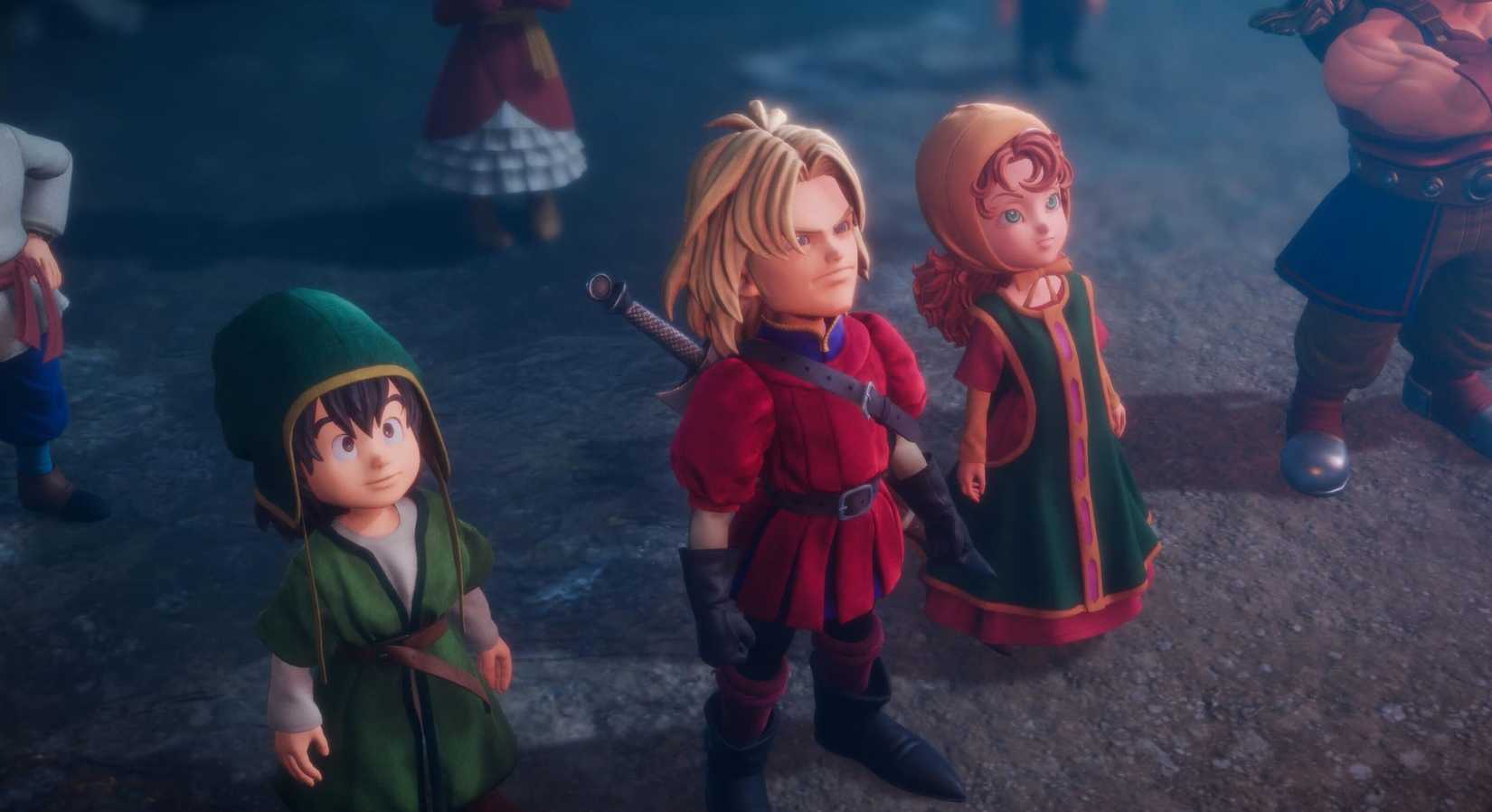
The vocation system, a fan-favorite element of the series, received a significant upgrade, allowing party members to adopt and master two distinct classes simultaneously. Furthermore, the developers removed the need to travel to Alltrades Abbey to change vocations, allowing for more fluid customization on the fly. In the field, the game introduced a "quick defeat" mechanic; players can now strike weaker monsters on the world map to dispatch them instantly, earning smaller but immediate rewards. This compromise effectively eliminates the tedious, low-stakes skirmishes that often broke the immersion in older RPGs.
Other modern refinements include multiple difficulty presets, a shared inventory system for the entire party, and an auto-revive mechanic that triggers after combat for fallen allies. For the modern player, these are not just conveniences; they are essential design choices that respect the player’s time. By removing the "busy work" that once defined the experience, Square Enix has allowed the core narrative and world-building to shine.
The journey of Dragon Quest 7—from a 2001 curiosity that felt like a relic to a 2026 standard-bearer for modern RPG design—is a testament to the value of iteration. It highlights a rare willingness by a developer to acknowledge the flaws of the past and treat their history as a living, breathing entity capable of growth. For contemporary audiences, the latest version of the game serves as a bridge between the genre’s foundational roots and its future, proving that if at first you don’t succeed, there is always room to try again. Through these consistent, thoughtful adjustments, Dragon Quest 7 has finally achieved the status it perhaps always deserved.