







In a significant move to streamline cloud management and improve operational excellence, Amazon Web Services (AWS) has announced the public preview of the AWS Well-Architected Agent. This new AI-powered service is designed to transform how organizations manage their cloud environments by providing continuous, contextual, and highly targeted recommendations for optimizing cost, security, performance, and resilience across the entire AWS footprint. By moving away from static checklists and manual audit processes, the service aims to provide cloud architects and developers with actionable, intelligent insights that align directly with specific business goals.
For years, the AWS Well-Architected Framework has served as the gold standard for organizations looking to build secure, high-performing, resilient, and efficient infrastructure. However, the manual nature of architecture reviews—which often rely on periodic assessments and generalized best practices—can sometimes struggle to keep pace with the rapid, iterative nature of modern cloud development. The new Well-Architected Agent addresses this gap by acting as an intelligent assistant that continuously evaluates infrastructure, correlates utilization metrics, analyzes resource configurations, and interprets application topology against the established best practices across more than 65 AWS services.
The core value proposition of the agent lies in its ability to function much like an experienced cloud architect. Instead of presenting users with a generic list of improvements, the agent leverages AI to understand the unique requirements of a business. When users define their goals—whether that is maximizing cost efficiency, hardening security, or ensuring peak performance—the agent tailors its findings accordingly. It not only identifies potential issues but also provides comprehensive implementation packages, including specific code changes and remediation steps, effectively bridging the gap between identifying a problem and executing the fix.
One of the most complex aspects of cloud optimization is managing the inherent trade-offs between different architectural pillars. For example, enhancing security features or building in additional redundancy for resilience can often lead to increased costs or potential performance impacts. The Well-Architected Agent is designed to navigate these nuances by surfacing cross-pillar trade-offs, providing architects with the necessary context to make informed decisions that align with their organizational priorities. This sophisticated approach ensures that optimizations do not inadvertently break other critical aspects of the application stack.

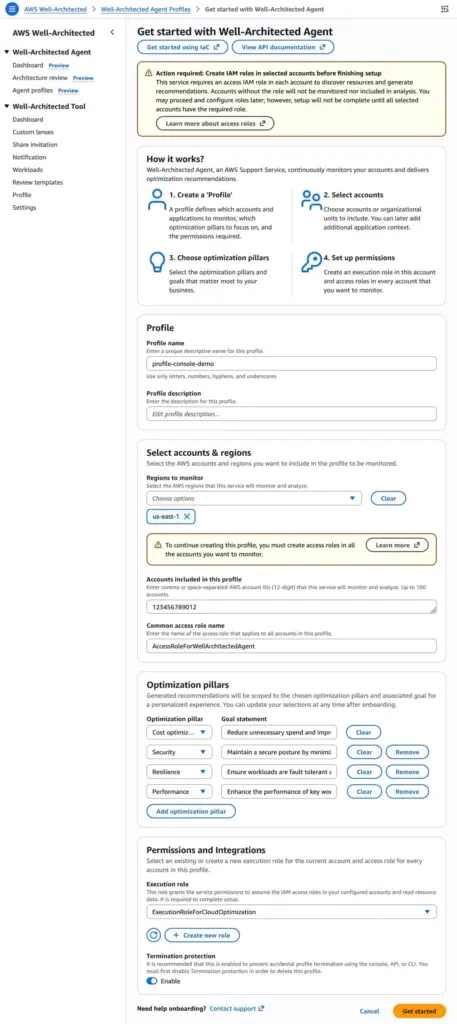
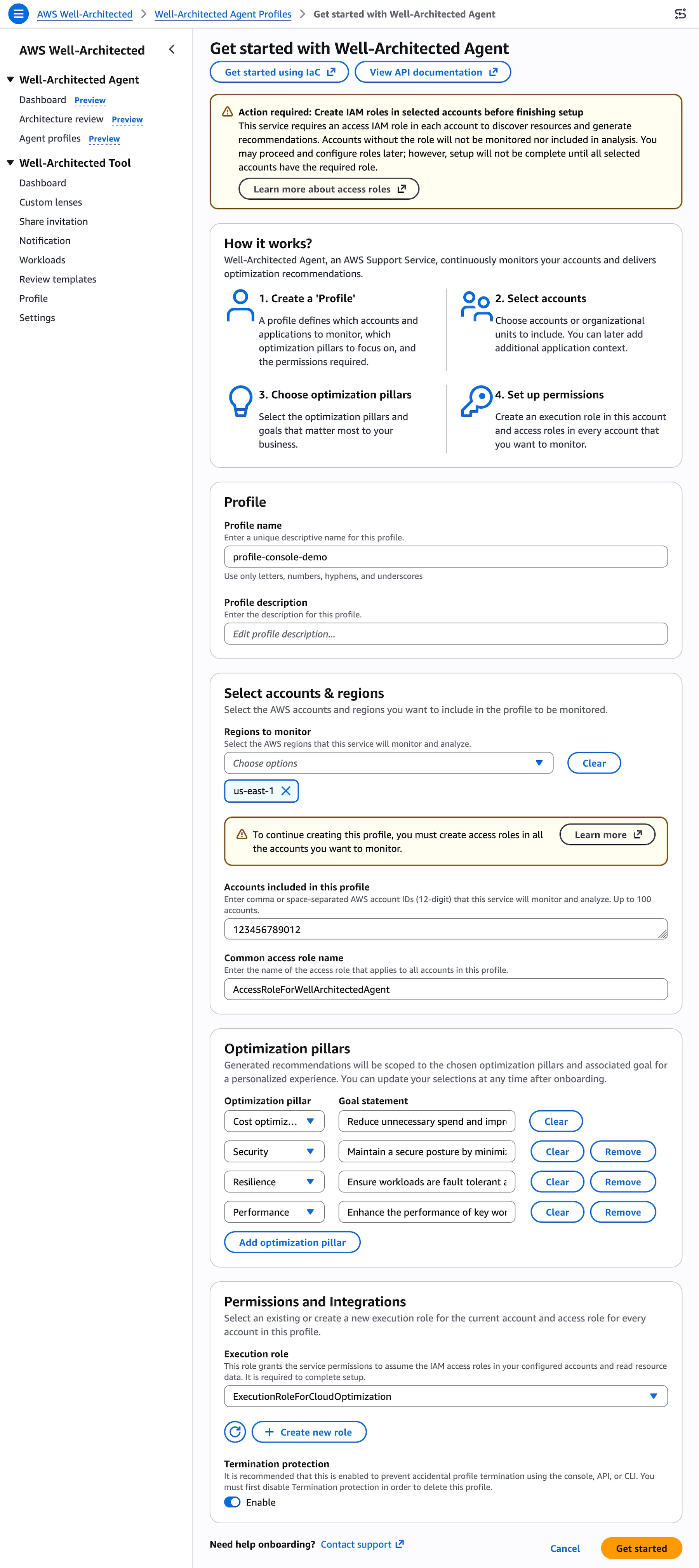
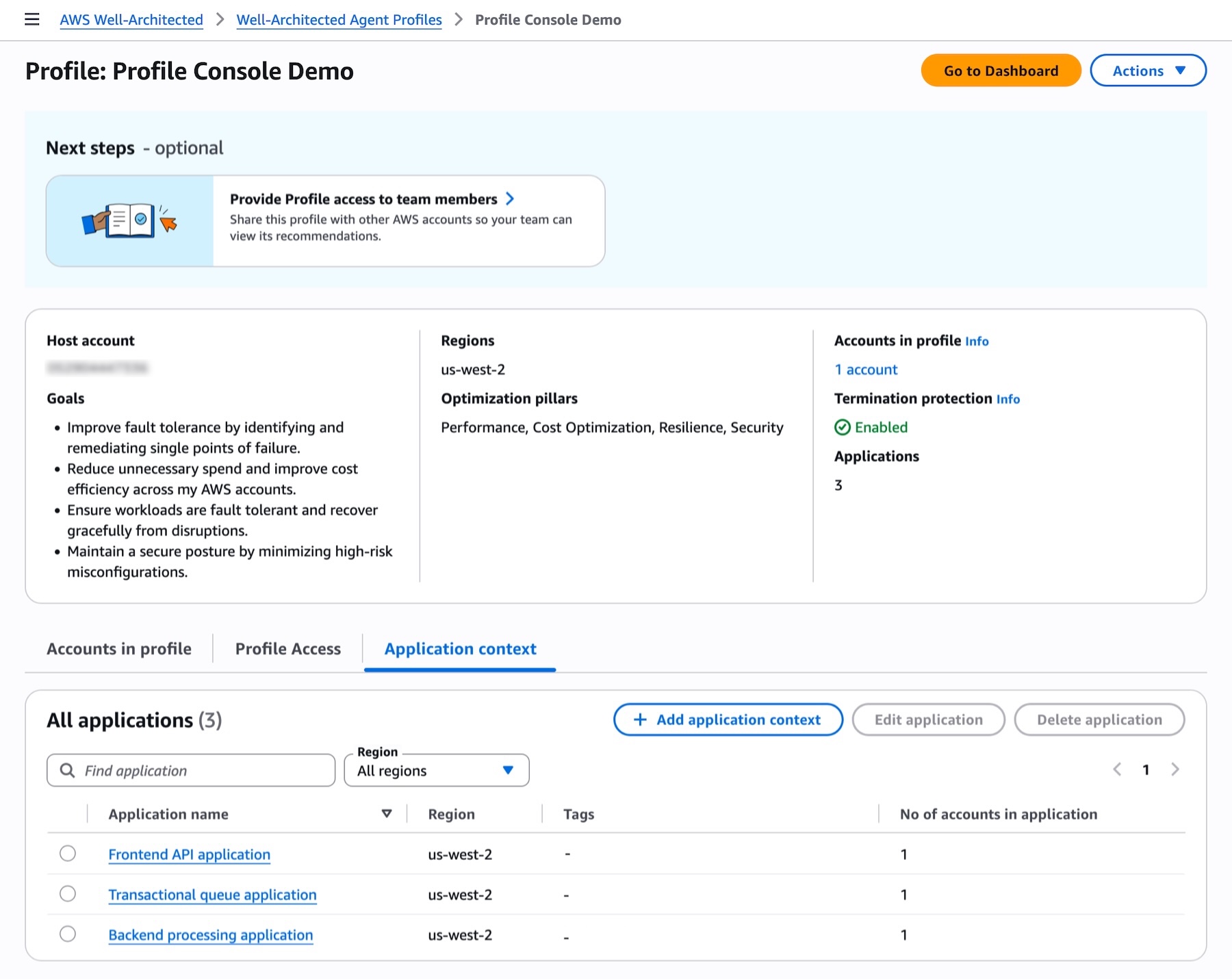
To integrate the agent into their workflows, users begin by creating an agent profile within the AWS Well-Architected console. This profile acts as the control plane for the service, allowing administrators to define the scope of the agent’s reach. Users can specify which AWS accounts and applications should be monitored, select the specific optimization pillars that take precedence for their current project, and manage the permissions required for the agent to access necessary telemetry and configuration data. By setting these parameters, organizations maintain strict control over how the AI interacts with their environment.
Once the profile is configured and the necessary customer-managed IAM roles are provisioned to allow the agent to read resource configurations and utilization metrics, the system begins its analysis. Within 24 hours of profile creation, the agent generates its initial set of prioritized recommendations. This timeline represents a major shift from traditional periodic reviews, offering a near-continuous feedback loop that helps teams identify and remediate architectural drift or inefficiency as it emerges.
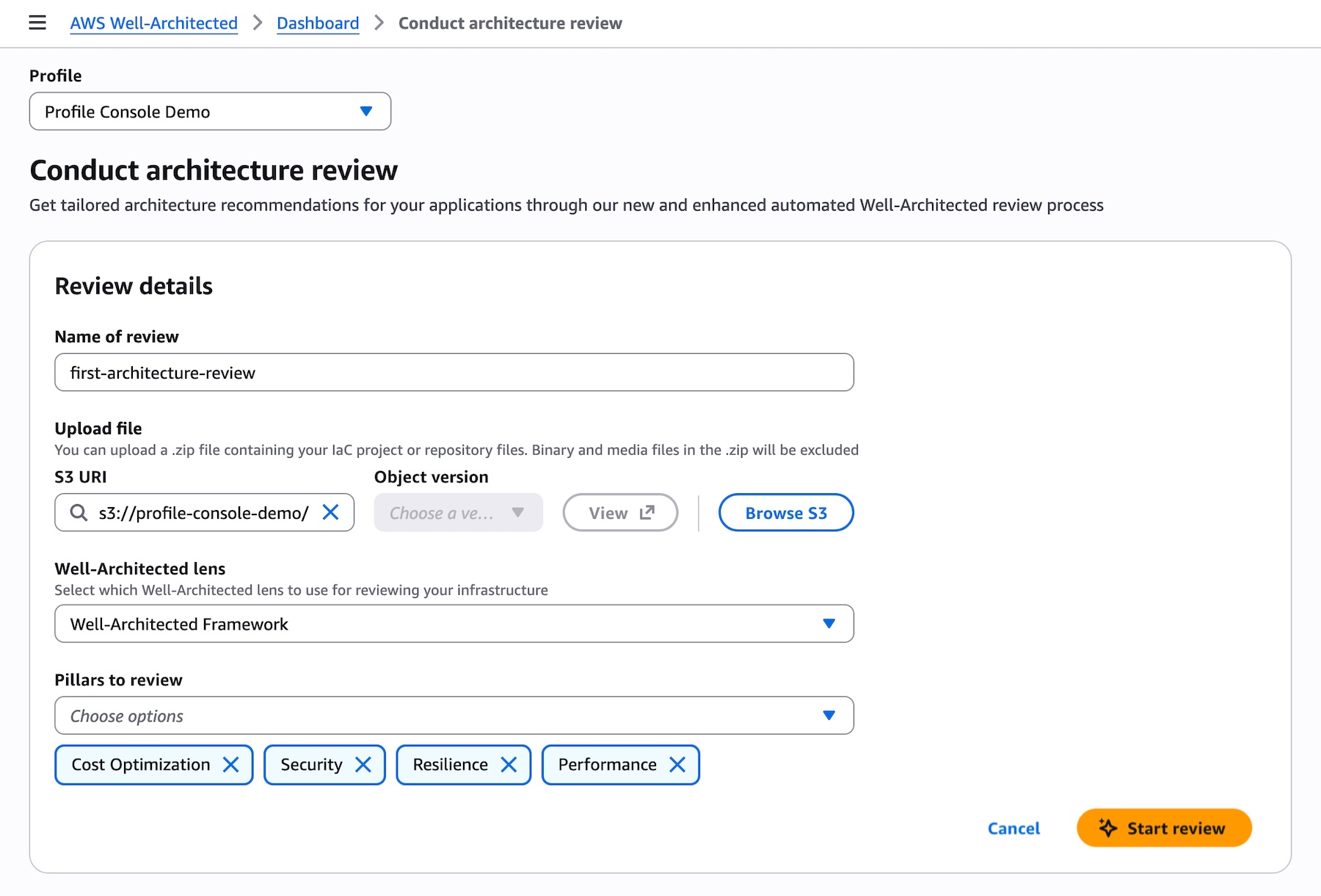
A standout feature of the new agent is its ability to perform architecture reviews on pre-deployment workloads. Recognizing that modern cloud development relies heavily on Infrastructure as Code (IaC), AWS has enabled users to upload their Terraform, AWS CloudFormation, or AWS Cloud Development Kit (CDK) templates directly to the agent. By analyzing these IaC projects, the agent can catch potential misconfigurations or deviations from best practices before they are ever provisioned into the live environment. Users simply upload a zip file containing their repository or template, select the relevant Well-Architected lens, and receive an automated assessment that highlights issues before they become operational problems.
Context is further enhanced through the application management interface, which allows users to map specific AWS accounts, regions, services, and resource tags to individual applications. This granular level of control ensures that the recommendations generated by the agent are not just technically accurate, but also relevant to the business logic of the application in question. By providing this context, teams can focus their remediation efforts on the services that drive the most value for their users.
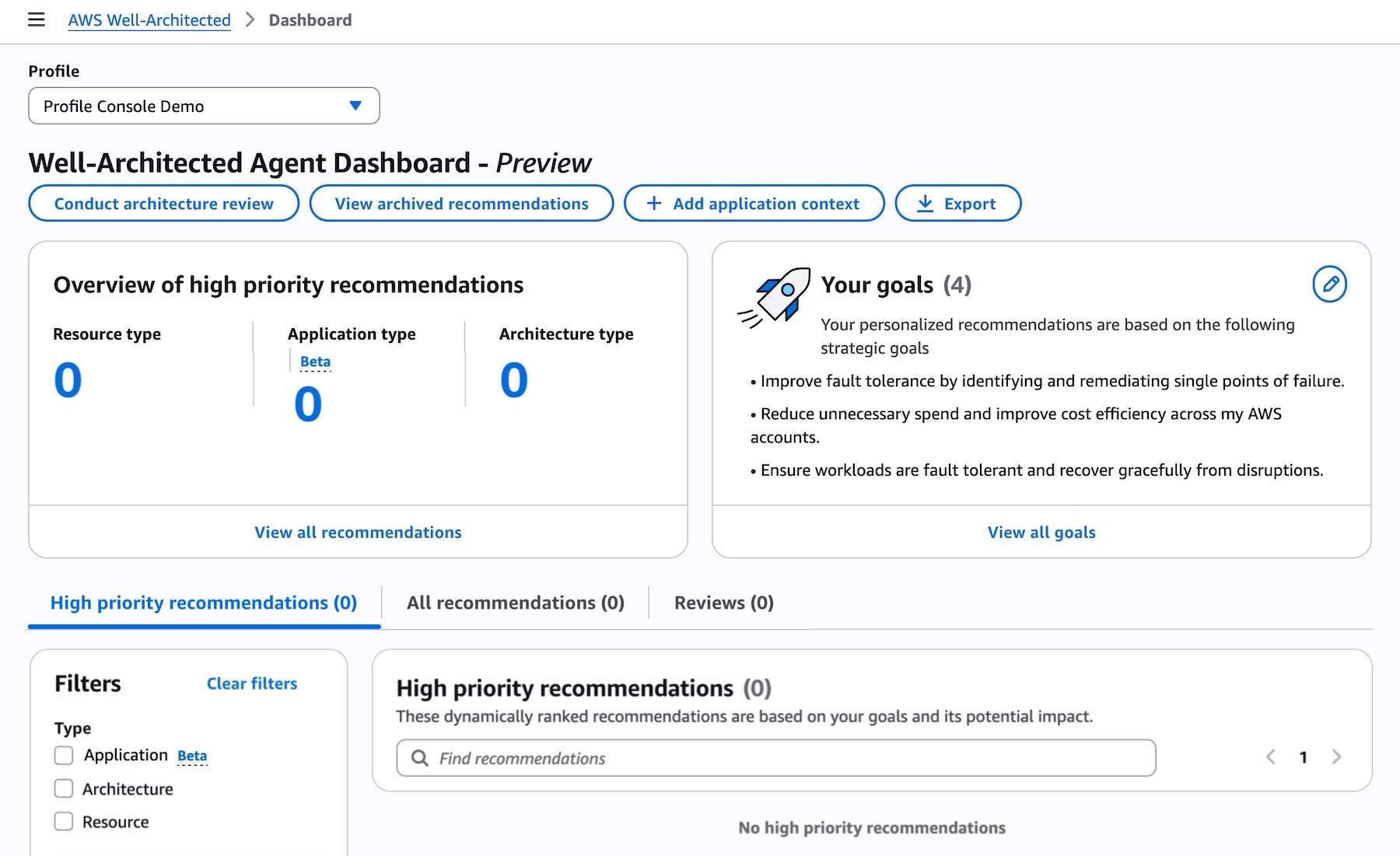
When it comes to the remediation process, the agent is designed to minimize the friction often associated with cloud refactoring. Every recommendation is accompanied by detailed insights explaining the rationale behind the finding, its potential impact, and the associated trade-offs. More importantly, the agent provides multiple avenues for resolution. Users can access step-by-step guidance, execute CLI commands directly, or utilize updated IaC templates provided by the agent. In many cases, the agent can provide the exact code changes required for a CDK function or CloudFormation stack, allowing developers to copy and paste the fix directly into their codebase, verify the changes, and deploy with confidence.
For teams looking to integrate these insights into broader development and operations workflows, the agent supports programmatic access via API. By utilizing the AWS MCP Server and various plugins, developers can bring Well-Architected insights directly into their preferred AI-powered coding tools and IDEs. This integration capability ensures that architectural best practices are treated as a first-class citizen within the software development lifecycle, rather than a separate, siloed task.
While the new agent offers a high degree of automation, it does not replace the traditional tools already familiar to AWS customers. The existing AWS Well-Architected Tool remains available for teams that prefer to conduct manual evaluations or that utilize custom-defined lenses to measure workloads against highly specific, proprietary best practices. The two systems are intended to work in tandem, allowing organizations to leverage the speed and intelligence of the AI agent for routine monitoring while maintaining the flexibility of manual tools for specialized or highly bespoke architectural requirements.
As the service enters public preview, it is currently available in the US East (N. Virginia), US East (Ohio), and US West (Oregon) regions. However, customers can onboard workloads from any AWS commercial region, making the service accessible to global organizations. The agent is a feature of the broader AWS Support ecosystem, meaning that access to these advanced capabilities is available to customers with an active AWS Support plan. As the preview continues, AWS encourages users to explore the console, integrate the agent into their workflows, and provide feedback, which will be instrumental in shaping the final feature set and performance of the tool.
This launch underscores a broader trend within the cloud industry toward proactive, AI-driven management. By offloading the burden of constant architectural monitoring to intelligent agents, organizations can free up their engineering teams to focus on innovation rather than maintenance. The AWS Well-Architected Agent represents a significant step forward in this journey, providing a more dynamic, contextual, and automated approach to maintaining excellence in the cloud.