










By Staff Reporters
If you have visited Opensource.com recently, you might have noticed a distinct quietness settling across the digital publication. For regular readers accustomed to a steady stream of daily insights, articles, and community stories regarding open source solutions, the recent lull has not gone unnoticed. Behind the scenes, however, that silence speaks volumes. The community is hard at work on something entirely new, and while specific details and project blueprints are still being kept under wraps for the moment, there is already an abundance of foundational ideas to discuss.
What better way to begin shaping the future of a platform rooted in collaboration than by looking at the very fabric of the global network that connects us all? To understand where Opensource.com is heading next, it is worth examining the infrastructure of the internet itself, the evolution of digital domains, and the human networks that have powered the open source movement for over a decade.
The Internet, and Top-Level Domains
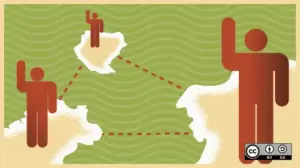
To appreciate the scale of what a digital community can achieve, it helps to revisit how the modern internet came to be. As many technology historians and everyday users know, the internet is fundamentally a network. By definition, a network is a group of interconnected connections—a concept elegantly captured in the portmanteau "internet," which fuses the words "interconnected" and "network."
In its earliest iterations, the internet was remarkably small and tightly controlled, consisting primarily of two distinct networks: the military network and the academic network. These foundational systems were designed for specific institutional tasks, sharing data across specialized nodes. However, once the internet began to gain popularity and utility far beyond those initial military and academic groups, a pressing logistical challenge emerged. It quickly became apparent that different designations were desperately needed to differentiate between various types of entities populating the digital landscape.

A system had to be created to easily distinguish, for instance, a commercial enterprise from a charitable organization, a university from a governmental department. The solution to this organizational challenge came in the form of top-level domains, commonly referred to as TLDs. These suffixes sit at the very end of web addresses, serving as immediate indicators of a website’s organizational nature and purpose.
Today, the digital landscape boasts a vast and sometimes bewildering array of available TLDs, ranging from niche industry tags to regional identifiers. Yet, for a remarkably long time in the history of the web, there were only a handful of these designations governing the entire network. Those original TLDs remain remarkably popular and culturally embedded in how we navigate the web to this day. Most internet users intuitively understand that when they navigate to a web address ending in .com, they are visiting a commercial site, whereas a visit to a .org address signifies a journey to a non-profit website, an organization dedicated to public service, or a community-driven initiative.
These suffixes do more than just route traffic; they tell a story about who is behind the content and what kind of values or structures govern the digital space being visited.
Open Source Is a Network
Open source, much like the internet that houses it, can manifest in many different forms, take on various structures, and serve multiple purposes. It can be thoroughly commercial, driving enterprise-grade software solutions and billion-dollar industries. It can be entirely non-profit, built on altruism and public stewardship. It can be deeply academic, serving as the research bedrock for universities and scientific laboratories. It can also be cultural, shaping how artists, writers, and creators share their works with the world.
No matter what form open source takes, or what industry it touches, it is always, at its core, a network. Sometimes that network is literal—a vast web of interconnected computers compiling code, hosting repositories, and distributing software packages across global servers. But most importantly, and most powerfully, it is a network of people.

Whether individuals are gathering in person at massive international conferences, chatting over drinks at a local pub, or collaborating asynchronously in an online chat room, the open source movement is, and always has been, a community of human beings working toward shared goals. The software, the documentation, the licenses, and the platforms are merely the tools; the heartbeat of open source is the human connection that drives creation, adoption, and sharing.
For the past twelve years, the website Opensource.com has been proudly supported by a commercial entity, providing a dedicated digital home for stories about open source solutions, community spotlights, and collaborative triumphs. However, there is a fundamental distinction to be made between the infrastructure that hosts a platform and the people who give it life. The individuals—representing readers, contributors, advocates, and creators alike—that make up the Opensource.com community are not commercial entities. They are people. They are human beings with passions, projects, and a shared dedication to openness, transparency, and collaboration.
As the site prepares for its next evolution, that distinction between corporate backing and human-driven community is guiding the path forward. In exactly one month, Opensource.com is going to resolve that long-standing structural mismatch and embark on its next chapter.
The community has been patient, and the wait is nearly over. Stay tuned for what comes next as the network prepares to light up once again.