








For years, the gold standard of home entertainment for cinephiles and casual viewers alike has been the OLED—organic light-emitting diode—television. Having spent years making do with a perfectly functional 55-inch TCL smart TV, I finally reached a point where the siren call of superior image quality became impossible to ignore. Like many others, I felt the time had come to step up to the technology that has defined the modern era of high-definition viewing.
The fundamental appeal of the OLED lies in its architecture. Unlike traditional LED televisions, which rely on a backlight shining through a liquid crystal panel to create images, OLED technology utilizes millions of self-lighting pixels. Because each individual pixel can be turned on or off completely, the contrast ratios are effectively infinite. This allows for a level of image control that translates into deeper, truer blacks, more vibrant colors, and a nuanced interplay of light and shadow that simply cannot be replicated by standard backlit displays. In the simplest terms, the visual fidelity of an OLED is demonstrably superior to the panels most of us have used for the better part of a decade.
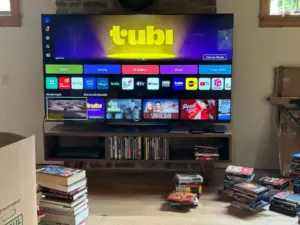
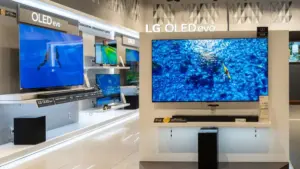
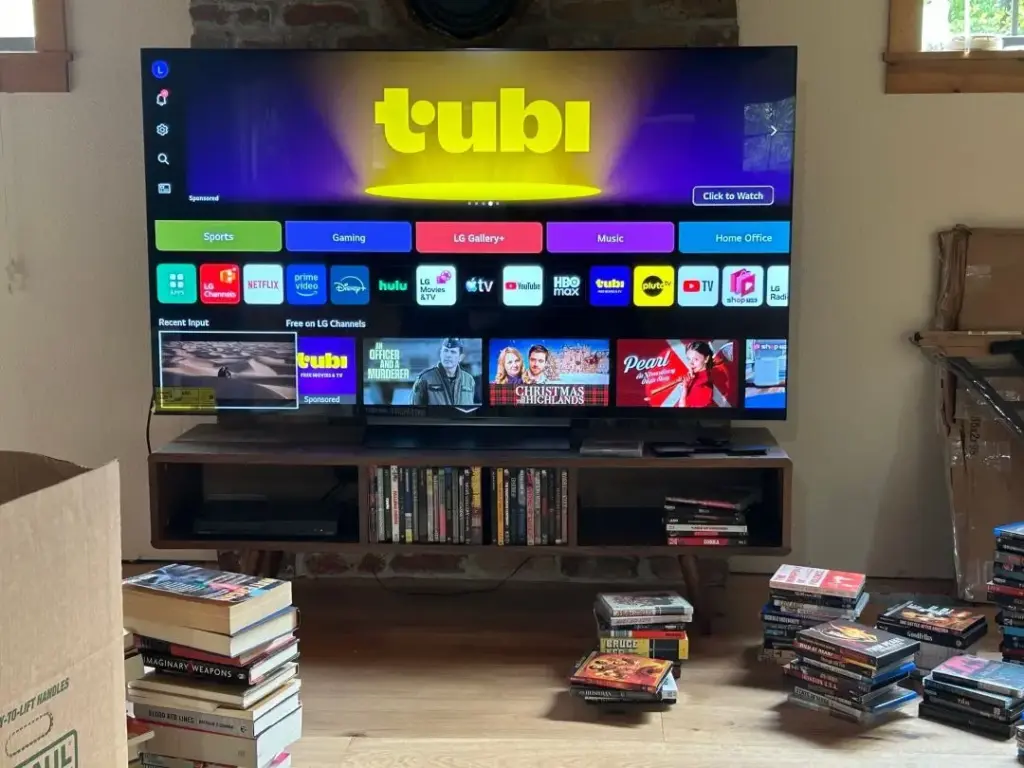
However, the barrier to entry has long been the price. OLEDs are significantly more expensive than their LED counterparts, a reality that kept me from upgrading for years. But this year, the combination of a change in my living situation and a desire to elevate my physical media habit—specifically my growing collection of 4K Blu-ray discs—pushed me to take the plunge. I decided that if I was going to upgrade, I might as well go big. I settled on the 65-inch LG evo C4, the company’s 2024 mid-range offering, hoping it would serve as the centerpiece of a dedicated home cinema experience.

When the unit first arrived, the results were, for the most part, exactly what I had hoped for. The television rendered colors and shadows with a breathtaking level of precision. As a fan of physical media, I immediately began cycling through my library of 4K Blu-rays with the fervor of a true enthusiast, marveling at the clarity and depth that the new panel provided. Everything seemed to be going perfectly until I sat down to watch the classic Western "McCabe and Mrs. Miller."
Midway through the film, the experience took a sharp, unexpected turn. I was suddenly overcome by a wave of intense nausea. I have never considered myself particularly sensitive to motion sickness, yet this sensation—a physical reaction that made me feel as though I was on the verge of being sick—persisted for several hours after it began. The nausea eventually subsided, only to be replaced by a nagging, persistent tension headache. It was a jarringly negative experience, and it left me wondering if my long-awaited upgrade was, in some fundamental way, incompatible with my own physiology.
As it turns out, my experience is far from unique. A quick dive into online forums reveals that this is a relatively common phenomenon for new OLED adopters. Reddit, in particular, is filled with anecdotes from owners who describe their high-end televisions as causing them physical distress. One user, who recently purchased an LG C2, posted about feeling lightheaded and nauseous for an entire day after setting up their new screen. The user’s reaction was one of genuine concern, noting that they were actually afraid to turn the television back on for fear of the physical toll it might take.
Others have pointed to the physical size of the displays as a potential culprit. One owner of an 85-inch TCL model shared that his wife felt ill whenever she watched the screen, leading them to question whether a display could simply be "too big" for the human eye to process comfortably within a standard living room environment.
The lack of a scientific consensus on why these symptoms occur only adds to the frustration. Many enthusiasts immediately blame motion-smoothing settings—a feature common on modern televisions that can sometimes create a "soap opera effect" that causes visual discomfort. However, my own television did not have these features enabled, suggesting that the issue might run deeper than mere software processing. Others suggest that the distance between the viewer and the screen is the primary factor. Yet, in my own setup, I was sitting nine feet away from the 65-inch panel, a distance that is well within the industry-standard recommended viewing range.
Brightness has also been cited as a potential trigger. OLED panels, particularly the newer evo models, are capable of producing quite intense light. In an attempt to mitigate the symptoms, I manually dialed the brightness down to 50 percent. While it made the image slightly less aggressive, I remained skeptical that the brightness level alone was the sole cause of my malaise.
A more plausible theory, at least in my case, involves the adjustment period required for the human eye to process such a large, high-definition field of view. The screen was so expansive that my eyes were forced to constantly scan different regions to take in the entirety of the image. When a scene contained significant motion, the resulting sensory input felt eerily similar to staring out the window of a fast-moving vehicle. It was a sensory overload that my brain simply wasn’t accustomed to, leading to a disconnect between what my eyes were seeing and what my inner ear was perceiving.
Fortunately, this proved to be a temporary hurdle. After a few days of intermittent viewing, my eyes finally adjusted to the scale and the speed of the display. The nausea vanished, and the tension headaches ceased to be an issue. What remained was an undeniably beautiful home viewing experience that made my previous television seem dull and flat by comparison. The upgrade was worth it, but the physiological barrier to entry was higher than I had anticipated.
For potential buyers, the size of a 65-inch screen is a factor that requires careful consideration beyond just the specs. While I recently moved into a larger living space that accommodated the scale of the C4, I know from experience that in my old apartment, a screen of this size would have felt overwhelming, essentially devouring the room. There is a balance to be struck between the desire for a cinematic experience and the physical reality of one’s living quarters.
Beyond the physical adjustment, there were some logistical frustrations. The LG C4 does not arrive with the kind of detailed, user-friendly installation instructions one might expect for a premium electronic device. The panel is wide and physically unwieldy, making it difficult to maneuver without assistance. The screen comes detached from its base, and the user is left to navigate the assembly process with little guidance. While a simple search on YouTube provided the necessary clarity to complete the setup, the process is nerve-wracking. Moving and assembling a screen of that size requires a steady hand and a great deal of caution, as the risk of scratching or damaging the delicate panel is high.
However, once the assembly is complete and the initial adjustment period passes, the OLED becomes a truly spectacular piece of equipment. The level of granular control available to the user is immense. From advanced brightness and color calibration to specialized features like "Filmmaker Mode"—which adjusts the color and frame rate to match the director’s original intent—the television offers a powerful toolkit for those who care about visual fidelity.
In summary, the LG evo C4 is a remarkable piece of technology that offers a transformative experience for any avid home entertainment viewer. It represents the pinnacle of modern display technology, bringing the cinema directly into the living room. That said, it is important for prospective owners to be aware that there may be a genuine, if temporary, learning curve involved. Your eyes might need a few days to catch up to the technology, and your living room might need a bit of reconfiguration to handle the scale. Once you clear those hurdles, however, the reward is an unparalleled viewing experience that changes how you interact with your favorite films.