









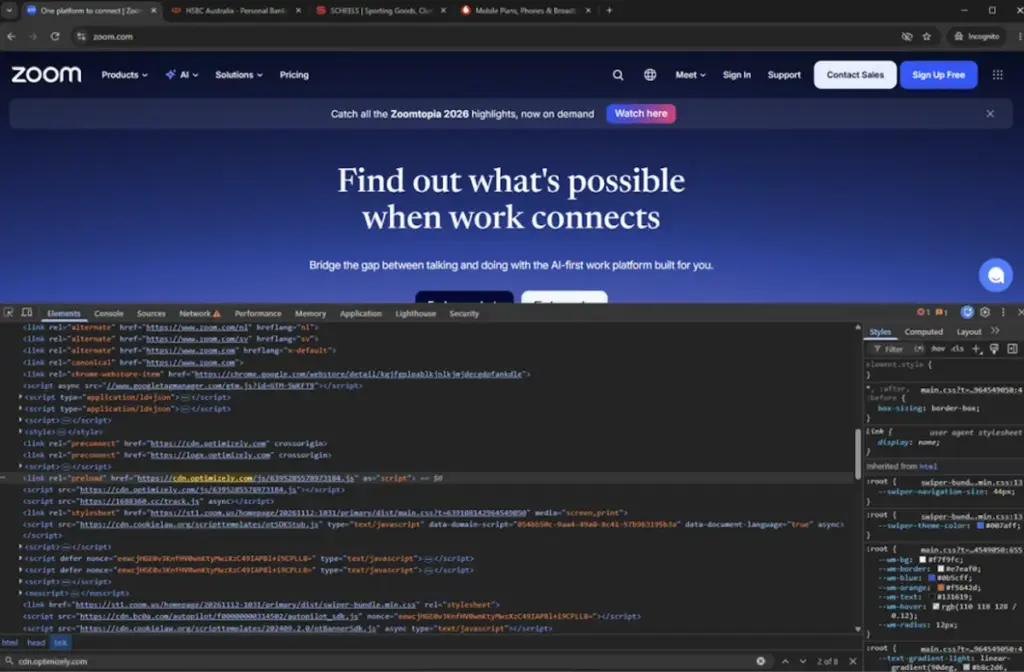
In a stark reminder of the fragile nature of modern web infrastructure, at least 178 high-profile web destinations were compromised over a 24-hour period beginning November 16, 2026. Visitors to globally recognized sites—including the BBC, CNN, Equifax, Ledger, and Zoom—were unwittingly exposed to malicious exploits after a security vulnerability in the Optimizely platform was leveraged by attackers to inject harmful JavaScript directly into customer websites.
The incident highlights a growing crisis in the digital ecosystem: the reliance on third-party vendors for user experience customization and A/B testing often comes at the cost of security. Because many popular websites lack rigorous controls over third-party content, a single point of failure at a vendor like Optimizely can quickly escalate into a massive, downstream supply chain attack.
The Anatomy of the Breach
According to a detailed analysis from the security firm Report URI, the malicious activity began on November 16, when attackers exploited a flaw in Optimizely’s experimentation platform to inject unauthorized code. Scott Helme, a researcher at Report URI, documented that the payload was not static. Instead, the attackers exhibited a high degree of sophistication, rebuilding the malicious JavaScript 26 times throughout the day.

This dynamic approach allowed the attackers to deliver a multi-purpose malware kit tailored to harvest sensitive user information. Once executed within a victim’s browser, the malware was capable of exfiltrating payment card data, intercepting browser cookies, and capturing screenshots. Perhaps most concerningly, the code included functionality to manipulate cryptocurrency transactions by silently swapping the user’s intended destination address for one controlled by the attackers.
The breach was not limited to traditional desktop-based data theft. The affected websites also served exploit code specifically crafted to target known vulnerabilities in older Apple iPhone and iPad devices. These zero-click exploit kits, identified by security researchers under names such as "DarkSword" and "Coruna," are designed to chain together multiple security flaws. By successfully triggering these exploits, attackers could gain complete, unauthorized control over an outdated device, facilitating deep-level data extraction.
"The important lesson here is that trusted JavaScript doesn’t always remain trustworthy," Helme wrote in his analysis of the incident. "A website can be compromised through a third-party dependency without its own code or infrastructure ever being breached."
Optimizely’s Response and Remediation
In a formal statement regarding the incident, Optimizely acknowledged that an unauthorized party had successfully exploited a vulnerability in their "Web Experimentation" product. By gaining access to this specific path, the attackers were able to inject malicious JavaScript into several customer projects, effectively turning those customers’ own sites into delivery vehicles for malware.
"We acted swiftly to contain the incident and have fully remediated the identified vulnerability," the company stated. Optimizely’s remediation efforts involved a multi-pronged approach: the company blocked access to the vulnerable path, deployed a technical fix, removed the malicious code from all impacted projects, ended active sessions, revoked existing tokens, and initiated a mandatory password and access reset for affected user accounts.
Furthermore, the company noted that it implemented additional protective measures, including enhanced security via Cloudflare, to prevent the delivery of unauthorized code. While Optimizely has declared the incident resolved, they continue to work alongside third-party security experts to conduct a comprehensive investigation into how the breach was permitted to occur.
The Hidden Risks of Third-Party Dependencies
The incident underscores the pervasive nature of JavaScript in the modern web. Many top-tier websites no longer render content unless visitors permit the execution of dozens of third-party JavaScript files. While this scripting language is essential for creating interactive and personalized user experiences, it is inherently powerful. Because JavaScript runs directly on the user’s device, it possesses the capability to read information displayed in the browser and modify the visual appearance or underlying data of a website in real-time.
The reliance on these scripts is often driven by the need for precise analytics. According to the 2025 Web Almanac, published by the HTTP Archive, the median homepage now loads at least 22 JavaScript files. As the Optimizely incident demonstrates, each of these files represents a potential vector for a supply chain attack. If a third-party vendor’s security is compromised, the downstream websites that rely on that vendor inadvertently become accomplices in the distribution of malicious content.

Zach Edwards, a researcher at Infoblox and co-founder of the ad-tracking service DecryptAds, noted that the nature of Optimizely’s product exacerbated the speed and impact of the attack. "Optimizely is a vendor which often collects data outside of consent flows," Edwards explained. "Their JavaScript snippets are embedded as close to the top of the page as possible to ensure that it’s one of the first things to render, which is important since the product is primarily built for A/B testing."
Because this code is designed to fire immediately upon page load to ensure accuracy in testing, it often bypasses consent dialog boxes. Consequently, the supply chain attack required no interaction from the user; the payload was served the moment the page loaded, significantly increasing the potential for widespread infection.
The Failure of Content Security Policies
Industry experts argue that websites could drastically minimize the risks associated with third-party breaches by implementing robust "Content Security Policies" (CSPs). A CSP allows website administrators to explicitly define which domains are authorized to serve third-party content. If an attacker tries to inject code from an unauthorized domain, a properly configured CSP will block the request.
However, the adoption of CSPs remains alarmingly low. Most websites—with the notable exception of major social media platforms and financial institutions—either avoid implementing CSPs entirely or maintain overly permissive policies to avoid disrupting marketing and tracking scripts.
The data gathered by Report URI regarding the Optimizely attack is telling. Of the 178 sites impacted, 68 had no CSP in place at all. Another 50 sites had a CSP that was so permissive it failed to block the malware payload. Only 24 of the affected sites—a mere 15 percent—possessed a security policy strong enough to fully mitigate the threat.
Helme’s own site, crawler.ninja, which monitors the security postures of the top million websites, estimates that only about 10 percent of the web’s busiest sites have effectively deployed CSPs. Helme characterizes the current state of web security as a "Wild West" environment. "Organizations are running all this code, but they don’t know what it’s doing," Helme said. "This is why we keep seeing such large-scale breaches in places where there are no checks and rules in place on the code we’re running. This was kind of inevitable."
He further noted that the barrier to entry for attackers has dropped significantly. "Once an attacker gets to the point of running code on your site, the question is what do they want to do with that and can they write the script to do it. Now, with AI, that’s not a problem anymore."
Protecting the End User
While the burden of security should primarily rest with website operators, the reality is that end users are frequently the ultimate victims. Historically, users relied on antivirus software and firewalls, but in the modern era, those tools are often insufficient against web-based script attacks.
For the security-conscious, script-blocking browser extensions like NoScript provide a high degree of protection, though they require a significant investment of time to configure correctly for each site visited. For the average user, modern ad-blocking software has become the most effective "firewall" against malicious scripts. By blocking unnecessary third-party requests, these tools significantly reduce the attack surface for the user, effectively preventing a wide array of malicious JavaScript payloads from ever executing.
As the digital landscape continues to evolve, the Optimizely incident serves as a stark warning to both developers and users alike: the convenience of a modern, highly interactive web comes with a heavy security tax that few organizations are currently prepared to pay. On November 18, Optimizely released an official report documenting their initial findings, further emphasizing the need for a more secure approach to third-party vendor management in the years to come.