Federal Bureau of Investigation (FBI) agents executed a high-profile arrest in Pennsylvania this past Thursday, taking into custody a senior executive from a Canadian cybersecurity firm. The arrest marks a significant escalation in the ongoing federal investigation into the notorious hacking collective known as ShinyHunters—a group that has recently gained notoriety for its brazen theft of sensitive data belonging to thousands of FBI personnel.
While the FBI has remained tight-lipped regarding the specifics of the case, the arrest was confirmed by multiple sources close to the investigation. The New York Times first reported the apprehension, noting that a Canadian national had been taken into custody in Pennsylvania on suspicion of providing material assistance to the ShinyHunters operation. The identity of the individual was not immediately disclosed by federal authorities, and a public statement issued by FBI Director Kash Patel via X (formerly Twitter) similarly omitted the suspect’s name, maintaining the confidentiality typical of sensitive ongoing cyber-espionage cases.
The Intersection of Ransomware Negotiations and Federal Law
Sources familiar with the investigation revealed that the suspect was in the United States to attend the Cyber Risk Summit, an industry conference held at the Loews Philadelphia Hotel between October 5 and October 7. The individual, who serves in an executive capacity for a firm specializing in ransomware negotiations, appears to have been under federal surveillance prior to his arrival in Pennsylvania.

According to public records and conference documentation, the event’s primary sponsor was a Canadian security company known as Cypfer. Among the speakers associated with the broader sphere of cybersecurity firms represented at the event was Edward Dubrovsky. Dubrovsky, a prominent figure in the Canadian security sector, has been previously affiliated with Cypfer and is currently associated with CyberSteward, another security firm that acted as a sponsor for the summit. In a social media post published roughly one month before the summit, Dubrovsky indicated his plans to attend the conference alongside his colleagues from CyberSteward.
Following the circulation of reports regarding the arrest, a spokesperson for Cypfer issued a clarification regarding Dubrovsky’s tenure at their firm. While his LinkedIn profile had previously identified him as an "ex-founder," the company stated that he was never a founder or co-founder, but rather served as a managing director until his resignation in November 2025.

Legal Charges and Jurisdictional Shifts
Federal court filings offer a glimpse into the legal gravity of the situation. On October 8, an individual identified as Edward Dobrovsky—noting a slight variance in the spelling of the surname compared to the LinkedIn profile—was arrested in Pennsylvania. He faces formal charges of conspiracy to threaten to impair the confidentiality of information with the intent to extort money, as well as charges related to interference with commerce by threats.
While many of the core documents pertaining to the complaint remain under seal, summaries indexed by legal repositories such as CourtListener confirm the nature of the allegations. As of the latest updates, the U.S. Bureau of Prisons inmate locator lists a 54-year-old Edward Dubrovsky as being held at a federal facility in Philadelphia. However, the legal proceedings are already shifting geographically. A notice filed on October 9 indicates that the case is being transferred to the Eastern District of Texas. Sources familiar with the FBI’s internal operations suggest that this move is highly strategic, as the FBI field office in Texas has become the centralized hub for the comprehensive investigation into the ShinyHunters collective.
Expertise in the Underworld of Cyber Extortion
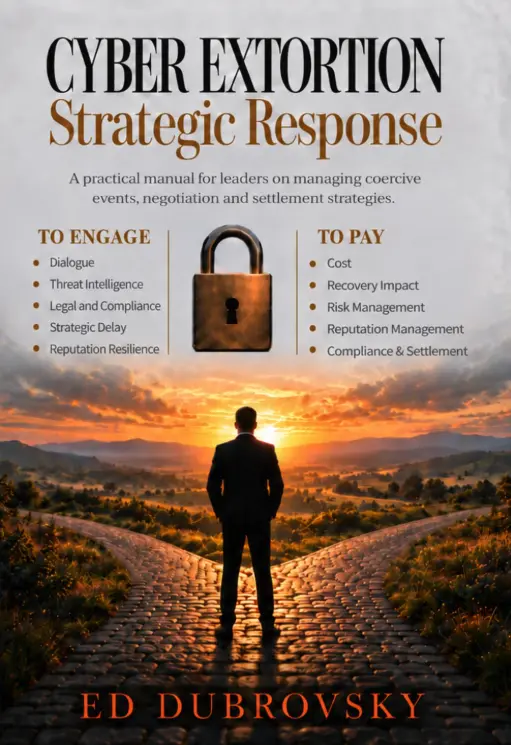
The arrest of an industry professional who holds themselves out as an expert in the field of cyber-extortion has sent shockwaves through the cybersecurity community. Dubrovsky is the author of Cyber Extortion Strategic Response, a 252-page professional volume that purports to guide organizations through the complex, high-stakes decision-making process that follows a ransomware attack.
The book’s promotional material, featured on platforms like Amazon, highlights a distinction that has now become a focal point of federal scrutiny: the difference between communicating with a criminal entity and negotiating a payment. The text argues that engagement with threat actors can serve legitimate strategic objectives, such as gathering intelligence, testing the veracity of stolen data claims, or simply buying time for an organization to fortify its defenses. These concepts, once viewed as academic or professional strategy, are now being evaluated by federal prosecutors in the context of criminal conspiracy.
As of the current reporting, Mr. Dubrovsky does not appear to have legal representation, and the court has yet to appoint a public defender. Attempts by media outlets to reach him or his colleagues at CyberSteward for comment have been unsuccessful.

The Reach and Methods of ShinyHunters
The ShinyHunters group has long been a primary target for international law enforcement due to their persistent and lucrative business model. The group typically leverages sophisticated phishing campaigns and the exploitation of stolen credentials to breach the corporate accounts of software-as-a-service (SaaS) providers. Once inside, they siphon vast amounts of data, threatening to dump the information on public forums unless a ransom is paid. The FBI estimates that the group has successfully extorted more than $70 million from various victims over the course of the current year alone.
The scope of the FBI’s investigation has widened significantly over the past month. Following the arrest of the convicted cybercriminal Pepijn van der Stap by Dutch authorities in September, the FBI has been meticulously analyzing devices seized during that operation. These findings are expected to lead to further charges against principals at various organizations that claim to facilitate ransomware negotiations.
A Taunting Adversary
The investigation has been characterized by an unusually public and aggressive back-and-forth between the hackers and the bureau. Shortly after the arrest of Van der Stap, an individual operating under the alias "Rey" assumed control of the ShinyHunters group. In a move that escalated tensions, Rey began taunting the FBI, specifically referencing data stolen from the agency’s own online recruitment portal. This stolen data reportedly contained highly sensitive information, including the specific units and specializations of FBI agents, as well as private medical and psychiatric records.
The situation surrounding Rey reached a turning point last week. According to reports from Reuters, the individual identified as Rey—a teenager named Saif Al-din Khader—was apprehended and has reportedly begun cooperating with federal investigators. This development followed an investigation into the group’s attempts to extort a navigation and digital aviation unit, a company that had been divested by Boeing in late 2025.
As the FBI continues to dismantle the infrastructure supporting ShinyHunters, the arrest of a seasoned cybersecurity executive serves as a stark reminder of the thin line between professional incident response and criminal facilitation. With the case now moving to the Eastern District of Texas, the legal proceedings are expected to accelerate, potentially shedding more light on how such groups have managed to infiltrate even the most secure federal institutions. The investigation remains active and fluid, with federal officials signaling that further developments are likely as the net continues to tighten around those accused of aiding one of the world’s most persistent cyber-extortion syndicates.