








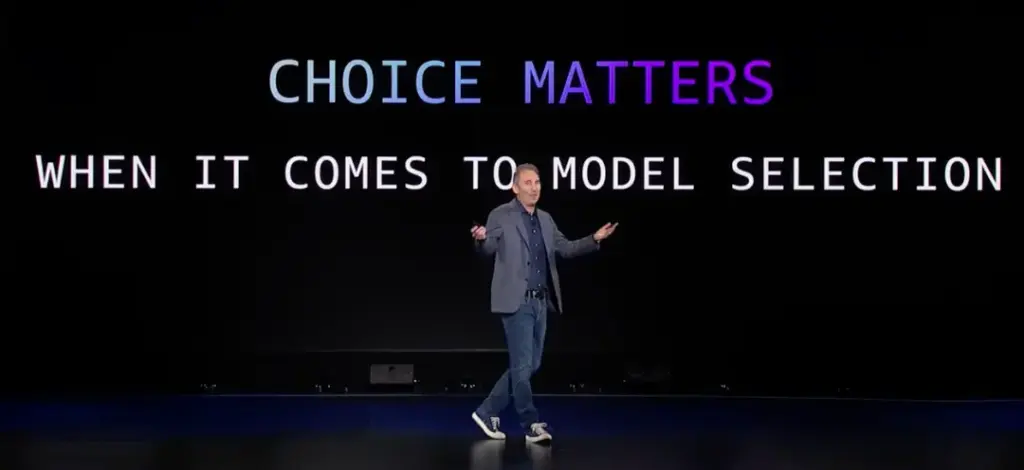
In the rapidly evolving landscape of generative artificial intelligence, the conversation among enterprise developers and architects has shifted significantly. While the early days of the AI boom were defined by a singular, persistent question—"how smart is this model?"—the focus has now transitioned toward a more nuanced, pragmatic inquiry: "which model fits this specific step in the workflow, at this price point, and within these latency constraints?" This evolution reflects the maturation of the enterprise AI market, where efficiency and performance optimization are becoming just as critical as raw intelligence.
This shifting philosophy was on full display last week as Amazon Web Services (AWS) significantly expanded the capabilities of Amazon Bedrock, its flagship service for building and scaling generative AI applications. By integrating new, specialized models from OpenAI and Anthropic, AWS is providing developers with greater granular control over their AI deployments, allowing them to balance the trade-offs between computational power and operational cost.
The New Intelligence-Efficiency Paradigm
The most prominent additions to the Amazon Bedrock platform are GPT-6 Sol and GPT-6 Luna, the latest iterations from OpenAI. These models are designed to address the "intelligence-versus-efficiency" curve, offering developers distinct options depending on the nature of their workloads.
GPT-6 Sol has been architected specifically for demanding, recurring tasks common in development and operations environments. It is designed to handle complex reasoning and code-based tasks that require high accuracy and depth. In contrast, GPT-6 Luna is optimized for focused, repeatable tasks that must be executed at high volume. By offering these two models, AWS is effectively enabling teams to right-size their infrastructure; rather than defaulting to a massive, general-purpose model for every query, developers can now deploy a more efficient, cost-effective solution for specific, high-frequency operations. Notably, both models are priced significantly lower than their predecessors in the GPT-5.6 series, providing a tangible economic incentive for businesses to integrate these tools into their production pipelines.
Complementing these additions is the release of Claude Opus 5.5 from Anthropic. As the inaugural member of the Claude 5.5 family, this model represents a leap forward in efficiency. It is designed to accomplish more with fewer tokens than its predecessor, Claude Opus 5, and is specifically tuned for agentic coding and long-running tasks. In an era where AI agents are expected to perform autonomous, multi-step operations over extended periods, the ability of Claude Opus 5.5 to maintain performance while reducing token consumption is a critical development for developers seeking to build complex, persistent autonomous systems.
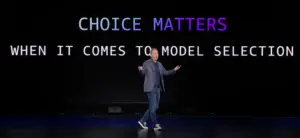
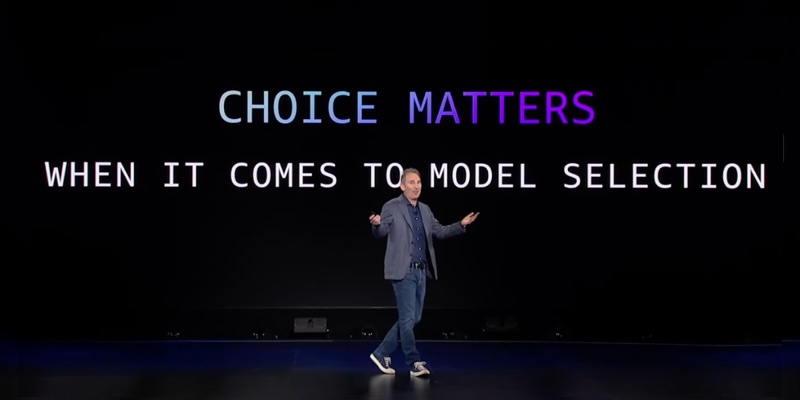
The common thread linking these three releases is the democratization of choice. The strategy encourages a "best-fit" architecture where the model is matched to the job at hand rather than reflexively reaching for the largest, most expensive model available. This shift is essential for organizations aiming to scale their AI operations sustainably without incurring prohibitive latency or costs.
Observability and the Agentic Future
Beyond the new model releases, the past week has highlighted a growing emphasis on the "agentic world." As generative AI models move beyond simple chat interfaces and into the realm of active, goal-oriented agents that can interact with software and infrastructure, the need for robust observability has become paramount. Developers are no longer just monitoring static inputs and outputs; they are now managing complex, multi-step processes where transparency, debugging, and tracing are essential for success.
This push toward improved observability tools is helping bridge the gap between experimental AI prototypes and hardened, production-grade applications. As these agents become more embedded in software development lifecycles and business operations, the ability to monitor their behavior, identify bottlenecks, and ensure reliable output is quickly becoming the next frontier for AWS.

Building for the Future
For the broader AWS ecosystem, these updates are part of a larger, ongoing effort to provide developers with a comprehensive toolkit. While the rapid influx of new models is the most visible sign of progress, the underlying infrastructure of Amazon Bedrock—which manages the orchestration, security, and integration of these diverse models—remains the backbone of this ecosystem.
As the industry moves forward, the availability of these diverse model options will likely continue to reshape how companies approach AI-driven development. For those operating within the AWS environment, the goal remains consistent: to simplify the complexity of AI integration while providing the flexibility to adapt to new advancements.
For developers looking to stay informed and engaged, the AWS ecosystem provides several ongoing channels for learning and collaboration. The AWS Builder Center continues to serve as a hub for connecting with peers, sharing practical solutions, and accessing documentation and architectural guidance that supports modern development workflows. Furthermore, AWS maintains a rigorous schedule of in-person and virtual events designed to keep the developer community apprised of the latest technical breakthroughs and best practices.
As the pace of innovation shows no sign of slowing, the focus will undoubtedly remain on refining these tools to be faster, cheaper, and more intelligent. Whether it is through the deployment of specialized models like the GPT-6 series or the enhanced efficiency of the Claude 5.5 family, the objective remains the same: empowering builders to solve increasingly complex problems with the most appropriate technology at their disposal. For those tracking these shifts, the coming weeks will likely bring further integration and optimization updates as the industry continues to push the boundaries of what is possible with generative AI in the cloud.