











Amazon Prime Day 2026, held from June 23 to June 26, once again demonstrated the sheer scale of global e-commerce, offering millions of deals across more than 35 product categories exclusively to Prime members. While shoppers navigated the site to secure discounts on everything from electronics to home essentials, a massive, invisible engine was working behind the scenes to ensure the experience remained seamless. As has become a hallmark of the company’s annual operations, Amazon Web Services (AWS) served as the backbone for the four-day event, handling unprecedented traffic volumes and maintaining stability under pressure.
The tradition of documenting the technical performance behind Prime Day dates back to 2016, and the 2026 edition stands as a testament to the continued evolution of cloud infrastructure. By examining the key metrics from this year’s event, one gains a clearer understanding of how AWS services—ranging from compute and storage to data streaming and security—collaborate to support one of the world’s most demanding digital environments.
The Compute and Storage Engine
At the foundation of this performance were Amazon Elastic Compute Cloud (Amazon EC2) and AWS Graviton processors. During the 2026 event, the efficiency of the company’s custom silicon became increasingly apparent, with AWS Graviton processors powering up to 49% of the EC2 compute capacity utilized by Amazon.com. This shift toward high-efficiency, cost-optimized hardware reflects a broader industry trend of prioritizing specialized silicon to handle massive, sustained workloads.
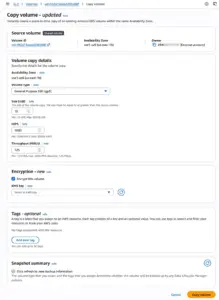
Storage demands during the event were equally staggering. Amazon Elastic Block Store (Amazon EBS), the high-performance block storage service, navigated the intensity of millions of simultaneous transactions by peaking at over 24.8 trillion I/O operations. To put that in perspective, the service was moving more than an exabyte of data on a daily basis, ensuring that databases and applications remained responsive despite the relentless influx of user activity.
Orchestrating Global Traffic
The agility of modern cloud applications relies heavily on serverless computing and container orchestration. AWS Lambda, which allows code to run without provisioning servers, proved its scalability by handling over 2.3 trillion invocations per day during the event. This level of execution highlights the reliability of serverless architectures when facing unpredictable, massive-scale traffic bursts.

Complementing this, Amazon Elastic Container Service (ECS) and AWS Fargate played a pivotal role in managing application environments. Throughout the four-day period, ECS launched an average of 158.3 million tasks per day on Fargate. This represented a 47.7% increase compared to the previous year’s Prime Day, underscoring the rapid growth in the complexity and volume of the services supporting the Amazon ecosystem.
For the end-user, the delivery of content is managed by Amazon CloudFront. As a global content delivery network, CloudFront was responsible for handling over 2.1 trillion HTTP requests during the week of Prime Day 2026. This represents a 5% increase in total request volume compared to 2025, demonstrating the network’s ability to maintain low-latency access for shoppers regardless of their geographic location.
Managing Data and Messaging at Scale
The integrity of the shopping experience relies on robust database management. Amazon DynamoDB, the fully managed NoSQL database service, acted as a critical pillar for high-traffic systems, including the Amazon.com storefront, Alexa, and the vast network of fulfillment centers. Over the course of the event, DynamoDB processed more than 59 trillion requests. Remarkably, the service achieved this while maintaining high availability and single-digit millisecond response times, even as it hit a peak of 192 million requests per second.
Meanwhile, Amazon Aurora—the high-performance relational database service—was tasked with managing massive amounts of transactional data. It successfully processed hundreds of billions of transactions, managing 5,491 terabytes of data and facilitating the transfer of 1,194 terabytes throughout the event. Furthermore, Amazon ElastiCache provided the necessary speed for frequently accessed data, peaking at a staggering 2.3 quadrillion daily requests and 2.1 trillion requests in a single minute.
The flow of information between these systems was maintained by powerful messaging and streaming services. Amazon Kinesis Data Streams, which handles real-time data processing, managed a peak of 988 million records per second. Communication between microservices and users was facilitated by Amazon Simple Queue Service (SQS) and Amazon Simple Notification Service (SNS). SQS saw a peak of 213 million messages per second, while SNS reached a milestone of delivering 5 trillion messages in a single day, ensuring that systems and customers stayed informed throughout the event.

Security, Governance, and Future Reliability
Operating at such a massive scale requires rigorous security and monitoring. AWS CloudTrail, which provides governance and operational auditing, saw its volume surge to 3.6 trillion events over the four days, a 44% increase over the previous year. Similarly, Amazon CloudWatch was essential for observability, processing over 2.15 quadrillion metric observations per day to provide real-time insights into system health.
Security monitoring also reached new heights with Amazon GuardDuty. The service monitored an average of 14.08 trillion log events per hour, reflecting a 59% increase in monitoring activity compared to Prime Day 2025. This focus on proactive security ensures that the infrastructure remains protected against threats even during periods of maximum load.
To guarantee that the platform could withstand these conditions, the team utilized AWS Fault Injection Service (FIS) to conduct controlled experiments. By running over 44,000 FIS experiments—a six-fold increase over 2025—engineers were able to stress-test the environment and ensure that Amazon.com remained highly available despite the immense pressure.
Lessons for Large-Scale Operations
The metrics recorded during Prime Day 2026 serve as a blueprint for businesses attempting to manage critical events, product launches, or large-scale migrations. For organizations looking to replicate this level of operational resilience, AWS offers specialized resources such as AWS Countdown Premium.
This service is designed to support businesses during high-stakes periods, whether they are preparing for retail peak seasons, major sporting events, or government-led initiatives like healthcare enrollment. By working alongside experts to scale infrastructure, optimize costs, and strengthen security measures in real-time, companies can ensure they deliver a reliable, high-performance experience to their customers. The scale of Prime Day 2026, while record-breaking, provides a clear view of the future of cloud-native commerce, where the ability to handle quadrillions of requests with millisecond precision is becoming the new standard. As Channy, an AWS representative, noted, the industry looks forward to seeing what new records and milestones will be defined when the next cycle of global demand arrives.