









For cat owners, managing a wet-food diet often means trading convenience for feline health. Following a health scare a couple of years ago, one pet owner transitioned their cat to wet food before eventually seeking out a smart pet feeder to return to a dry food routine. During that period, the daily challenges of serving wet cat food became abundantly clear: it must be served fresh, it cannot sit out for extended periods, and leaving the house requires careful planning around meal times. Furthermore, it demands a higher budget than standard dry kibble and a constant supply of canned goods or alternatives.
While wet cat food proved inconvenient, it was considered a necessary expense to keep the cat healthy. Traditional automatic wet food dispensers on the market typically require messy freezer packs to keep meals chilled, while the few refrigerated options available generally hold only enough food for a single day or slightly more. This long-standing gap in pet technology is what makes the introduction of the Neakasa Riko smart cat feeder notable. Designed to rehydrate food meal by meal, the Riko stores freeze-dried food and water separately while offering a degree of compatibility with other dry foods. When a scheduled feeding time arrives, the device grinds and soaks the food just before dispensing it to the pet. After spending a month testing the Neakasa Riko, reviewers have gathered valuable insights into how this innovative approach might reshape feeding routines for cat owners.

How the Neakasa Riko Makes Wet Food Easier
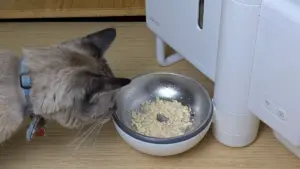
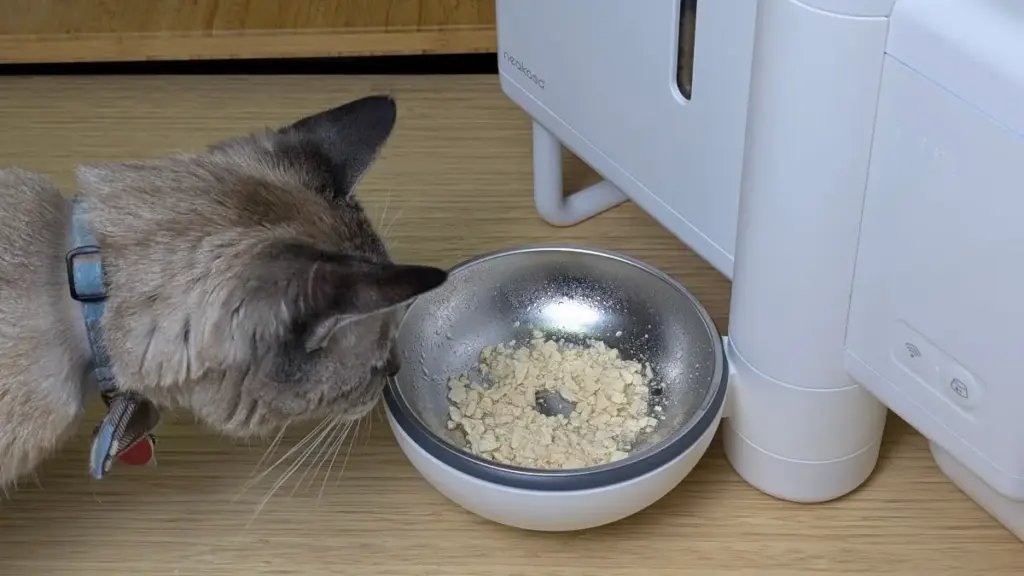
At first glance, the Neakasa Riko immediately distinguishes itself from a typical smart cat feeder. The most prominent physical features are the 80-ounce water tank positioned on the right-hand side and the retractable feeding bowl located directly beneath the food hopper. Positioned immediately below a built-in grinder and water jets on the underside of the dry food storage compartment, the retractable bowl allows food to sit long enough to rehydrate before a cat begins eating.
While the Riko is specifically engineered to target freeze-dried food, manufacturer Neakasa notes that it may also function effectively with air-dried and baked cat food. However, the company explicitly advises against using it with standard extruded kibble. During testing with regular cat food, such as the Supreme Source brand—which permits softening food with water as needed—reviewers observed that the Neakasa Riko does not grind standard kibble at all. Although early results with alternative dry foods appeared promising because the cat paid little attention to the altered texture, experts caution against letting the Riko entirely take over the feeding process without careful observation.

Combining a mix of freeze-dried food and kibble within the Neakasa Riko could serve as a practical compromise for many households, especially since several commercial cat food brands already offer similar pre-mixed options. Pet owners will still need to determine the optimal water-to-food ratio for their specific animal, but the concept presents a viable alternative. Although the device can dispense water separately from food, reviewers suggest that utilizing it strictly for water is inefficient, save for potentially providing a secondary water source immediately following mealtime until the next scheduled drop.
The hardware design includes storage tanks that are straightforward to remove for routine refilling and cleaning. As a safety measure, the unit refuses to operate unless the food hopper’s lid is securely in place, preventing clever pets from attempting to access food directly from the low-profile hopper instead of the bowl. The device even emits a chime to remind owners to replace the lid. Similar to other modern smart feeders, the Riko incorporates a dedicated compartment for desiccant packs to maintain food freshness over time.

Maintenance is simplified through the inclusion of two dishwasher-safe stainless steel bowl inserts, making the Riko easier to keep clean than many competing smart feeders. An intelligent calibration feature allows the food dispenser scale to be calibrated with the bowl entirely removed, meaning owners can quickly swap out bowls without needing to recalibrate or zero out the scale. The starter kit also includes practical accessories such as wet wipes for cleaning the interior, spare desiccant packs, and a specialized limescale cleaner to clear hard water deposits from the water tank. An optional rechargeable battery pack, available in the Riko Everyday Set, is claimed by Neakasa to deliver up to seven days of backup power during outages.
The Neakasa App Offers Intuitive Control
The companion Neakasa app provides an intuitive interface, featuring a main dashboard that highlights essential metrics such as daily feeding history, quick access to manual and scheduled feeding controls, and estimated levels for both food and water. The settings menu accommodates a robust array of features, including feeding controls, reminders, scale calibration, a child lock, and deep cleaning options, organized logically according to frequency of use.

While smart feeders often incorporate sounds and digital displays that pets do not strictly require to recognize mealtime, the Riko’s mealtime chime serves a practical purpose by reminding pets of food that has been freshly rehydrated and dispensed. The integrated small display indicates the current status of the feeder and can be customized during idle periods to show a clock, a simple icon, or custom text. However, because custom text continuously scrolls even when brief enough to fit statically on the screen, some users find the movement distracting and opt instead for a simple heart icon. The display and audio settings can also be turned off completely or configured according to a Do Not Disturb schedule for overnight hours.
The Neakasa Riko intentionally omits integration with broader smart home ecosystems. This design choice aligns with its core functionality of scheduling meals and tracking pet food consumption. While centralizing this data within advanced home automation platforms might appeal to niche power users, standard smart home features—such as automated lighting, smart locks, or energy monitoring—offer little functional value for a pet feeder, aside from perhaps changing ambient light colors to signal an error or low food supply.

Putting the Neakasa Riko to the Test
Transitioning a feline to a new diet typically requires a gradual phasing-in period over several days to avoid digestive upset. Because the test cat already maintained a stable diet, and out of concern for the high cost of freeze-dried chicken, testing primarily involved substituting daily treats with the Riko’s rehydrated offerings. This method allowed reviewers to enrich the cat’s existing diet while evaluating the machine’s mechanical performance.
Finding the ideal water-to-freeze-dried-chicken ratio required a brief trial-and-error period. Initial attempts using a 1:1 ratio of food and water resulted in a mixture that the cat found unappealing, taking nearly an entire day to finish a single serving—an undesirable outcome given the risk of wet food spoiling if left out. Adjusting the ratio to a 1:4 food-to-water proportion proved to be the ideal balance, with the cat consuming the entire meal within minutes.

Although the Neakasa Riko is designed to retract the bowl when a designated threshold of uneaten food remains, the safety retraction threshold must be set to 10 grams or higher, meaning it cannot accommodate extremely small serving sizes. Owners planning to leave cats home alone are strongly advised to monitor the device’s performance over multiple meals first to ensure the food-safety retraction feature does not prematurely remove meals and leave the pet hungry.
Scheduling quirks noted during testing included scheduled feedings occurring precisely one hour later than programmed, despite correct time zone settings. The workaround involved simply shifting the schedule forward by an hour. Unlike manual feedings where rehydration times can be customized, scheduled feedings automatically allocate approximately 20 minutes for the water to thoroughly soak the food. Uniquely, once the bowl is emptied, it remains extended until the next food or water cycle rather than retracting immediately. This design choice gives pets an opportunity to thoroughly clean the bowl and ensures easy access when owners want to swap it out for a clean insert.

Is the Neakasa Riko Worth the Investment?
Retailing at $240, the Neakasa Riko fills a specialized niche for pet owners seeking to diversify their cat’s diet with nutritious freeze-dried ingredients or softened kibble without resorting to traditional canned wet food. However, a financial comparison between canned cat food and freeze-dried alternatives reveals significant cost disparities. Based on the dietary requirements of an average 10-pound adult cat, daily servings of freeze-dried food from brands like Weruva, Instinct, and Stella & Chewy average around $5.18. This is nearly five times the cost of budget canned brands such as Friskies and Meow Mix at roughly $1.05 per serving, and considerably higher than premium canned options like Sheba and Fancy Feast, which average $4.28 per serving. Exclusive feeding of freeze-dried diets can easily accumulate to over $110 a month.
In contrast, premium dry kibble remains far more economical, often costing under $0.50 per serving. Competing automatic feeders designed for traditional canned wet food offer alternative approaches at varying price points. The $170 Petlibro PLAF109 utilizes a basic refrigeration system to keep up to three meals fresh for up to three days, while the $262 PetSafe FreshFeed preserves up to six meals for up to six days.

Ultimately, the Neakasa Riko stands out as one of the most convenient smart feeders for handling freeze-dried and dry pet foods, holding up to 10 days of meals while consuming less energy than traditional refrigeration units. While exclusive reliance on expensive freeze-dried diets may strain household budgets, the device serves as an effective tool for supplementing an existing feeding routine, managing vacation feedings, or providing flexible options as a pet’s dietary needs evolve over time.