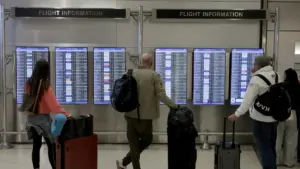











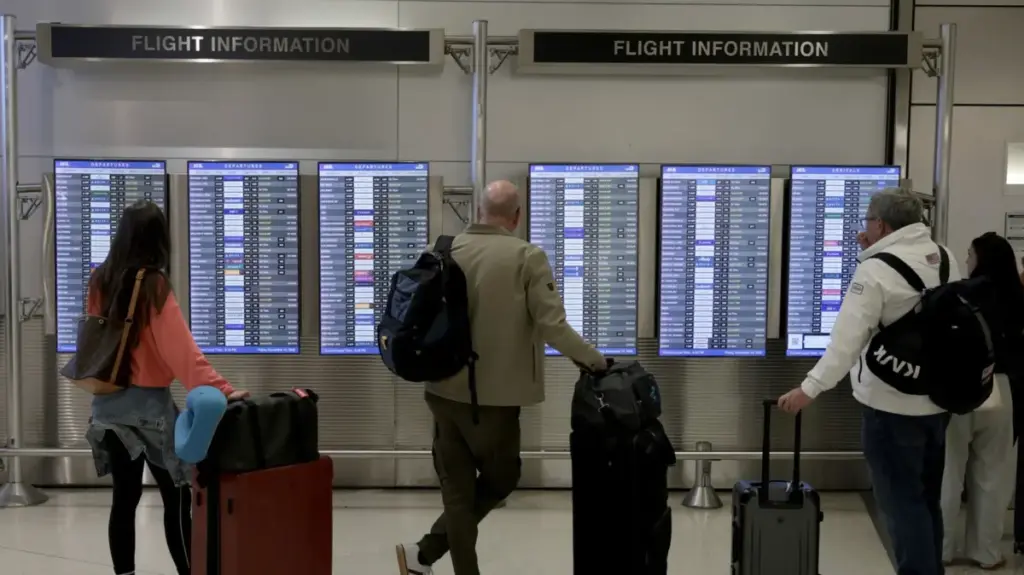
After hours of uncertainty that left millions of passengers stranded and thousands of flights paralyzed, the Federal Aviation Administration (FAA) officially lifted its nationwide ground stop late on the evening of November 13. The unprecedented disruption, which began during the afternoon, forced the cancellation of hundreds of scheduled departures and the diversion of countless aircraft already in the air, creating a logistical nightmare that reverberated through major airports across the United States.
The suspension of all domestic flight departures, which was finally cleared at 8:15 PM Eastern Time, marked one of the most significant interruptions to American aviation in modern history. Following the resumption of operations, Transportation Secretary Sean Duffy held a sobering press conference to address the public, where he identified the root cause of the shutdown not as a singular isolated glitch, but as a systemic failure of the nation’s aging aviation infrastructure.
The Vulnerability of Legacy Systems
Secretary Duffy was blunt in his assessment, pointing directly to what he characterized as an "incredibly old air traffic control system" that is struggling to keep pace with the demands of modern air travel. At the heart of the technical failure was the continued reliance on TDM (Time Division Multiplexing) telecom, a legacy analog telecommunications technology. While the rest of the world has largely transitioned to modern digital networking, the FAA’s reliance on these older systems to transmit critical data between air traffic control facilities has become a significant liability.

According to the details provided by the Department of Transportation, the system’s routers reached a critical breaking point on the afternoon of the 13th. By approximately 3:36 PM, the legacy equipment became overwhelmed by data traffic, leading to the transmission of inconsistent and unreliable information. This data corruption forced the agency into a defensive posture. Secretary Duffy clarified that while the United States did not experience a total loss of communications or radar capabilities—which would have created an even more catastrophic scenario—the FAA made the difficult decision to ground all flights out of an "abundance of caution."
Crucially, the Secretary noted that the instability was isolated to the older infrastructure. Systems that had already undergone modernization were reportedly unaffected by the malfunction. However, the selective nature of the failure did little to soothe the frustrations of a traveling public that had been grounded for the better part of the day.
A Call for Congressional Action
The incident has reignited a heated debate over the funding and modernization of national infrastructure. Secretary Duffy, appearing visibly frustrated during his press briefing, emphasized that this event was a clear warning sign of what is to come if the status quo remains unchanged. "It’s going to continue to fail," Duffy told reporters, as quoted by the New York Times. "How many times does this have to happen for Congress to give the money to fix it?"
The aviation industry has long warned that the FAA’s reliance on outdated technology is a ticking time bomb. While Congress has previously allocated $12.5 billion toward the massive task of modernizing the country’s air traffic control facilities, that investment is increasingly viewed as insufficient. Secretary Duffy has been actively lobbying for an additional $30 billion to accelerate the overhaul of these fragile systems. The sheer scale of the disruption on November 13 has placed renewed pressure on lawmakers to justify the current budgetary delays in the face of a system that is clearly nearing its operational limits.
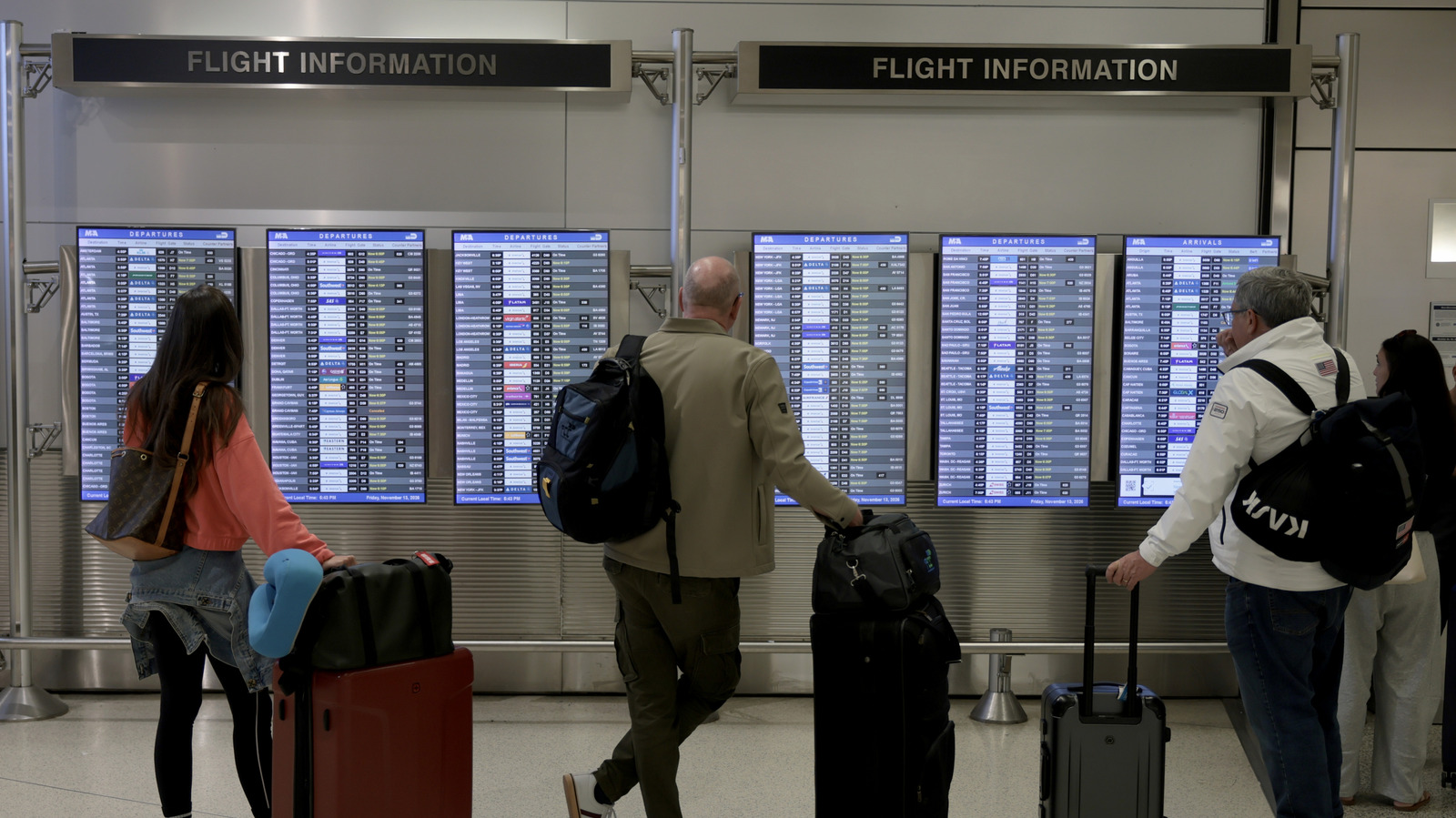
To put the severity of the event into perspective, the FAA has only issued nationwide ground stops three times in the 21st century. Industry experts noted that the duration of this specific outage was the longest such disruption since the immediate aftermath of the September 11 terrorist attacks, highlighting the rarity and the gravity of the situation.
Investigating Potential External Threats
In the immediate wake of the ground stop, concerns naturally turned to the possibility of a cyberattack or malicious interference. Given the interconnected nature of global infrastructure, the public and regulatory bodies were quick to question whether the system had been compromised.
Markwayne Mullin, the Secretary of Homeland Security, joined Duffy at the press conference to provide an update on the security assessment. Mullin moved to quell immediate panic, stating that there was currently no evidence to suggest that the communication failures were the result of a cyberattack. However, he stopped short of issuing a definitive "all clear," explaining that his agency is continuing to conduct a thorough forensic investigation. "We are still looking," Mullin noted, emphasizing that the Department of Homeland Security is not ruling out any possibilities until the investigation is fully concluded.
Mullin also took the opportunity to distinguish this incident from other recent technological disruptions. He clarified that the FAA’s internal crisis was entirely unrelated to the separate, lengthy service outage that had recently taken down Microsoft’s suite of services, including Outlook and Teams, for over 24 hours. By separating the two events, officials aimed to prevent speculation that a wider, coordinated digital strike was occurring against American infrastructure.
The Path Forward
As the aviation industry attempts to recover from the massive backlog of flights, the focus is shifting from the immediate restoration of services to the long-term sustainability of the national airspace system. The events of November 13 have transformed a technical malfunction into a high-stakes political issue, with the Department of Transportation and the FAA now squarely focused on securing the funding required to transition away from legacy analog systems.
For the millions of passengers who found themselves stranded in terminals across the country, the resolution of the ground stop was only the first step in a long recovery process. As flights resume, the aviation sector faces the complex task of rebalancing schedules and managing the secondary delays that inevitably follow a total system freeze.
Ultimately, the episode serves as a stark reminder of the fragility of the systems that underpin modern transportation. With the FAA’s reliance on decades-old technology now exposed to the public eye, the conversation regarding how the United States manages and funds its critical infrastructure is expected to intensify in the coming weeks. Secretary Duffy’s warning that further failures are inevitable without significant intervention serves as the backdrop for what will likely be a contentious legislative session regarding the future of the nation’s air traffic control capabilities. As the investigation continues, the aviation community remains on high alert, waiting to see whether this "abundance of caution" will translate into the long-awaited modernization of the systems that move the world.