










Throughout his illustrious career, the late Sir Patrick Stewart built a reputation anchored in the portrayal of noble, intellectual, and steadfast protagonists. For generations of audiences, he was the definitive face of moral authority, most notably as Captain Jean-Luc Picard in the Star Trek franchise and as Professor Charles Xavier in the X-Men film series. Both roles, while distinct in their narrative settings, share a fundamental DNA: they are characters defined by their unwavering idealism, their capacity for empathy, and their role as pillars of their respective communities. Whether navigating the complexities of space diplomacy or fostering the next generation of mutants, Stewart’s characters were consistently positioned as the benevolent leaders we aspired to follow.
This persona was so deeply ingrained in the public consciousness that Stewart himself frequently leaned into it, occasionally subverting it for comedic effect. His memorable, self-deprecating cameos—most notably on the sitcom Extras, where he played a depraved version of himself, and as the eccentric, morally flexible CIA Deputy Director Avery Bullock on American Dad—were effective specifically because they played against his established "good guy" archetype. Even when he dabbled in the darker side of human nature on stage, delivering iconic performances in Shakespearean tragedies like Macbeth and The Merchant of Venice, his screen work remained tethered to his gravitas. He was, in the eyes of Hollywood and his global audience, a man meant to command starships and lead schools, not to lurk in the shadows.
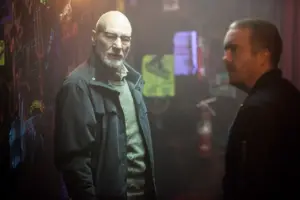
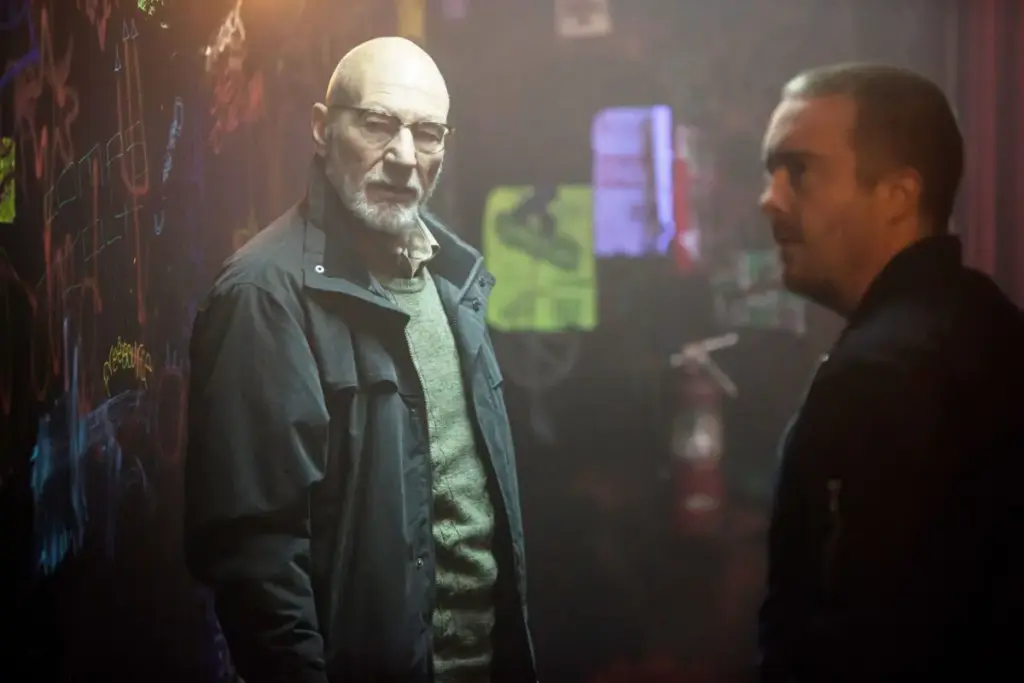
However, in 2015, director Jeremy Saulnier offered audiences a rare, jarring departure from this established norm. In the visceral, high-tension rural thriller Green Room, Stewart stepped into the boots of Darcy, a calculated and chillingly pragmatic neo-Nazi leader. It remains perhaps the single most terrifying performance of his career—a masterclass in restrained malice that stripped away the warmth of Picard and the wisdom of Xavier to reveal a man defined by the absolute banality of evil. For those who missed this transformation or wish to revisit one of the most underrated genre films of the last decade, Green Room is currently available to stream for free on Tubi.

A Nightmarish Descent into the Pacific Northwest
The premise of Green Room is deceptively simple, echoing the "wrong place, wrong time" tropes of classic survival horror, yet it is executed with a grit and realism that makes it feel uncomfortably tactile. The story follows The Ain’t Rights, a struggling, scrappy punk rock band touring through the Pacific Northwest. Their reality is one of hand-to-mouth survival: they subsist on bar tabs, siphoned gasoline, and the kind of restless, youthful energy that ignores the encroaching consequences of their lifestyle. They are not heroes; they are desperate musicians trying to make enough gas money to reach the next gig.
Their downward spiral begins when they accept a booking at an isolated, remote bar in rural Oregon. The venue, as it turns out, is a fortress for a local white supremacist movement. The band, having unknowingly signed up to play for an audience of skinheads, finds themselves out of place and out of their depth. The atmosphere is thick with hostility, and the band members—eager to finish their set and collect their pay—find themselves trapped in the backstage area after accidentally witnessing a murder.
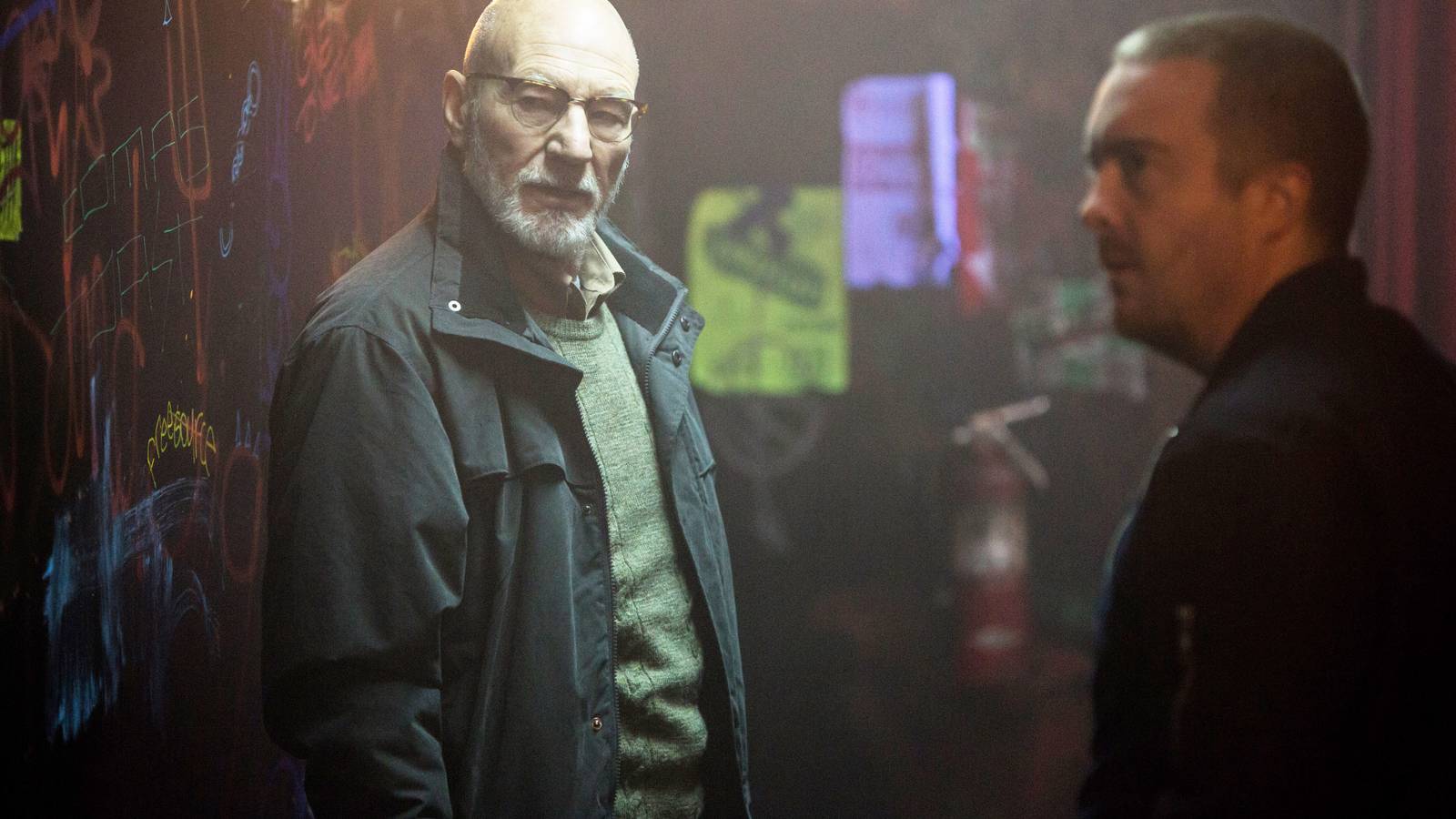
The situation escalates from a tense standoff into a desperate, claustrophobic nightmare. The bar’s staff, realizing they cannot allow witnesses to leave the premises, initiate a lockdown. They call in the man in charge: Darcy. When Stewart’s character finally appears, he does not arrive with the bluster or chaotic rage one might expect from a cinematic villain. Instead, he arrives with the quiet, terrifying efficiency of a CEO managing a crisis. He views the band’s presence not as a moral dilemma, but as a logistical problem that requires a cold, clean solution. His decision to eliminate them is delivered with the same calm, authoritative cadence that once settled intergalactic conflicts on the bridge of the USS Enterprise. It is this dissonance—the voice of authority being used to orchestrate a slaughter—that makes Stewart’s performance so haunting.
The Brutality of "Inaction" Cinema
The film’s aesthetic is intentionally "grimy," a term that feels like an understatement when describing the sensory experience of watching Green Room. The production design leans into the reality of a dive bar that hasn’t been cleaned in decades, where the air feels heavy with stale beer and cigarette smoke. Every frame is saturated with a sense of rot, and the lighting is calibrated to make the skin of the characters appear sallow, almost cadaverous. It is an immersive, uncomfortable world where nothing is polished, and nothing is safe.
Much like Jeremy Saulnier’s previous work, such as 2007’s Murder Party, Green Room functions as an "inaction" movie. The characters, particularly the members of the band, possess no special training or innate combat prowess. They are not action heroes; they are terrified individuals thrust into a situation where they are forced to fight, often with whatever meager tools they can scavenge. The film highlights the physical and mental toll of such an environment: weapons are improvised, plans are desperate and flawed, and injuries are treated with little more than duct tape and grit.

The violence in Green Room is striking not just for its intensity, but for its total lack of ceremony. Characters who the audience might expect to be "protected" by narrative tropes are dispatched with shocking suddenness. There is no triumph here, only the grim reality of survival. The makeup and practical effects teams lean into this, depicting the aftermath of the violence—the shredded throats, the shattered limbs, and the blood-soaked floors—with a clinical, unflinching eye. It is a grueling viewing experience that demands the audience’s full attention, stripping away the comfort of the "heroic" survival narrative.
The Banality of Evil
The anchor of this entire experience is, undoubtedly, Patrick Stewart. His performance as Darcy is an exercise in restraint. He plays the character as a man who has built a business—a criminal enterprise, yes, but a business nonetheless—and he is dedicated to protecting his interests. He is not a mustache-twirling caricature; he is a man who believes he is the smartest person in the room, and he speaks to his subordinates with a condescending, fatherly tone that makes his underlying cruelty even more pronounced.
For those accustomed to seeing Stewart as the moral compass of science fiction, the shift is jarring. He portrays Darcy as a man who has compartmentalized his humanity, viewing the lives of the band members as little more than loose ends to be tied up. He is the "kingpin" of this rural outpost, a man whose word is law, and who treats the prospect of mass murder with the same administrative weight as checking the bar’s inventory.
The brilliance of the performance lies in its subtlety. Stewart doesn’t need to scream or threaten to exert power; he exerts it through his presence, his stillness, and his absolute refusal to engage with the humanity of his victims. He is a "casual, everyday sort of monster," a depiction that is far more chilling than any overt villainy. By the time the film reaches its harrowing conclusion, the audience is left with a stark reminder of Stewart’s incredible range. He spent decades convincing the world of his inherent goodness; in Green Room, he spends 95 minutes proving just how easily he could set that reputation aside to become something entirely, and terrifyingly, different.

As the film remains a standout in the thriller genre, its accessibility on platforms like Tubi allows a new generation of viewers to discover this side of Stewart’s craft. It is a necessary watch for anyone interested in seeing how a master of the screen can subvert expectations, delivering a performance that is as repulsive as it is impossible to look away from.